
It Asset Management Best Practices: it asset management best practices
In today's complex IT environment, managing technology assets has evolved from a simple inventory task into a critical business function directly impacting security, compliance, and financial health. An unstructured or outdated approach to ITAM often results in significant security vulnerabilities, uncontrolled budget overruns, and severe regulatory penalties. Conversely, a modern, robust strategy transforms your organization's IT assets from a potential liability into a significant strategic advantage, optimizing value and minimizing risk.
This guide moves beyond generic advice to provide a comprehensive roundup of the top 10 IT asset management best practices tailored for mid-size to enterprise organizations. We will deliver actionable frameworks, practical implementation steps, and real-world examples to help you master every stage of the asset lifecycle, from secure acquisition and deployment to certified data destruction and compliant disposition. You will learn how to:
- Establish a formal IT asset lifecycle management policy.
- Implement a comprehensive tracking system and conduct regular audits.
- Prioritize certified data sanitization and maintain a secure chain of custody.
- Integrate asset management with financial systems for total visibility.
- Ensure regulatory compliance and develop a standardized hardware retirement schedule.
Each practice is designed to be directly applicable, providing the detailed insights necessary for IT directors, infrastructure teams, and compliance officers to build a program that not only functions but excels. Let's get started on building a clear, controlled, and cost-effective ITAM strategy.
1. Implement a Comprehensive IT Asset Inventory and Tracking System
A comprehensive IT asset inventory is the foundational pillar of effective IT asset management (ITAM). This practice involves creating and maintaining a centralized, detailed database of all hardware and software assets from procurement through disposition. This "single source of truth" meticulously tracks key data points, including hardware specifications, software licenses, purchase dates, physical locations, assigned users, maintenance history, and depreciation status.
Without an accurate inventory, strategic planning is impossible. This detailed record-keeping enables precise forecasting for asset retirement, ensures no device is overlooked during decommissioning, and provides a clear, auditable trail for regulatory compliance. It transforms asset management from a reactive task into a proactive, data-driven strategy.
Why This Is a Core Practice
An accurate inventory directly impacts an organization's financial health, operational efficiency, and security posture. It prevents unnecessary purchases of hardware or software licenses, reduces the risk of data breaches from lost or forgotten devices, and streamlines IT support. For regulated industries, such as healthcare or finance, maintaining a verifiable asset lifecycle record is not just a best practice; it is a mandatory requirement for passing audits.
For example, a Fortune 500 company might use a robust platform like ServiceNow to manage a global fleet of assets, while a large healthcare system like Kaiser Permanente relies on a similar system to track the complex lifecycle of regulated medical equipment across dozens of facilities.
Actionable Implementation Steps
To successfully implement this IT asset management best practice, follow a structured approach:
- Prioritize and Phase Your Rollout: Begin by cataloging your most critical and high-value assets, such as servers, network switches, and storage arrays. Once this core infrastructure is documented, expand the inventory to include end-user devices like laptops and mobile phones.
- Standardize Asset Tagging: Establish a consistent asset tagging protocol from the moment a device is procured. Use a combination of serial numbers, MAC addresses, and unique internal asset IDs. This ensures every item can be quickly identified and tracked.
- Integrate with Your ITSM: Connect your asset inventory system with your IT Service Management (ITSM) platform. This integration links assets to support tickets, change requests, and user profiles, providing a holistic view of each device’s history and impact.
- Conduct Regular Audits: Schedule quarterly physical inventory audits to reconcile your database records with the actual assets in your environment. This process identifies discrepancies, locates missing equipment, and maintains data integrity.
- Assign Clear Ownership: Every asset must have a designated owner, whether an individual user or a department head. This assignment fosters accountability for the asset's condition, location, and eventual return for disposition.
2. Establish a Formal IT Asset Lifecycle Management Policy
A formal IT asset lifecycle management policy provides the governance framework that dictates how technology assets are procured, deployed, maintained, retired, and disposed of. This documented strategy ensures that all departments follow standardized, repeatable procedures for every stage of an asset's life. It transforms asset management from an ad-hoc process into a predictable, auditable, and financially sound business function.
This policy acts as a playbook for IT and business units, aligning asset handling with budgetary constraints, security protocols, and regulatory compliance. It is a critical component of a mature IT asset management best practices program, defining roles and responsibilities to prevent rogue spending and ensure that assets are retired securely and efficiently.
Why This Is a Core Practice
Without a formal policy, organizations are vulnerable to inconsistent practices, compliance failures, and significant security risks. A documented lifecycle policy is essential for regulated industries. For example, the U.S. Department of Defense uses strict directives like DoD 5015.02 for managing classified equipment, while HIPAA-covered entities must document device lifecycles to protect patient data.
This governance standardizes the process for working with external partners. For instance, the policy will dictate the vetting and communication protocols when engaging with specialized IT asset disposition companies, ensuring security and compliance are maintained through the final disposal stage. Frameworks like ITIL and standards such as ISO/IEC 27001 popularize this structured approach.
Actionable Implementation Steps
To create an effective lifecycle management policy, focus on clear definitions and enforceable rules:
- Define Clear Lifecycle Stages: Document the specific processes for procurement, deployment, in-service management, and retirement. Outline the exact steps for each stage, from purchase approvals to final data destruction certificates.
- Establish Retirement and Disposal Criteria: Specify the conditions under which an asset must be retired, such as age, performance degradation, or end-of-support. Clearly define the requirements for secure data erasure and physical destruction.
- Specify Chain-of-Custody Requirements: Mandate the documentation needed for a fully auditable chain of custody during asset disposition. This includes transfer forms, courier tracking, and certificates of destruction.
- Integrate Financial and IT Timelines: Align asset retirement schedules with financial depreciation cycles. This ensures that the book value of an asset is accurately reflected and supports strategic budget forecasting for technology refreshes.
- Schedule Annual Policy Reviews: Treat the policy as a living document. Review and update it annually or whenever there are significant changes in technology, business processes, or regulatory landscapes.
3. Prioritize Data Security and Certified Data Destruction
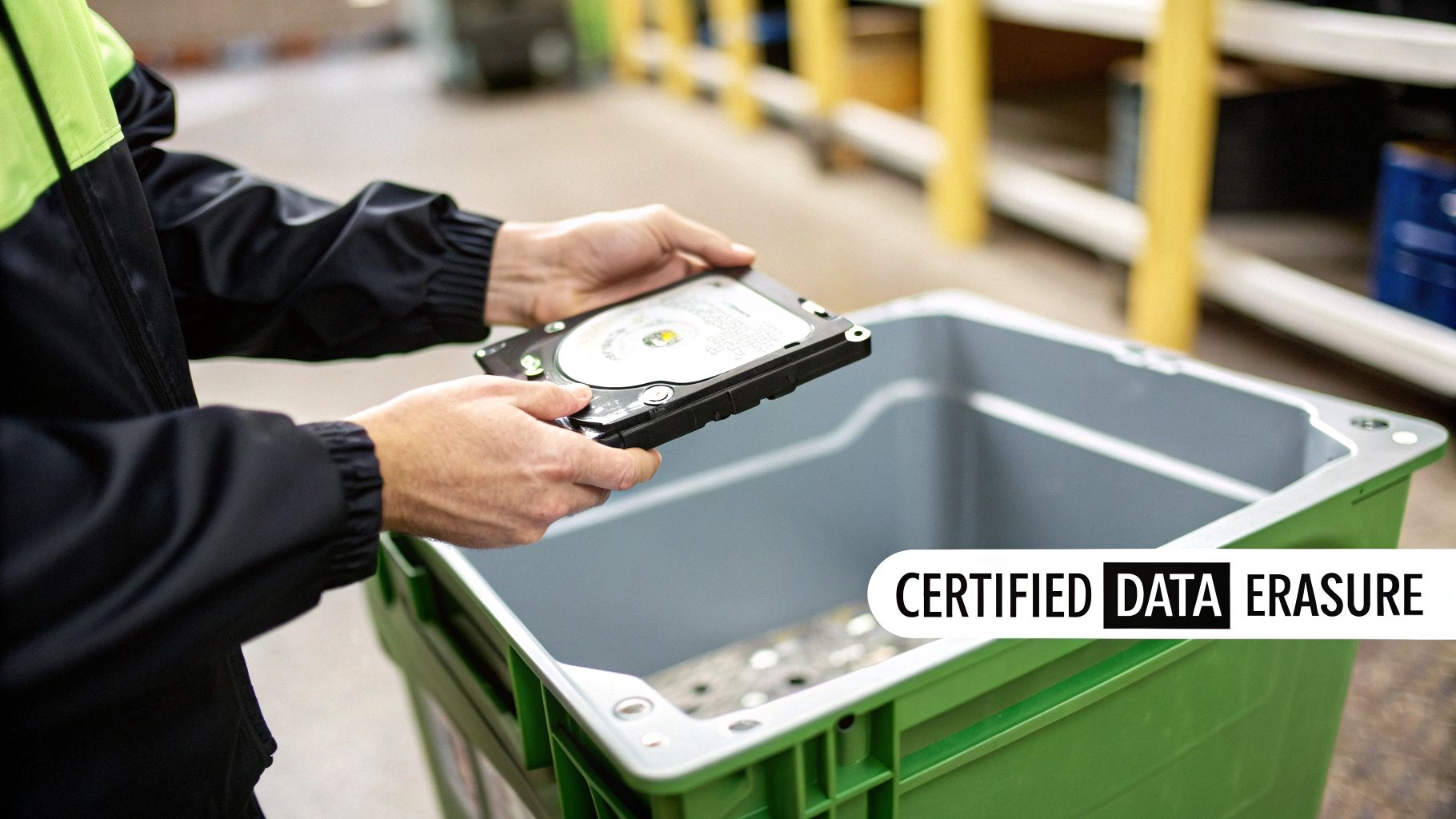
Effective IT asset management extends beyond physical tracking; it is fundamentally about safeguarding the sensitive information stored on those assets. This practice ensures that all data is irretrievably removed from devices before they are resold, recycled, or discarded. It involves using certified methods like cryptographic erasure (wiping), degaussing, or physical destruction (shredding), with documented verification for every single asset.
Proper data destruction is non-negotiable for protecting intellectual property, customer data, and regulated information. It is a critical control for complying with stringent standards such as HIPAA, GDPR, PCI-DSS, and NIST SP 800-88, preventing catastrophic data breaches and preserving an organization’s reputation.
Why This Is a Core Practice
Failing to properly sanitize data exposes an organization to severe financial penalties, legal liability, and brand damage. A single misplaced hard drive containing sensitive information can lead to a multi-million dollar incident. Certified destruction provides a defensible, auditable process that proves due diligence was followed, which is essential for risk management and regulatory compliance.
For example, financial institutions like Bank of America must use NSA-approved destruction methods for cryptographic equipment, while healthcare systems such as the Mayo Clinic depend on certified data sanitization to protect patient health information (PHI) in accordance with HIPAA.
Actionable Implementation Steps
To integrate certified data destruction into your ITAM program, take the following steps:
- Standardize Destruction Methods: Define and document specific data destruction procedures based on data sensitivity and media type, aligning with standards like NIST SP 800-88. Use cryptographic erasure for reusable drives and physical shredding for failed or highly sensitive media.
- Mandate Certificates of Destruction: Require your disposition vendor to provide a formal, signed Certificate of Destruction for every batch of assets. This document should list the unique serial number of each drive, the method of destruction, and the date of completion. For more detail, you can learn about the importance of a Certificate of Destruction for hard drives and what it should include.
- Verify Vendor Certifications: Partner only with vendors holding recognized industry certifications like R2v3, e-Stewards, or NAID AAA. These credentials ensure the vendor adheres to strict security protocols, environmental standards, and chain-of-custody requirements.
- Establish Clear Data Classification: Implement a data classification policy to identify devices containing regulated or confidential information (e.g., PII, PHI, PCI). This allows you to apply the appropriate level of security and destruction method for each asset.
- Conduct Regular Audits: Periodically audit your data destruction vendor and internal processes. Review documentation, witness the destruction process, and test sanitized media to ensure procedures are being followed correctly and are effective.
4. Conduct Regular Asset Audits and Reconciliation
A static inventory is an inaccurate one. Regular asset audits and reconciliation are the critical processes that validate and refresh your IT asset database by physically or electronically verifying assets against inventory records. This practice involves systematically checking that every listed asset exists, is in its recorded location, and is in the expected condition.
This verification process is essential for identifying discrepancies caused by unauthorized changes, asset loss, or unrecorded moves. It acts as a control mechanism to prevent "ghost assets" from bloating your books and ensures that your financial reporting is accurate. For effective IT asset management, periodic reconciliation transforms the inventory from a historical document into a living, reliable tool for strategic decision-making.
Why This Is a Core Practice
Regular audits are fundamental to maintaining data integrity, mitigating risk, and ensuring compliance. They help organizations catch aging or underperforming equipment, track asset movement between departments or locations, and identify candidates for timely retirement or redeployment. This proactive approach supports regulatory frameworks like Sarbanes-Oxley (SOX) and ISO 27001, which mandate strict controls over financial and information assets.
For instance, government agencies must perform mandatory annual asset certifications to maintain accountability for public resources. Similarly, large educational institutions often reconcile technology assets across multiple campuses during summer breaks to prepare for the upcoming academic year.
Actionable Implementation Steps
To successfully implement this IT asset management best practice, integrate a routine audit cycle into your operations:
- Leverage Automated Discovery Tools: Use software like Lansweeper or Absolute to continuously scan your network and detect connected devices. This automates a significant portion of the audit process by comparing discovered assets with your inventory records in real time.
- Schedule Audits Strategically: Plan physical audits during low-activity periods, such as after business hours or during holiday breaks, to minimize disruption to operations. Communicate the schedule clearly to all department heads.
- Streamline Physical Verification: Tag all physical assets with barcodes or QR codes. This allows auditors to use handheld scanners or mobile apps to quickly scan items, instantly pulling up their records and confirming their status.
- Assign Departmental Accountability: Make department managers responsible for the assets assigned to their teams. Require them to periodically certify the presence and condition of their equipment, fostering a culture of ownership.
- Integrate Findings with Financials: Cross-reference audit findings with your organization's financial records. This ensures that asset depreciation schedules are accurate and that retired or lost assets are properly written off the books.
5. Develop a Standardized Hardware Refresh and Retirement Schedule
Establishing a standardized hardware refresh and retirement schedule is a proactive strategy to manage the IT asset lifecycle. This practice involves setting predefined timelines for replacing asset categories based on factors like age, vendor support end-of-life (EOL) dates, performance degradation, and total cost of ownership (TCO). A formal schedule transforms reactive, chaotic replacements into a predictable, budget-friendly process.
This forward-looking approach prevents the operational drag and security risks associated with aging hardware. By planning refreshes, organizations can control capital expenditures, minimize unplanned downtime, and execute efficient, large-scale dispositions. This discipline is essential for environments like data centers, government agencies, and healthcare systems where reliability and performance are non-negotiable.
Why This Is a Core Practice
A scheduled refresh cycle is a cornerstone of strategic IT asset management best practices because it aligns technology with business objectives. It ensures employees have reliable tools, systems maintain peak performance, and the organization avoids the high costs of emergency repairs and data recovery from failed legacy hardware. Furthermore, it allows for timely adoption of more energy-efficient and secure technologies, reducing operational costs and strengthening the organization's security posture.
For example, Amazon Web Services (AWS) relies on meticulously documented, age-based schedules to retire server hardware, ensuring its cloud infrastructure remains robust and efficient. Similarly, the Veterans Health Administration (VHA) deploys standardized refresh schedules for its medical IT equipment to guarantee patient safety and regulatory compliance.
Actionable Implementation Steps
To build an effective hardware refresh and retirement program, follow these structured steps:
- Base Cycles on Vendor EOL: Tie your refresh timelines directly to vendor support end-of-life dates, not just arbitrary calendar years. Operating unsupported hardware is a significant security and compliance risk.
- Implement Staggered Refreshes: Avoid a massive one-time capital expense by staggering your refresh cycles. A common strategy is to replace 25% of a specific asset class, like laptops, each year over a four-year cycle.
- Analyze Total Cost of Ownership (TCO): Your decision to refresh should include maintenance costs, energy consumption, and the business cost of potential downtime. Often, the TCO of an old asset exceeds the cost of a new one.
- Coordinate with Fiscal Planning: Align your refresh schedules with the organization's annual or quarterly budget planning cycles. This ensures that capital is allocated and available when needed.
- Plan Disposition Logistics in Advance: Engage your ITAD vendor two to three months before a scheduled refresh. This lead time is crucial for coordinating secure logistics, data destruction, and processing of end-of-life IT equipment.
6. Implement Environmental and Social Responsibility Standards
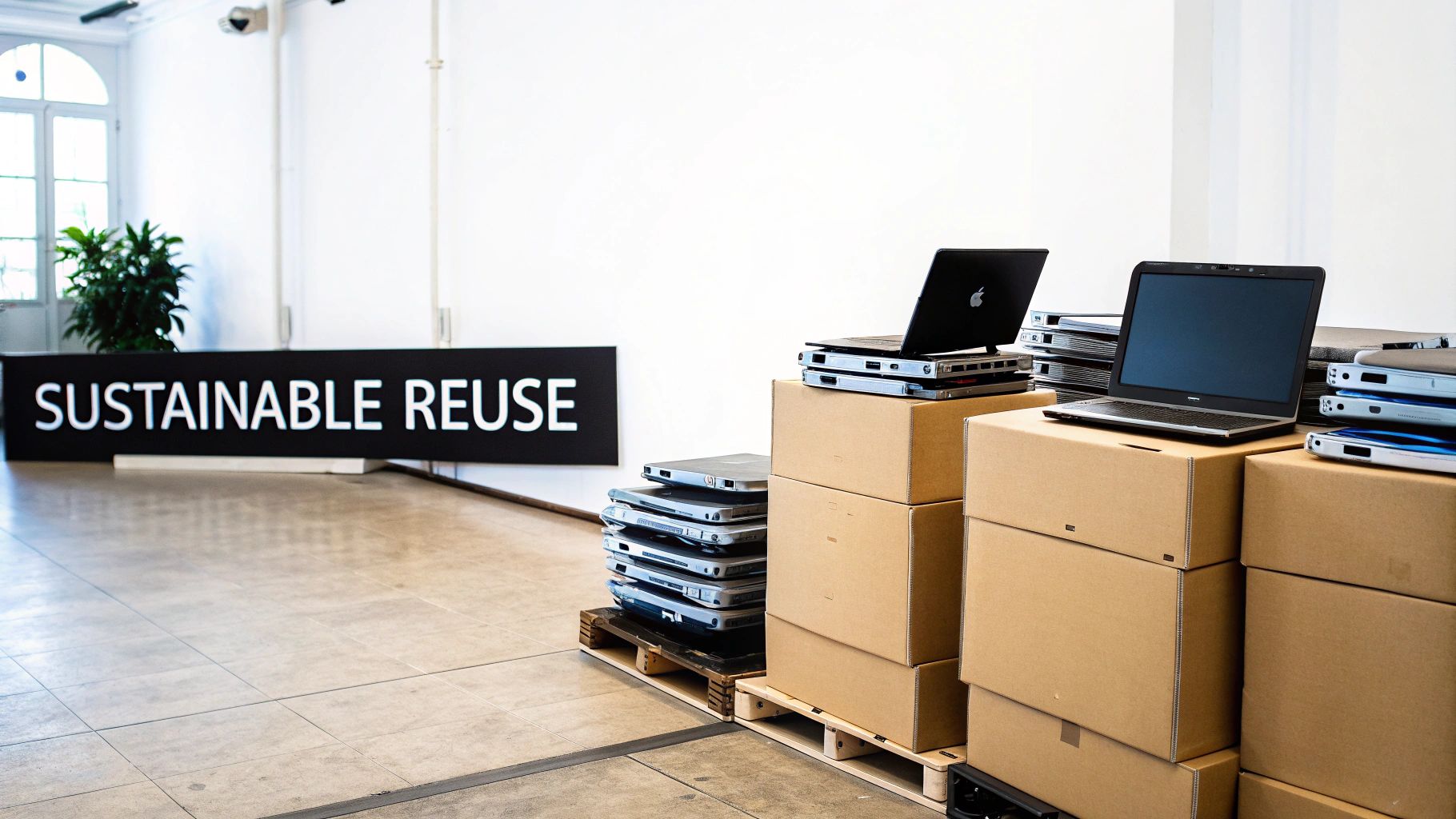
Effective IT asset management extends beyond an asset's useful life to encompass its environmental and social impact at disposition. This practice involves adopting a formal framework for sustainable electronics handling, prioritizing reuse and responsible recycling to minimize landfill waste. It requires partnering with certified vendors who adhere to strict environmental standards and exploring opportunities to donate functional equipment to charitable organizations, fulfilling corporate social responsibility (CSR) goals.
This commitment transforms IT asset disposition (ITAD) from a logistical task into a strategic initiative that supports corporate sustainability objectives. By focusing on the circular economy, organizations not only reduce their environmental footprint but also enhance brand reputation and align with global standards like the UN Sustainable Development Goals. It is a critical component of modern, conscientious IT asset management best practices.
Why This Is a Core Practice
Integrating environmental and social standards into ITAM mitigates significant risks associated with improper e-waste disposal, including legal penalties, data security vulnerabilities, and reputational damage. It ensures compliance with evolving environmental regulations and demonstrates a tangible commitment to sustainability, which is increasingly important to customers, investors, and employees. Socially, donating equipment bridges the digital divide and provides valuable resources to underserved communities.
For instance, Microsoft’s Circular Centers are designed to refurbish and reuse servers and components, extending their lifecycle significantly. Similarly, Dell Technologies champions closed-loop recycling by using plastics from old electronics to manufacture new products, showcasing a scalable and impactful approach.
Actionable Implementation Steps
To successfully implement this IT asset management best practice, follow a structured approach:
- Vet and Mandate Certified Vendors: Exclusively partner with e-waste recyclers holding recognized certifications like R2, e-Stewards, or ISO 14001. These certifications guarantee that vendors follow safe and environmentally sound processes. You can learn more about how a R2 certified electronics recycler operates to better inform your vendor selection.
- Establish a Disposition Hierarchy: Create a formal policy that prioritizes asset reuse through refurbishment or redeployment, followed by component harvesting. If reuse is not possible, the next step is responsible recycling, with landfill disposal as the absolute last resort.
- Set Measurable Sustainability Goals: Define specific targets for your program, such as achieving a 60% asset reuse rate or diverting 99% of all e-waste from landfills. Track these metrics and report them in annual corporate sustainability or ESG reports.
- Develop Donation Partnerships: Build relationships with nonprofit organizations like TechSoup Global or local charities that can benefit from your retired but still functional IT equipment. Formalize a process for identifying, sanitizing, and transferring these assets.
- Incorporate Sustainability into RFPs: When soliciting bids for ITAD services, include specific environmental and social criteria. Require potential vendors to provide detailed reports on recycling rates, downstream material tracking, and their own corporate sustainability initiatives.
7. Establish Clear Chain-of-Custody and Documentation Procedures
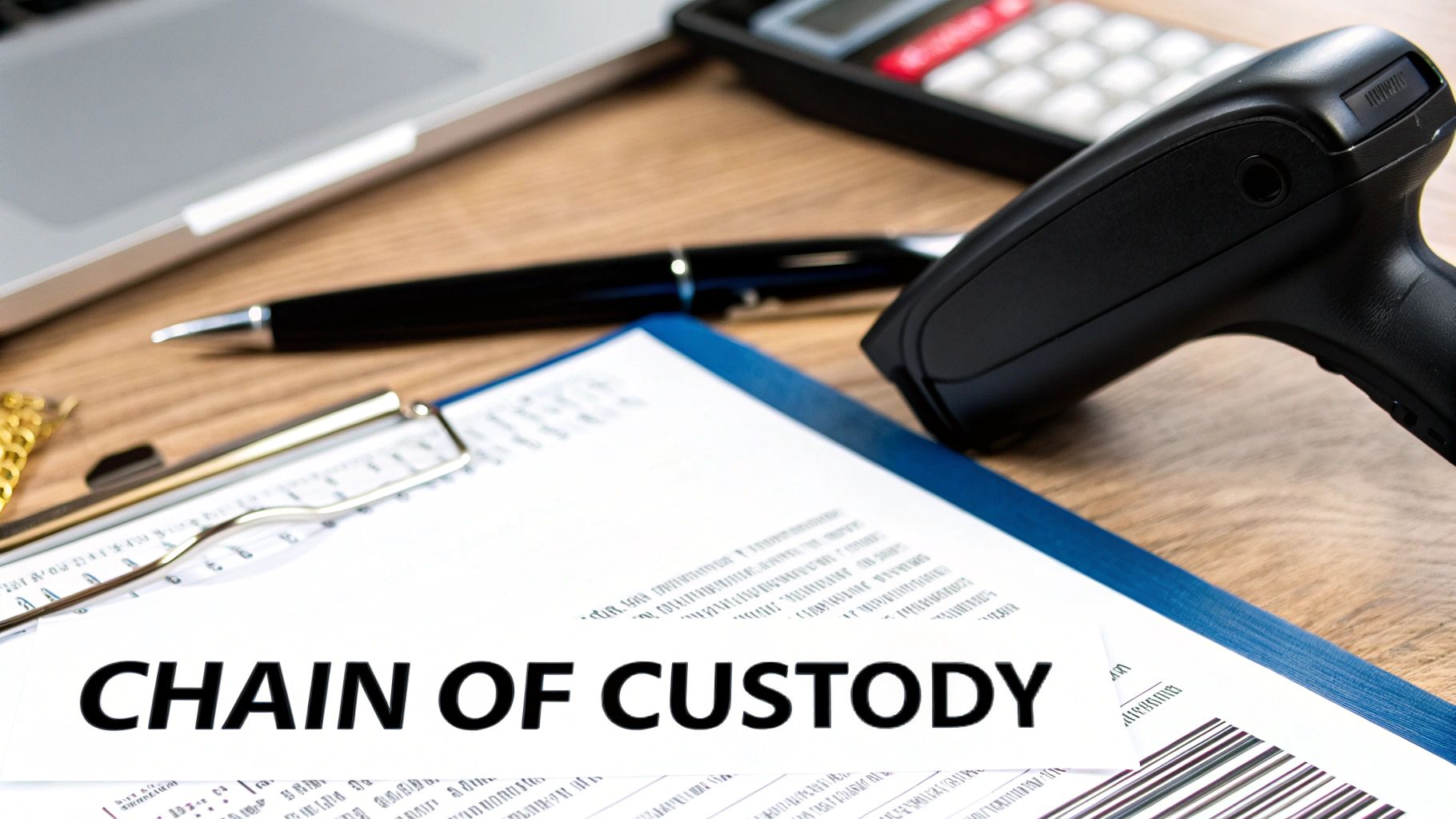
Chain-of-custody is a formalized, chronological paper trail that documents the sequence of custody, control, transfer, analysis, and disposition of IT assets. This practice ensures that from the moment an asset is designated for retirement and leaves organizational control, every handoff is recorded, timestamped, and verified. It creates an unbroken, auditable record that confirms assets were handled securely and disposed of according to policy and regulatory standards.
This rigorous documentation is the bedrock of accountability and liability protection. It provides irrefutable proof that sensitive data was properly managed and that hardware was disposed of responsibly, transforming asset retirement from a point of risk into a defensible, compliant process. Without it, an organization has no way to prove it met its legal and ethical obligations.
Why This Is a Core Practice
For regulated industries, a clear chain-of-custody is non-negotiable. It is essential for demonstrating compliance with standards like HIPAA, which mandates the secure handling of devices containing protected health information (PHI), and SOX, which requires controls over financial data. It also prevents asset loss, theft, and unauthorized access during the vulnerable transition period between decommissioning and final destruction.
For example, a financial institution like JPMorgan Chase must maintain a strict chain-of-custody for retired servers and hard drives to comply with financial regulations and protect client data. Similarly, federal agencies are bound by GSA regulations that demand meticulous documentation for all property transfers and disposals.
Actionable Implementation Steps
To build a robust chain-of-custody process as part of your IT asset management best practices, implement the following steps:
- Standardize Asset Transfer Forms: Create a mandatory, standardized transfer form that includes fields for the asset tag, serial number, date/time of transfer, names and signatures of both parties, and the physical condition of the asset.
- Implement Digital Tracking and Verification: Use barcodes or QR codes scanned at each handoff point to automate and timestamp the process, reducing manual errors. Require photographs of assets at pickup and upon arrival at the disposition facility to visually document their condition.
- Define Documentation Retention Policies: Establish a clear policy for how long chain-of-custody records must be kept, typically ranging from three to seven years, to align with specific regulatory requirements like HIPAA or tax laws.
- Require Vendor Attestation: Ensure your final documentation includes a certificate of data destruction and a certificate of recycling or disposal signed by your chosen ITAD vendor. Before selecting a partner, it is crucial to research and vet qualified computer recycling companies that can provide this level of certified documentation.
- Conduct Periodic Audits: Regularly review a sample of disposition records to ensure forms are complete, signatures are present, and the documented timeline is logical. This verifies that your procedures are being followed correctly.
8. Integrate Asset Management with Financial and Accounting Systems
Integrating your IT asset management (ITAM) system with financial and accounting platforms bridges the gap between physical assets and their financial value. This practice involves linking IT asset data, such as purchase date and cost, with financial systems to automate depreciation tracking, manage capital budgets, and ensure compliance with accounting standards like GAAP and IFRS. This connection provides a real-time, unified view of asset value from procurement to disposition.
By synchronizing these systems, financial decisions are based on accurate, up-to-date asset data. It ensures that the book value of an IT asset is correctly reflected in the general ledger and that asset retirement and disposal activities are properly accounted for. This integration transforms IT asset management from a purely operational function into a strategic financial one.
Why This Is a Core Practice
This integration is fundamental for accurate financial reporting and strategic planning. It eliminates manual data entry and reconciliation errors between IT and finance departments, leading to more precise budgeting and forecasting. For public companies and regulated industries, demonstrating auditable control over asset valuation and depreciation is non-negotiable. Proper financial tracking ensures that the costs associated with IT assets are accurately capitalized and expensed over their useful life.
For example, a multinational corporation using SAP can link its Fixed Assets module directly with its ITSM platform, ensuring every new server or laptop is automatically entered into the depreciation schedule. Similarly, a university system might use Banner to track the financial lifecycle of research equipment, aligning IT inventory with grant funding and departmental budgets.
Actionable Implementation Steps
To effectively integrate your IT asset and financial systems, follow this structured approach:
- Define Clear Asset Classifications: Work with your finance team to establish distinct asset categories (e.g., servers, laptops, network gear) and assign specific depreciation schedules and rates to each class. This ensures consistent accounting treatment.
- Establish Automated GL Account Mapping: Configure your systems to automatically map different asset types to the correct general ledger (GL) accounts. This streamlines procurement and disposal entries and reduces the risk of misclassification.
- Create a Monthly Reconciliation Process: Implement a mandatory monthly reconciliation process where IT asset records are formally compared against the fixed asset sub-ledger. This catches discrepancies early and maintains data integrity between the two systems.
- Document Integration Logic: Thoroughly document all integration points, data mapping rules, and process workflows. This documentation is crucial for training, troubleshooting, and providing a clear audit trail for financial regulators.
- Train Cross-Functional Teams: Ensure both IT and finance staff understand how changes in one system impact the other. Provide joint training on procurement, asset retirement, and disposal processes to maintain alignment and prevent errors.
9. Create a Technology Skills Development and Staff Training Program
Even the most sophisticated IT asset management (ITAM) policies and tools are ineffective without knowledgeable staff to execute them. This best practice involves developing a structured training program for IT teams and end-users to ensure they understand their roles within the asset lifecycle. The program should cover everything from asset handling procedures and data security protocols to the specific workflows for requesting, returning, and disposing of technology.
Well-trained staff are the frontline defense against asset loss, data breaches, and non-compliance. When employees understand the "why" behind ITAM policies, they become active participants in protecting company resources. This transforms asset management from a back-office IT function into a shared organizational responsibility, ensuring smoother coordination and enhanced security.
Why This Is a Core Practice
A dedicated training program directly reduces human error, which is a leading cause of asset mismanagement and security incidents. It ensures that every employee, from an IT administrator to a remote sales associate, handles company technology according to established security and compliance standards. This is particularly critical in regulated sectors where improper handling can lead to severe financial penalties and reputational damage.
For example, government agencies often mandate annual IT security and asset handling training for all personnel to maintain compliance with frameworks like NIST. Similarly, healthcare organizations provide specialized training on HIPAA-compliant procedures for managing devices containing electronic protected health information (ePHI).
Actionable Implementation Steps
To build an effective training program as part of your IT asset management best practices, consider these actions:
- Develop Role-Specific Training Modules: Create tailored training content for different stakeholder groups. IT staff need in-depth technical training, while end-users require clear, simple guidance on their daily responsibilities for assigned assets.
- Integrate ITAM into Onboarding: Include a mandatory asset management policy review and security awareness session in the new employee onboarding process. This establishes clear expectations from day one.
- Conduct Annual Refresher Courses: The technology landscape and compliance requirements change rapidly. Mandate annual refresher training and policy attestations to keep knowledge current and reinforce key security concepts.
- Track Training and Certifications: Use a learning management system (LMS) to track course completion and identify knowledge gaps. Encourage and incentivize staff to pursue professional certifications like the CompTIA IT Asset Manager (ITAM) or ITIL specializations to build expertise.
- Focus on Disposition and Data Security: Ensure all training explicitly covers the procedures for returning assets for disposition, emphasizing the importance of secure data handling and the risks associated with improper disposal.
10. Conduct Regular Risk Assessments and Compliance Reviews
This practice involves systematically evaluating vulnerabilities in your IT asset management lifecycle, from procurement to final disposition. It is a proactive process designed to identify potential security gaps, data privacy risks, and non-compliance with industry regulations and internal policies. Regular assessments help anticipate problems before they become costly incidents, ensuring your organization can adapt to evolving threats and legal requirements.
By formalizing this review process, IT asset management shifts from a purely operational function to a strategic component of enterprise risk management. It provides documented evidence of due diligence, which is critical for satisfying auditors, stakeholders, and regulatory bodies. This structured approach identifies remediation priorities, allocates resources effectively, and helps avoid severe penalties associated with non-compliance.
Why This Is a Core Practice
In today's complex regulatory landscape, ignorance is not a defense. A single retired asset with improperly sanitized data can lead to a multi-million dollar fine, reputational damage, and legal action. Regular risk assessments are essential for maintaining a strong security and compliance posture. They ensure that your documented policies for data destruction and asset handling are actually being followed and are effective.
For example, a healthcare system subject to HIPAA must conduct annual Security Rule risk assessments that include the physical security and data sanitization of medical devices and servers. Similarly, a financial services firm must perform regular Sarbanes-Oxley (SOX) control assessments that verify the integrity of IT assets handling financial data.
Actionable Implementation Steps
To effectively integrate this practice into your IT asset management program, follow these structured steps:
- Schedule Formal Reviews: Establish a regular cadence for compliance reviews, at least annually or whenever significant regulations (like GDPR or CCPA) are updated. This ensures your program remains current.
- Define Assessment Scope: Explicitly include the entire asset lifecycle in your risk assessment scope. This should cover procurement, deployment, maintenance, data sanitization, and final disposition by third-party vendors.
- Use Established Frameworks: Leverage industry-standard frameworks like the NIST Cybersecurity Framework, ISO 27001, or CIS Controls as a baseline for your assessments. These provide a structured methodology and widely accepted criteria.
- Evaluate Third-Party Vendors: Your risk exposure extends to your partners. Scrutinize your IT asset disposition (ITAD) vendors, ensuring they hold relevant certifications (like R2v3 or e-Stewards) and can provide a secure, auditable chain of custody.
- Document and Remediate: Meticulously document all findings, assign ownership for remediation tasks, and set clear timelines for completion. This creates an auditable record of your commitment to continuous improvement and risk mitigation.
IT Asset Management: 10 Best Practices Comparison
| Initiative | Implementation Complexity 🔄 | Resource Requirements ⚡ | Expected Outcomes ⭐📊 | Ideal Use Cases 💡 | Key Advantages ⭐ |
|---|---|---|---|---|---|
| Implement a Comprehensive IT Asset Inventory and Tracking System | High — centralized setup, integrations, data cleanup | Software platform, tagging (RFID/barcode), staff time, integrations | Accurate asset visibility, audit trails, better budgeting | Multi-site enterprises, healthcare, government, large school districts | Precise planning, loss prevention, compliance evidence |
| Establish a Formal IT Asset Lifecycle Management Policy | Medium — cross-functional design and governance | Stakeholder time, legal/finance input, policy maintenance | Consistent procedures, reduced shadow IT, predictable retirements | Regulated organizations, enterprises with procurement controls | Standardization, clearer accountability, audit readiness |
| Prioritize Data Security and Certified Data Destruction | Medium — technical and vendor coordination | Certified vendors/equipment, verification processes, cost for destruction | Eliminated data recovery risk, compliance documentation (CoD) | Healthcare, finance, regulated industries, any org handling sensitive data | Legal protection, reduced breach liability, stakeholder trust |
| Conduct Regular Asset Audits and Reconciliation | Medium — recurring physical verification effort | Audit teams, discovery tools, QR/barcode scanners, scheduling | Improved inventory accuracy, faster loss detection, timely retirements | Large organizations, campuses, regulated entities with many assets | Detects theft/mismatch, informs disposition planning |
| Develop a Standardized Hardware Refresh and Retirement Schedule | Medium — planning and budget alignment | Capital budgeting, vendor coordination, scheduling tools | Reduced unplanned failures, predictable bulk disposition windows | Data centers, enterprises, universities, healthcare IT | Cost forecasting, smoother logistics, better TCO management |
| Implement Environmental and Social Responsibility Standards | Medium — vendor vetting and program setup | Certified recyclers, refurbishment workflows, reporting resources | Lower e‑waste, ESG reporting, community impact via donations | Organizations with ESG goals, consumer brands, large recyclers | Reputation boost, regulatory compliance, tax/donation benefits |
| Establish Clear Chain-of-Custody and Documentation Procedures | Medium — process formalization and training | Forms, digital tracking, signatures, photo evidence, storage | Auditable transfer records, reduced liability, clear accountability | Healthcare, military, finance, any regulated disposition | Legal protection, traceability, compliance support |
| Integrate Asset Management with Financial and Accounting Systems | High — complex system integrations and governance | ERP/financial integration work, data governance, ongoing reconciliation | Accurate depreciation, audit-ready financials, better capital planning | Public companies, finance-led enterprises, institutions with fixed assets | Prevents misstatements, simplifies closing, CFO-level insights |
| Create a Technology Skills Development and Staff Training Program | Low–Medium — program design and ongoing delivery | Training materials, time for staff, certification costs, LMS | Better policy adherence, fewer handling errors, improved security | Organizations with distributed IT teams, high turnover, regulated sectors | Higher compliance, operational consistency, reduced mistakes |
| Conduct Regular Risk Assessments and Compliance Reviews | Medium — specialist input and remediation tracking | Risk assessors/consultants, audit tools, remediation resources | Identified gaps, prioritized controls, reduced regulatory exposure | Organizations facing HIPAA, SOX, GDPR, or industry audits | Proactive remediation, documented due diligence, vendor risk visibility |
Building Your ITAM Blueprint for a Secure and Sustainable Future
Navigating the complexities of modern IT infrastructure demands more than just occasional inventory checks; it requires a strategic, holistic approach. The IT asset management best practices we've explored throughout this guide are not isolated tasks but interconnected pillars that form a robust framework for operational excellence. Moving beyond reactive problem-solving to proactive governance is the hallmark of a mature ITAM program, transforming your technology portfolio from a source of potential risk into a powerful strategic asset.
The journey begins with visibility. Implementing a comprehensive inventory and tracking system is the foundational step that enables every other best practice, from lifecycle management to financial integration. Without knowing what you have, where it is, and its current state, effective management is impossible. This single source of truth becomes the bedrock upon which you build standardized retirement schedules, conduct meaningful audits, and make informed decisions about technology refresh cycles.
From Policy to Practice: The Human and Security Elements
While technology and tools are crucial, the human element cannot be overstated. Establishing formal policies for asset lifecycle management and creating a robust staff training program ensures that your standards are understood, adopted, and consistently applied across the organization. This disciplined approach is most critical when handling data. Prioritizing certified data destruction and maintaining a meticulous chain of custody aren't just compliance requirements; they are fundamental to protecting your organization's reputation, intellectual property, and customer trust.
A truly effective ITAM strategy integrates seamlessly into the broader business fabric. By connecting asset management with financial systems, you unlock deeper insights into total cost of ownership (TCO), optimize budget forecasting, and demonstrate tangible ROI. Likewise, regular risk assessments and compliance reviews ensure your program remains agile, adapting to evolving regulatory landscapes and emerging cybersecurity threats.
Key Takeaway: Effective IT asset management is not a final destination but a continuous cycle of planning, executing, auditing, and refining. It's an ongoing commitment to maximizing value, minimizing risk, and upholding your corporate responsibility.
Your Actionable Next Steps
To translate these principles into action, start by evaluating your current ITAM maturity. Identify the most significant gaps between your current processes and the best practices outlined here.
- Immediate Action (Next 30 Days): Focus on the fundamentals. If you lack a centralized inventory, initiate a project to implement one. Review your existing data destruction procedures and compare them against NIST 800-88 standards to identify any critical security vulnerabilities.
- Strategic Initiative (Next Quarter): Formalize your policies. Draft or update your official IT Asset Lifecycle Management policy and begin developing a standardized hardware refresh schedule. Schedule an initial, small-scale asset audit to test your reconciliation process.
- Long-Term Vision (Next 6-12 Months): Drive integration and optimization. Plan the integration of your ITAM system with your accounting software. Launch a formal training program for all staff involved in the asset lifecycle and, most importantly, select a certified partner for secure IT asset disposition (ITAD).
Mastering these IT asset management best practices ultimately builds a more resilient, secure, and sustainable organization. It empowers you to extract maximum value from every technology investment while confidently navigating the complexities of data security, regulatory compliance, and environmental stewardship. The result is a streamlined, cost-effective, and future-proof IT ecosystem that supports and accelerates your core business objectives.
A successful ITAM program depends on a secure and compliant disposition strategy at the end of the asset lifecycle. Partner with Dallas Fortworth Computer Recycling to ensure your retired assets are managed with certified data destruction, auditable chain-of-custody, and environmentally responsible recycling. Visit Dallas Fortworth Computer Recycling to transform your ITAM policy into a verifiable reality.