
Electronics disposal san antonio: Your complete guide to safe recycling
For IT leaders, electronics disposal in San Antonio is a lot more than just cleaning out a storage room. It's a high-stakes process tangled up with data security, environmental compliance, and your company's reputation. A casual "get rid of it" approach just doesn't fly anymore—making a compliant IT Asset Disposition (ITAD) plan a strategic necessity.
The Real Risks of E-Waste for San Antonio Businesses
Every outdated server, laptop, and office phone sitting in a closet is a potential liability. Without a formal disposal strategy, your organization is wide open to data breaches, non-compliance penalties, and the kind of bad press no one wants. Assuming a quick internal wipe or dropping old gear at a local collection event is enough is a dangerous misconception for any business.
The challenge is getting bigger as the city’s own recycling landscape evolves. San Antonio is pushing hard to improve its environmental standing, and that means more scrutiny on corporate e-waste. The city's overall recycling rate was projected to hit 40% by 2022—a huge jump from below 10% in 2007—with a goal of reaching 60% by 2025. This isn't just talk; it's backed by major investments like the new $68 million materials recovery facility that opened in 2022, signaling a clear move toward greater producer responsibility.
Data Security and Brand Reputation
The most immediate danger here is a data breach from improperly discarded equipment. A single server rack or a box of old company laptops can hold a treasure trove of sensitive information:
- Customer financial records and PII.
- Employee payroll details and HR files.
- Proprietary IP and trade secrets.
A breach traced back to your old hardware can lead to catastrophic financial losses, steep regulatory fines, and permanent damage to your company's good name. This is exactly why a certified partner is essential—they provide a documented, auditable process that guarantees data is gone for good.
The biggest oversight I see IT teams make is underestimating the residual data on retired assets. A 'deleted' file is rarely ever truly gone without professional sanitization, leaving a digital backdoor open for years after a device leaves your facility.
Navigating Compliance and Environmental Responsibility
Beyond the data, improper electronics disposal creates serious environmental hazards. Old devices contain lead, mercury, and cadmium that can leach into soil and groundwater if they end up in a landfill. Both federal and Texas state regulations hold your business accountable for the entire lifecycle of your electronics. Claiming you didn't know the rules isn't a valid defense. You can learn more about the profound environmental impact of electronic waste in our detailed article.
A certified ITAD partner like Dallas Fortworth Computer Recycling transforms this complex obligation into a secure and streamlined process. We ensure every device is handled in full compliance with all environmental laws and data privacy standards, giving you a clear, documented path to responsible disposal.
How to Build a Compliant Disposal Framework
Building a solid framework for electronics disposal isn't about just checking off boxes. It’s about creating a repeatable, auditable system that shuts down risk from day one. A scattered, "we'll get to it later" approach is a surefire way to expose your company to major data security headaches and compliance fines. The real goal is to shift from reactive clean-outs to a proactive, policy-driven process.
Your first move, always, is a thorough asset inventory. You can't manage what you haven't measured. This means getting eyes on every single piece of equipment slated for retirement—from the servers humming in your data center to the forgotten monitors in a conference room. Document everything: serial numbers, asset tags, and the last known user.
This initial legwork is crucial because it directly informs your next step: data sensitivity classification. Let's be honest, not all electronics carry the same level of risk. A server that once held customer financial records needs a much higher level of scrutiny than an old office printer.
This is a distinction that trips up a lot of businesses. Treating every device the same is not only inefficient, it's how costly oversights happen.
Classifying Your Assets for Disposal
To put this into practice, you need a simple classification system. It doesn’t have to be complicated, but it does need to be clear and applied consistently across the board.
Here’s a practical breakdown:
- Level 1 High-Risk Assets: These are the big ones—devices that stored or processed sensitive data. Think servers, storage area networks (SANs), laptops, and any computer that handled protected health information (PHI) or personally identifiable information (PIII). These assets demand certified, verifiable data destruction, which often means physical shredding. No exceptions.
- Level 2 Medium-Risk Assets: This bucket covers equipment like company smartphones, tablets, and network hardware like routers and switches. They definitely hold sensitive data, but cryptographic erasure or professional degaussing might be sufficient before they head to a recycler.
- Level 3 Low-Risk Assets: Finally, you have items like monitors, keyboards, mice, and other peripherals. These devices typically don't store data, so they can be prioritized for donation, reuse, or standard recycling without the intense data destruction protocols.
Think about a healthcare clinic here in San Antonio retiring a batch of patient data terminals. Those are textbook Level 1 assets. They would require a strict chain of custody and a Certificate of Data Destruction for every single unit to stay compliant with HIPAA. On the other hand, the clinic’s old waiting room TVs would be Level 3, perfect for a nonprofit donation program after a quick factory reset.
This flowchart really drives home the core risks—data security, compliance, and your reputation—that a strong disposal framework is built to protect against.
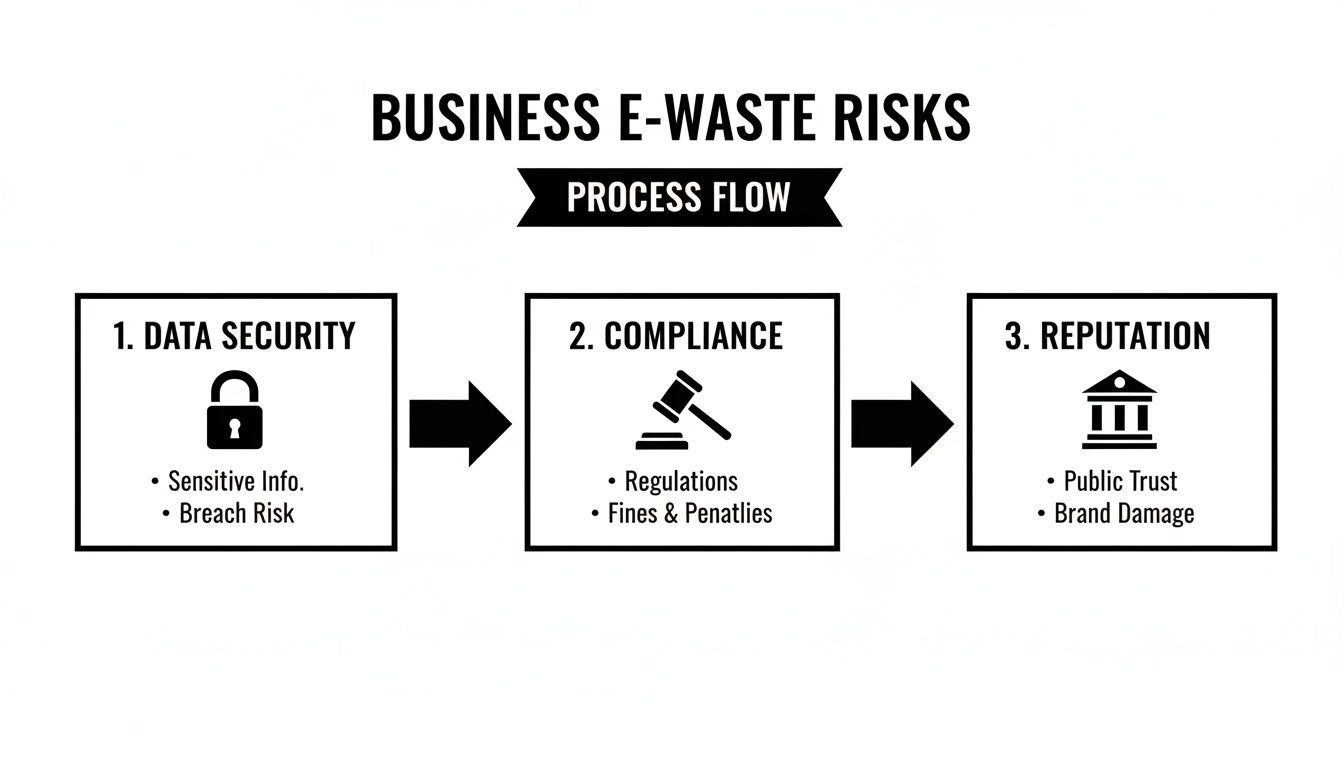
It shows how a failure in one area cascades right into the next, which is why a comprehensive strategy is so important.
Aligning With Texas and Local Regulations
Once you have your assets inventoried and classified, your internal policy has to line up with the external rules. Here in Texas, that means following state-level regulations like the Texas Computer Equipment Recycling Act, which requires manufacturers to offer free recycling for computers and monitors. Your framework must document how you're using these programs.
To keep things clear for IT managers, this checklist breaks down the essential compliance points for both San Antonio and Texas.
San Antonio & Texas Electronics Disposal Compliance Checklist
| Compliance Area | Action Required | Governing Body/Program |
|---|---|---|
| Manufacturer Take-Back | Identify and use free recycling programs for computers and monitors offered by the original manufacturer. | Texas Computer Equipment Recycling Act (TCEQ) |
| Data Security | Sanitize or destroy all data on devices containing PII, PHI, or other sensitive information before disposal. | Federal (HIPAA, GLBA) & State (Texas Identity Theft Enforcement and Protection Act) |
| Hazardous Waste | Ensure components like CRT monitors and batteries are handled by certified recyclers to prevent soil/water contamination. | EPA (RCRA) & TCEQ |
| Documentation | Maintain records of disposal, including inventory lists, chain-of-custody forms, and Certificates of Destruction. | Internal Policy & Audit Preparedness |
| Vendor Certification | Only partner with e-waste vendors holding certifications like R2 or e-Stewards to ensure responsible downstream processing. | Industry Best Practices |
Following this checklist is the most straightforward way to build a process that holds up under scrutiny, whether from an internal auditor or a state regulator.
The issue of responsible electronics disposal in San Antonio is a local snapshot of a massive global problem. The numbers are staggering: just 30% of the 31 pounds of e-waste each person generates annually in the Americas is properly recycled. That’s a lower rate than most other regions. With global e-waste volumes hitting a mind-boggling 136.67 billion tons, this low recovery rate poses a huge environmental threat from the hazardous materials inside our old equipment.
Your framework needs to clearly outline the required documentation for every stage of the process. This includes:
- Initial inventory logs
- Chain-of-custody forms for every asset transfer
- Certificates of Data Destruction
- Final recycling or reuse certificates from your vendor
This paper trail is your proof of due diligence. If an auditor ever comes knocking, you’ll have a complete, defensible record that shows your organization handled its retired assets responsibly and securely. For a closer look at the specifics, you might find our guide on the recycling of various computer components helpful. By building this framework, you turn electronics disposal from a logistical headache into a managed business process that protects your company on all fronts.
Mastering Secure Data Destruction
For any IT leader in San Antonio tasked with electronics disposal, one thing trumps everything else: data security. It’s the absolute, non-negotiable core of the entire process. Just hitting 'delete' or running a factory reset is a dangerous gamble, plain and simple. It leaves a back door wide open for sensitive corporate and customer information to be recovered.
True data security means using certified, verifiable destruction methods. The goal is to make recovery completely impossible.
The right method always comes down to the sensitivity of the data on the asset and what you plan to do with it next—whether that's recycling, resale, or donation. This isn't just a technical decision; it's a critical risk management choice with very real legal and financial stakes.
Comparing Data Destruction Methods
Getting familiar with the main destruction methods helps you match your security needs with the right service. Each one offers a different level of security and is built for specific situations.
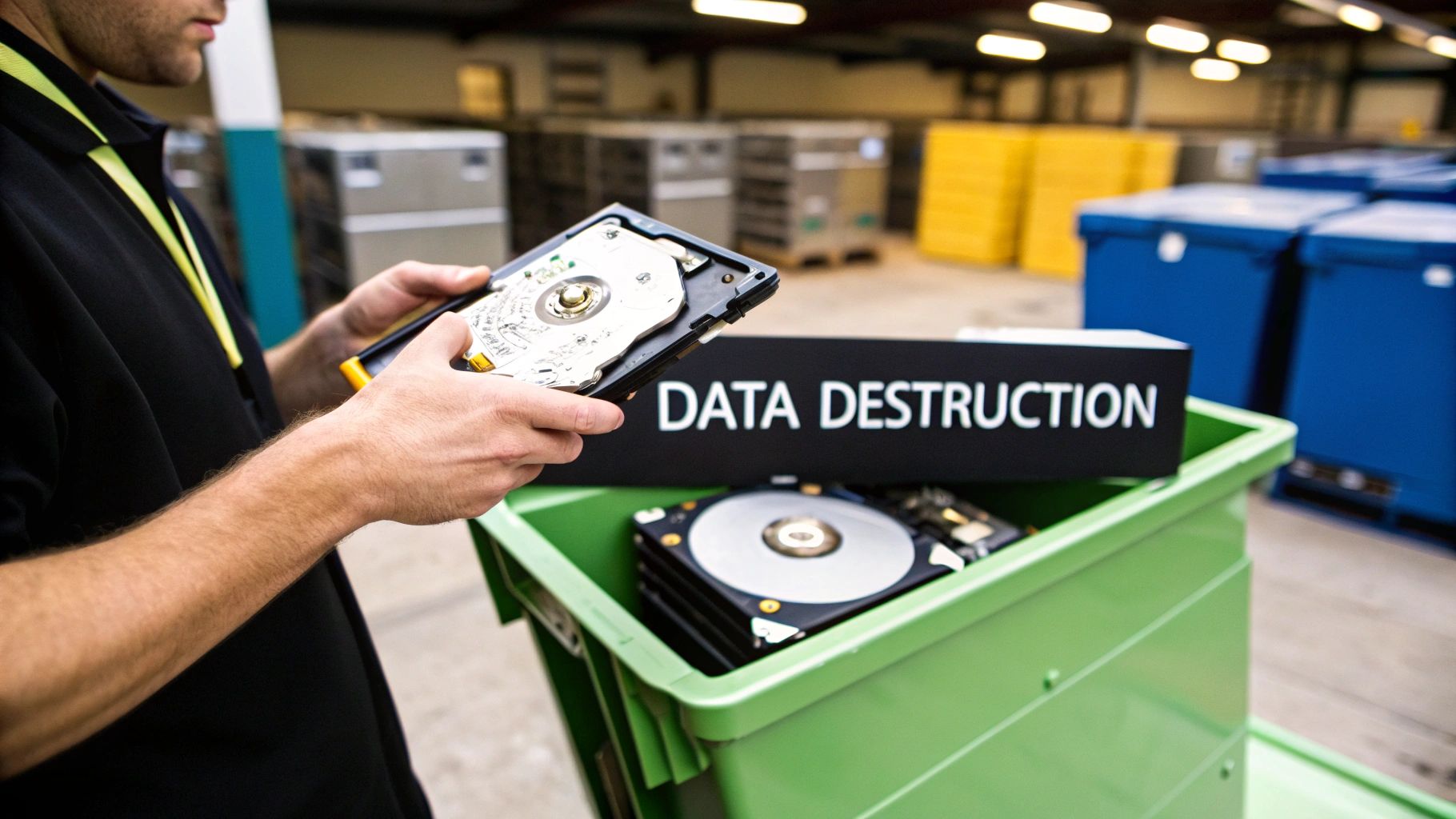
- Physical Shredding: This is the most final solution. The hard drive or storage device is physically pulverized, usually ground into tiny, confetti-like pieces. It’s the perfect choice for devices that held top-tier sensitive data—think servers from a financial firm or medical gear with patient records. There is zero chance of data recovery, making it the gold standard for compliance and avoiding risk.
- Degaussing: This method blasts the drive with a powerful magnetic field, scrambling and erasing the magnetic data on hard drives and other media. While it’s fast and effective, it also renders the drive totally unusable. Degaussing is a solid option for medium-risk assets where you don't need to physically destroy the drive but still need absolute certainty the data is gone for good.
- Cryptographic Erasure: If you're planning to resell or donate assets like laptops or mobile devices, this is your best bet. Special software overwrites the entire drive with random data, making the original information irrecoverable. The big win here is that the hardware stays functional and can be remarketed, letting you recover some value from your retired IT assets.
Imagine a San Antonio tech startup that wants to securely wipe laptops before donating them to a local school—they'd go with cryptographic erasure. On the other hand, a downtown law firm retiring a server full of confidential client files would absolutely insist on physical shredding to meet its legal and ethical duties.
The Importance of Documentation
In data security, proof is everything. Without a clear, unbroken paper trail, you have no way to defend your company’s due diligence if an audit happens or a breach is suspected. This is where chain-of-custody documentation and a Certificate of Data Destruction become completely indispensable.
A Certificate of Data Destruction isn't just a receipt; it's your legal proof that you fulfilled your data security obligations. It should detail every serialized asset, the destruction method used, the date of destruction, and be signed by an authorized representative of your certified ITAD partner.
This paperwork is your shield. It proves that your company took every required step to protect sensitive information during the electronics disposal process. You need to make sure your vendor’s process includes meticulous asset tagging and tracking from the second the gear leaves your building until its final destruction.
Vetting Your Vendor's Security Protocols
Not all data destruction services are created equal. When picking a partner for electronics disposal in San Antonio, you have to dig into their security protocols. Don't be shy about asking the tough questions. For a deeper look at what makes a service genuinely secure, check out our guide on what to look for in secure data destruction services.
Here are a few key areas to investigate:
- Facility Security: Is their building secure? Ask about access controls, 24/7 surveillance, and employee background checks.
- Chain of Custody: How do they maintain the chain of custody? You're looking for detailed processes that involve locked containers, sealed transport, and serialized asset tracking from start to finish.
- Certifications: Do they hold industry-standard certifications like R2 or e-Stewards? These aren't just fancy logos; they require strict adherence to data security and environmental standards.
Choosing a partner with robust, transparent security protocols is the final, crucial step in mastering data destruction. It ensures your company’s most valuable asset—its data—is protected from the moment your old electronics are retired until they are verifiably destroyed or sanitized.
Choosing the Right ITAD Partner in San Antonio
Picking an IT Asset Disposition (ITAD) partner for your electronics disposal in San Antonio is a lot more than just finding someone to haul away old gear. This decision directly impacts your company’s data security, legal compliance, and even your bottom line. You're essentially handing over the keys to your most sensitive data and trusting them to uphold your environmental responsibilities.
Simply seeing an R2 or e-Stewards certification on a website is just the starting point—it's table stakes. A truly valuable partner needs to demonstrate expertise that fits your specific needs, from having the right logistical muscle in the San Antonio area to providing a completely transparent and auditable recycling process.

Beyond the Basics Vendor Vetting Questions
When you're sitting across the table from a potential ITAD vendor, you need to ask pointed, practical questions that get to the heart of their capabilities. Vague promises won’t cut it; you need to know how they actually operate.
Here are the questions I always recommend asking:
- Downstream Transparency: Can you provide a complete map of your downstream recycling chain? I want to know who your partners are for smelting and final material processing and see their certifications. A top-tier partner will have this ready to go.
- Logistical Capabilities in San Antonio: How do you handle pickups in the metro area? Are you using your own fleet of GPS-tracked vehicles, or are you subcontracting? This tells you everything about their control over the chain of custody.
- Liability and Insurance: What, specifically, does your service agreement cover if something goes wrong? Don't be shy—ask to see their certificates of insurance for data breach, pollution, and general liability. Make sure the numbers are high enough to cover the risk your assets represent.
The answers you get will quickly separate the serious professionals from the basic recyclers. A partner who can confidently walk you through their entire process, from your loading dock to the final ounce of recycled material, is one you can build a relationship with.
Local Recycler Versus Regional Partner
For companies in San Antonio, it often comes down to a choice between a strictly local recycling outfit and a larger regional provider. While going local has its appeal, a partner with a wider reach, like Dallas Fortworth Computer Recycling, often brings advantages in scale and specialization that are hard to ignore.
When your company has complex or high-volume needs, a regional partner provides a level of operational sophistication that most local recyclers simply cannot match. This means unified reporting, specialized handling for sensitive equipment, and a more robust compliance framework.
A larger partner is just better equipped to manage the unique demands of data centers, healthcare systems, and large enterprises. Their established, repeatable processes for large-scale projects ensure the consistency and auditability you need to stay compliant. For more on this, our guide on selecting the right IT asset disposition companies takes a deeper dive into what sets premier partners apart.
Evaluating Key Vendor Criteria
Making the right choice requires a structured approach. I recommend using a simple framework to compare potential partners on the factors that truly matter for mitigating risk and ensuring a smooth process.
The table below breaks down what I look for when evaluating an ITAD vendor. It’s a practical checklist to help you compare apples to apples.
ITAD Vendor Evaluation Criteria
| Evaluation Criteria | What to Look For | Why It Matters |
|---|---|---|
| Certifications & Compliance | Current R2v3 or e-Stewards certification. Proof of adherence to NIST 800-88 data sanitization standards. | These certifications are your assurance of responsible recycling and secure data handling, validated by third-party auditors. |
| Data Security Protocols | Secure, access-controlled facilities with 24/7 surveillance. Documented chain-of-custody procedures. | Your data is your biggest liability. A vendor’s security infrastructure must be strong enough to protect it from pickup to destruction. |
| Logistics & Operations | GPS-tracked company-owned vehicles. Professional, background-checked employees. Experience with palletizing and manifesting assets. | A controlled logistics process minimizes the risk of asset loss or theft during transit, which is a critical weak point in the disposal chain. |
| Reporting & Documentation | Detailed inventory reports, serialized Certificates of Data Destruction, and final recycling certificates. | Comprehensive documentation is your legal proof of due diligence and is essential for passing internal or external compliance audits. |
| Specialized Capabilities | Experience handling heavy data center equipment, regulated medical devices, or proprietary lab instruments. | If you have specialized assets, you need a partner with proven expertise to ensure they are decommissioned and disposed of correctly and safely. |
Treating your choice of an ITAD partner for electronics disposal in San Antonio as a strategic decision, not just a procurement task, is crucial. By focusing on transparency, verifiable security, and proven operational capability, you can find a partner who does more than just remove old equipment—they protect your organization from risk.
Managing Logistics and Specialized Equipment
Once you've picked your ITAD partner, the rubber really hits the road. Now it's all about the physical, real-world challenge of getting those assets from your building to theirs. This is where a partner's operational chops—or lack thereof—truly show. It’s not just about calling a truck; this part of electronics disposal in San Antonio demands meticulous planning, secure handling, and rock-solid documentation to keep that chain of custody intact.
The whole thing kicks off with a pickup schedule that works for you, not against you. A professional partner will coordinate with your facilities team to make sure disruptions are kept to an absolute minimum, whether you're phasing out equipment over a few weeks or doing a massive, one-and-done cleanout. Clear communication here is everything.
Preparing Assets for Secure Transit
The first line of defense against damage or data loss happens before the truck even arrives. Properly prepping your equipment is a systematic process of inventorying, palletizing, and securing every single device. It's not about just stacking boxes.
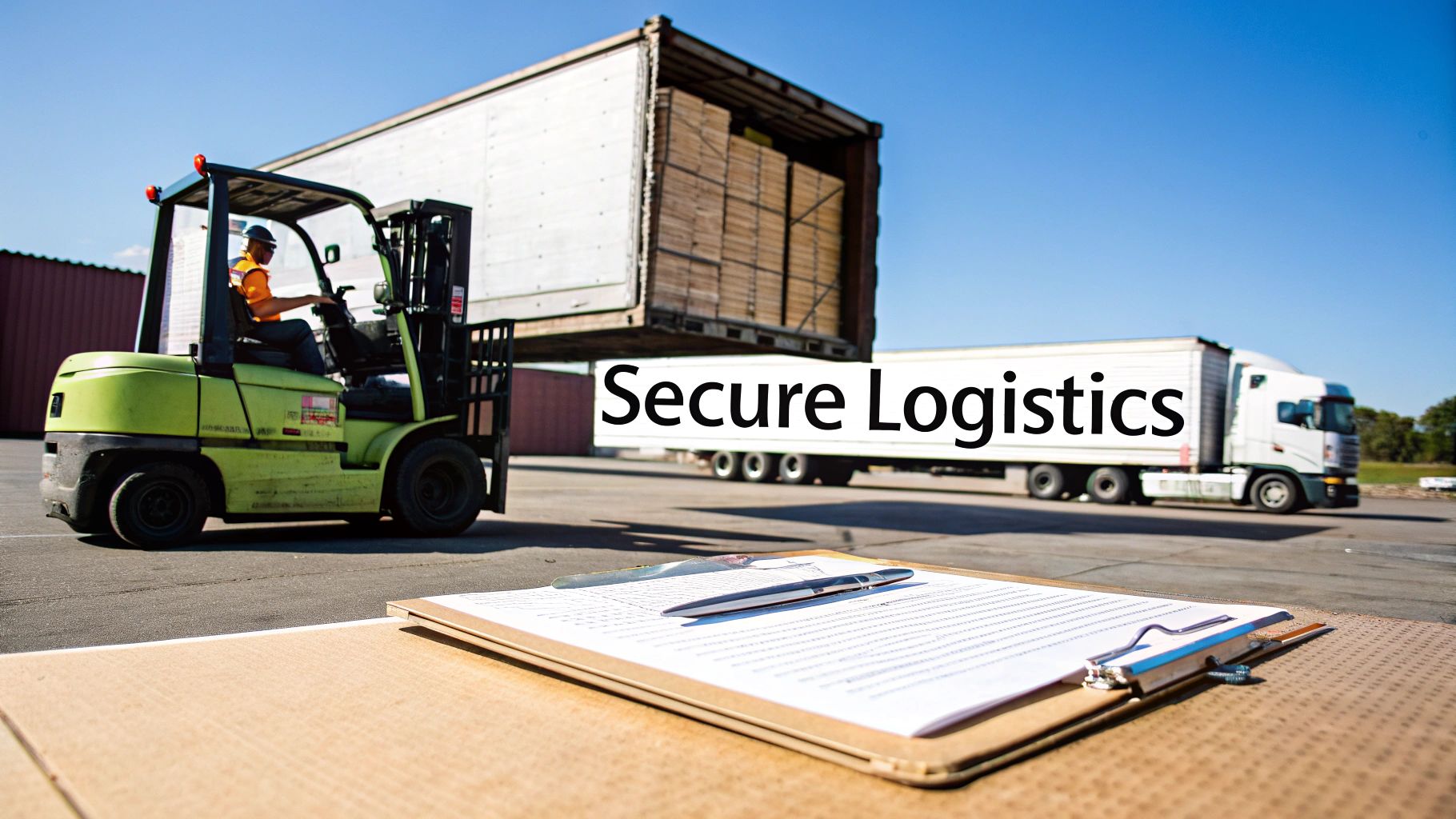
For any significant volume of gear, we see clients stage everything in a secure area. The equipment is then carefully shrink-wrapped onto pallets and tagged with a unique manifest number. This isn't just paperwork—it's your primary tracking document. It should list every serialized asset on that pallet, creating a direct, auditable link between what leaves your loading dock and what arrives at the ITAD facility.
Handling Specialized and Sensitive Equipment
San Antonio’s diverse economy means IT leaders are often dealing with a lot more than just old office PCs. Decommissioning specialized equipment from our city's key industries is a whole different ballgame and requires a partner who has been there and done that.
Think about these real-world scenarios we see all the time:
- Healthcare Systems: A hospital retiring an old MRI machine or a fleet of diagnostic carts is dealing with heavy, awkward equipment that’s almost certainly storing protected health information (ePHI). A specialized ITAD partner knows how to de-install these units safely, manage the logistics of oversized equipment, and ensure every bit of embedded data is sanitized to strict HIPAA standards.
- Data Centers: When a data center operator out in the Westover Hills area refreshes server racks, that project can involve thousands of pounds of valuable hardware. Your partner needs the logistical muscle to handle that scale, provide secure transport, and maintain a perfect chain of custody for hundreds of individual drives. For a deeper dive, check out our guide on the data center decommissioning process.
- Manufacturing and Labs: A local manufacturer retiring proprietary testing equipment needs a partner who can guarantee the destruction of intellectual property baked into the firmware. This often goes way beyond a standard hard drive shred and requires specialized physical destruction methods.
In every one of these cases, the vendor’s experience is non-negotiable. It’s a core risk mitigation tool. An amateur handler could damage your facility, expose sensitive data, or completely miss industry-specific compliance rules.
The biggest logistical failures I've seen happen when a company tries to save a buck by hiring a general freight carrier to move sensitive IT assets. They just don't have the security protocols or asset tracking capabilities. You create a massive gap in your chain of custody the second that truck pulls away from the dock.
Maximizing Value from Retired Assets
Smart logistics also opens the door to recovering value from your retired tech. For non-sensitive devices that still have some life left in them, a good partner can manage refurbishment and donation programs. It's a sustainable move that benefits the community and looks great on your company's corporate social responsibility report.
This is becoming a huge factor in the electronic scrap recycling market. San Antonio's approach is part of a national trend—the industry is projected to jump from $34.94 billion in 2025 to $57.25 billion by 2032. With North America holding a 39.2% market share, driven by commercial e-waste, getting the logistics right is more critical than ever.
When you work with a partner who excels at both secure logistics and value recovery, you ensure your electronics disposal program is not just compliant and safe, but also environmentally and socially responsible.
Common Questions on San Antonio Electronics Disposal
When it comes to electronics disposal in San Antonio, IT managers often run into the same handful of crucial questions. Getting clear, practical answers is the first step toward building a secure and compliant process you can count on.
Let's dig into some of the most common issues we help San Antonio businesses navigate. These aren't just about general best practices; they get to the core of what local companies need to know to stay out of trouble.
What Is the Biggest Mistake Companies Make With Electronics Disposal?
The single biggest—and most expensive—mistake we see is choosing an ITAD partner based only on the lowest price. This approach almost always ignores the things that actually protect your business: certifications, airtight data security, and a transparent downstream process. A cut-rate vendor might be nothing more than a scrap hauler, leaving you completely exposed to data breaches and environmental fines.
That decision can have massive consequences.
The real cost isn't what you pay for the pickup; it's the potential for multi-million dollar data breach fines, brand destruction, and legal headaches that come from an uncertified vendor mishandling your assets. A certified partner gives you an auditable paper trail of secure destruction and responsible recycling. That's your insurance policy against a catastrophe.
Always, always verify a potential partner’s R2 or e-Stewards certifications. Ask to see their downstream vendor map and proof of their liability insurance. The slightly higher cost for a professional, certified service is a tiny price to pay for genuine peace of mind and legal protection.
Can We Donate Old but Working Computers to a Local Nonprofit?
Absolutely, and it's a great way to support the community. But—and this is a big but—it has to be done with extreme care and only after professional, certified data sanitization. Just deleting files or running a factory reset is nowhere near enough to stop someone from recovering your company’s data.
The only safe way to do this is to have your certified ITAD partner manage the whole workflow:
- Secure Collection: Assets are picked up from your facility and securely transported to the partner’s certified location under a strict chain of custody.
- Certified Data Sanitization: Every device is wiped clean using NIST 800-88 standards, which makes the original data permanently irrecoverable.
- Refurbishment and Donation: Once the data is gone for good, the equipment is tested, refurbished, and then given to local nonprofit organizations.
This structured process guarantees your sensitive data is destroyed while still allowing you to give back to the San Antonio community. It’s a true win-win, but only when a professional is overseeing it.
How Should We Handle Proprietary Lab or Medical Equipment?
Specialized gear like lab instruments or medical diagnostic machines demands a partner with specific, proven experience. These devices are tricky; they often have embedded systems, proprietary software, and sensitive data that a standard IT disposal process will completely miss. You’re not just dealing with PII here—you could be handling protected health information (ePHI) or your company's most valuable intellectual property.
Your disposal plan for this kind of equipment has to include:
- Secure Decommissioning: A detailed plan for safely de-installing and removing the equipment, especially from sensitive environments like a hospital or a cleanroom.
- Specialized Transport: Logistics built to handle heavy, fragile, or odd-shaped assets without causing any damage.
- Complete Data and Firmware Destruction: A guaranteed method for destroying all embedded data and proprietary software so it can’t be recovered or reverse-engineered.
Always demand a detailed, written Statement of Work (SOW) from your vendor that spells out the exact procedures they will use for your specific equipment. That document is your proof that every bit of proprietary information is protected and your company stays compliant with industry rules like HIPAA.
At Dallas Fortworth Computer Recycling, we provide nationwide, certified ITAD services tailored to the complex needs of businesses, data centers, and healthcare providers. We turn your electronics disposal challenges into a secure, compliant, and auditable process. Learn more about how we can protect your organization at dallasfortworthcomputerrecycling.com.