
The Environmental Impact Of Electronic Waste Explained
The environmental impact of electronic waste isn't some far-off, abstract problem. It’s a massive global issue driven by two simple facts: our devices are filled with toxic materials, and we’re throwing away incredibly valuable, finite resources every single day. This goes far beyond just overflowing landfills—it’s about actively poisoning our soil and water while losing billions in recoverable gold, copper, and other precious metals.
Every single discarded device, from a server to a smartphone, adds to this growing environmental debt.
Understanding The E-Waste Crisis
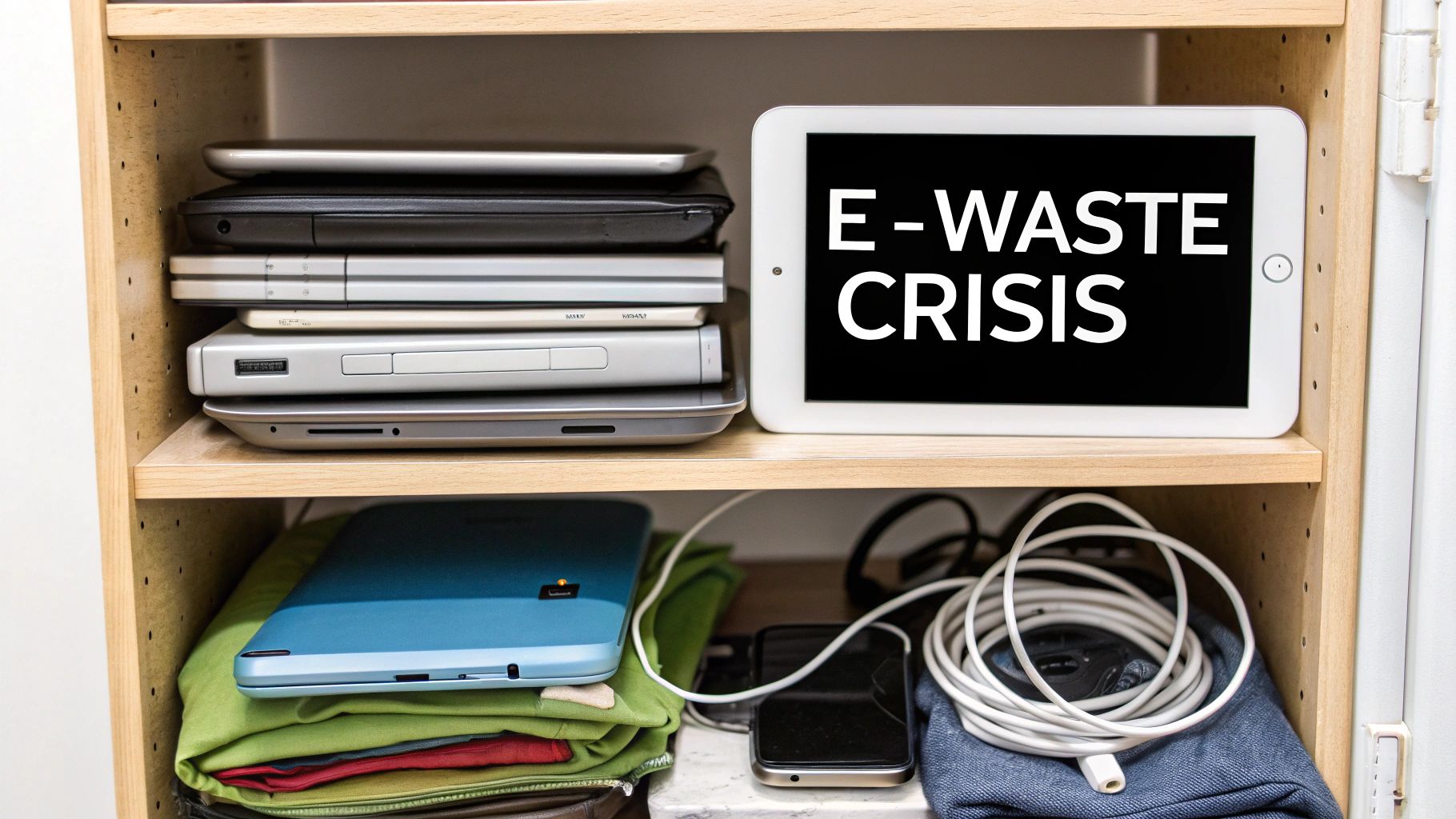
That closet full of old company laptops or the storage room packed with retired servers is more than just a logistical headache. It’s a small piece of a colossal, worldwide challenge. E-waste, or electronic waste, is the term for all discarded electrical and electronic equipment. But unlike your typical office trash, these devices are a complex, hazardous mix of valuable materials and dangerous components.
Think of each retired device as a critical decision point. When it's handled improperly, it becomes a serious liability—a tiny chemical time bomb just waiting to go off in a landfill. The core problem is really twofold: we are simultaneously discarding poison and treasure.
The Scale Of The Problem
The sheer volume of e-waste being generated is almost hard to comprehend. In 2022 alone, the world produced a staggering 62 million metric tons of e-waste. That's an 82% jump from 2010, and projections show this number soaring to 82 million metric tons by 2030.
Here's the most alarming part: e-waste is piling up five times faster than our documented recycling efforts can even begin to address. Globally, a dismal 22.3% of it is properly collected and managed. This uncontrolled growth creates a hidden "environmental debt" that quietly accrues interest in our ecosystems for generations to come.
Improperly disposed e-waste doesn't just disappear. It leaches a cocktail of heavy metals and chemicals into the ground, contaminating the soil we use for agriculture and the water we drink. This creates a long-term toxic legacy that is difficult and expensive to reverse.
Core Environmental Impacts
The environmental damage from e-waste isn’t a single issue but a web of interconnected problems. For any IT leader or facilities manager, understanding these impacts is the first step toward building a truly responsible IT Asset Disposition (ITAD) strategy.
To give you a clearer picture, we've broken down the main threats into a simple table.
Key Environmental Impacts Of E-Waste At A Glance
This table summarizes the primary environmental threats posed by improperly managed electronic waste, providing a quick reference for busy IT professionals.
| Impact Category | Description Of Threat | Primary Pollutants Involved |
|---|---|---|
| Toxic Contamination | Heavy metals and hazardous chemicals seep from devices into soil and groundwater, harming ecosystems and entering the human food chain. | Lead, Mercury, Cadmium, BFRs (Brominated Flame Retardants) |
| Resource Depletion | Valuable and non-renewable materials are lost forever when electronics are landfilled, forcing more energy-intensive and damaging mining operations. | Gold, Silver, Copper, Palladium, Platinum |
| GHG Emissions | Manufacturing new devices is energy-intensive. Failing to reuse or recycle increases the carbon footprint of the entire technology lifecycle. | Carbon Dioxide (CO2), Methane (CH4), Nitrous Oxide (N2O) |
As you can see, the consequences are severe and multifaceted. Every server, laptop, and phone has a story that extends far beyond its useful life in your office. The real challenge is ensuring that story doesn't end with it poisoning a landfill.
Making informed decisions about disposal is critical. Working with a certified electronics recycling center provides the necessary framework to manage these assets responsibly and protect both your company and the environment.
The Hidden Toxins In Your Old Electronics
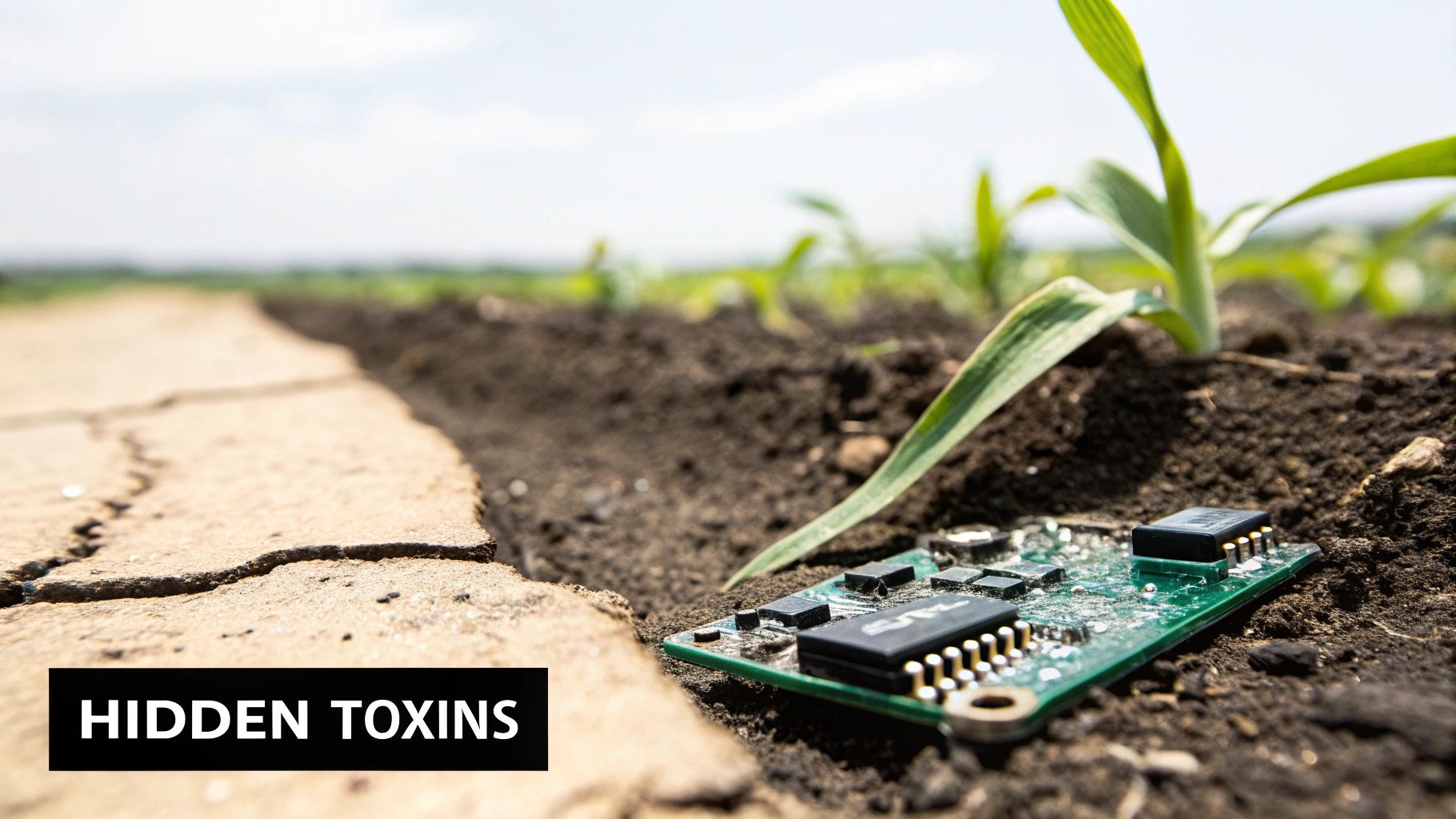
Every old computer, server, or smartphone in your IT closet is a miniature chemical vault. While it's sitting harmlessly in storage, the materials inside are contained. But the moment it hits a landfill, that vault begins to crack open, leaching a cocktail of hazardous substances into the ground.
This isn't just an abstract environmental concern. It's a direct pathway from a forgotten circuit board to our local ecosystem. When electronics are exposed to sun and rain, the toxins don't just disappear—they begin a slow, damaging journey into the earth.
Think of it like a leaky chemical drum buried underground. Over time, rainfall carries these dissolved toxins deeper into the soil, where they eventually find their way into the groundwater that feeds our rivers, lakes, and drinking water. It’s a quiet, cumulative form of contamination that’s incredibly difficult to reverse.
A Cocktail Of Dangerous Chemicals
A single device might seem insignificant, but the collective toxic load from millions of them is massive. The average office computer contains a range of materials that, while perfectly safe during use, become potent pollutants after disposal.
Several key culprits are responsible for the worst of it. Each one poses a unique threat once it escapes its plastic and metal casing.
Here are the primary toxins to be aware of:
- Lead: Found in solder on circuit boards and old CRT monitors, lead is a powerful neurotoxin. It can cause severe damage to the central nervous system, kidneys, and reproductive systems, especially in children.
- Mercury: Used in flat-screen displays and switches, mercury can vaporize and travel long distances in the atmosphere before settling in water. There, it converts to methylmercury—a highly toxic compound that builds up in fish and enters the human food chain.
- Cadmium: A key component in rechargeable computer batteries and semiconductors, cadmium is a known carcinogen. Long-term exposure can cause kidney damage and soften bones.
- Brominated Flame Retardants (BFRs): These chemicals are added to plastic casings and circuit boards to prevent fires. When burned in landfills or during crude recycling, they release highly toxic dioxins linked to hormonal disruption and cancer.
From Landfill To Food Chain
The journey these toxins take is a chilling example of ecological cause and effect. Once they contaminate the soil, they are absorbed by plants. Those plants are then eaten by animals, causing the toxins to build up in their fatty tissues in a process called bioaccumulation.
This chain reaction means that the lead from a discarded server in a local landfill can eventually find its way onto our dinner plates. The concentration of these toxins multiplies at each step up the food chain, reaching its most dangerous levels in predators—including us.
This is why proper e-waste disposal is a public health issue, not just an environmental one. The toxins don't stay where we dump them. They travel, they accumulate, and they return to us in our food and water, creating long-term health risks that are completely preventable.
Ensuring your old hardware never sees a landfill is the only way to break this cycle. If you're managing obsolete devices, learning more about professional computer equipment recycling is the first step toward a secure and environmentally sound solution.
Throwing Away A Literal Gold Mine
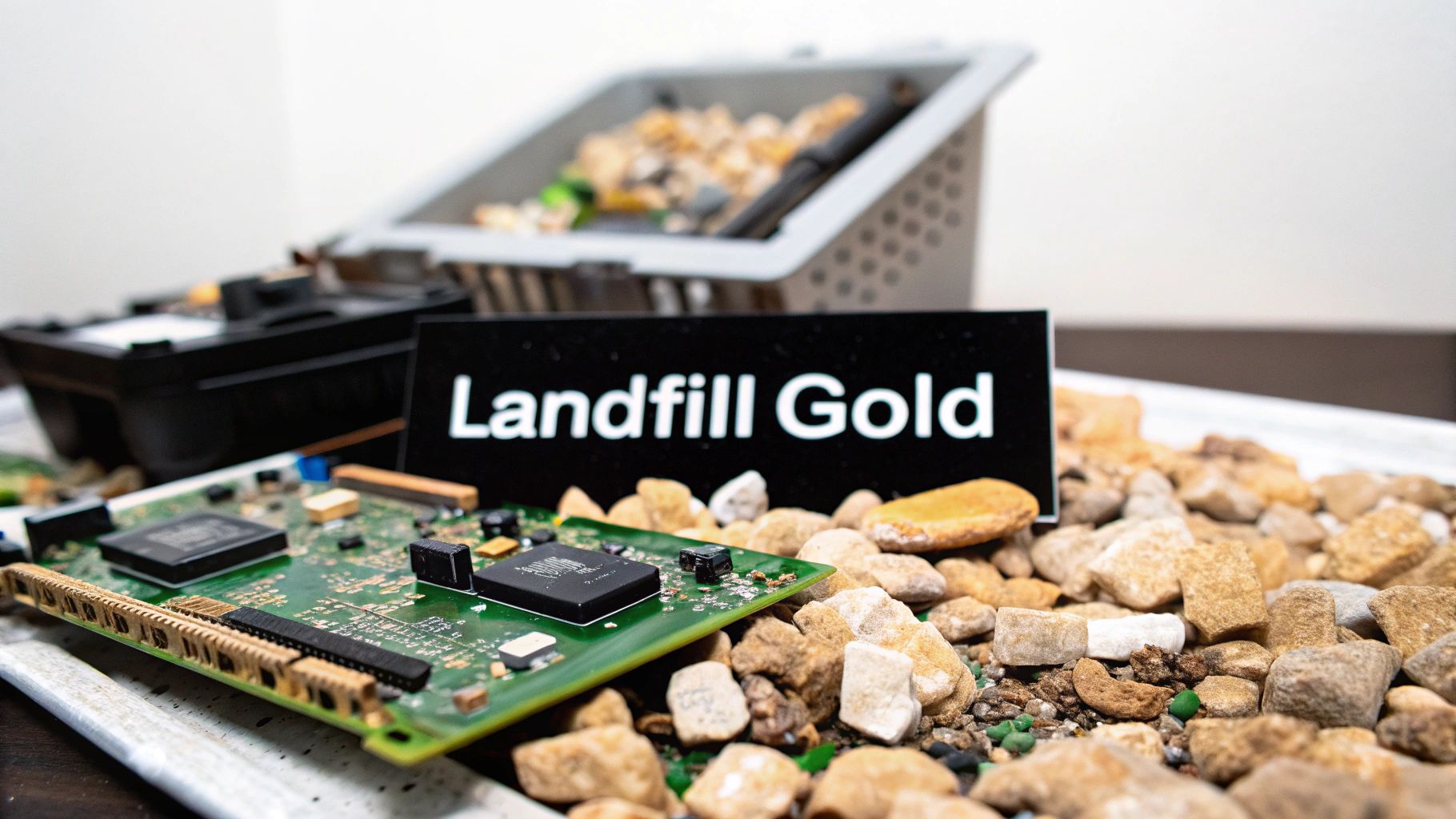
While the toxic legacy of e-waste is a major environmental problem, that's really only half the story. The other half is an incredible economic failure. When a company sends a pallet of old servers, laptops, or networking gear to a landfill, they aren't just creating a pollution headache—they are literally throwing away cash.
Think of it like a gold mine where, instead of digging deep into the earth, you just sift through old electronics. This isn't some far-fetched analogy; it's the reality of "urban mining." In fact, the concentration of precious metals in e-waste is often much higher than in raw ore. A single metric ton of circuit boards can contain 40 to 800 times more gold than a metric ton of ore.
This completely flips the traditional view of waste on its head. That outdated server isn't just a hunk of metal and plastic; it's a dense repository of valuable, finite resources. Tossing it is like shredding winning lottery tickets.
Quantifying The Landfill Treasure
The sheer value locked away in our global mountain of e-waste is staggering. Beyond the direct environmental impact of electronic waste, the financial loss is immense. In 2022 alone, the estimated value of recoverable metals in discarded electronics hit an astonishing $91 billion, with gold, copper, and iron leading the way. You can see the full breakdown of these staggering e-waste metal values on Statista.
And this isn't just about a few flecks of gold. Up to 60 different metals and rare earth elements are woven into our devices. Yet, we're failing spectacularly at getting them back. For instance, less than 1% of the global demand for rare earth elements—which are critical for everything from electric vehicles to wind turbines—is met through recycling.
The United Nations estimates that about $62 billion worth of these resources go completely unaccounted for each year. They end up lost in landfills or processed through crude methods that fail to capture their true value, representing a massive missed economic opportunity.
This colossal loss points to a deep inefficiency in how we use things. We invest huge amounts of energy and capital to mine, refine, and manufacture these materials, only to throw them away after a few years. Responsible recycling breaks this linear "take-make-waste" model, creating a circular flow that recovers value and reduces the need for destructive new mining.
Unlocking Value From Your Retired Assets
For any organization, this creates a clear financial reason to rethink its disposal strategy. Every piece of IT equipment holds real, recoverable value. A single desktop computer might not seem like a treasure chest, but the cumulative value across an entire enterprise fleet is substantial.
Here’s a look at the key valuable materials found inside typical corporate IT assets:
- Gold and Silver: Used in connectors and circuit boards for their excellent conductivity and resistance to corrosion.
- Copper: Found everywhere in wiring, heat sinks, and connectors, making it one of the most abundant and valuable metals in e-waste.
- Palladium and Platinum: Used in trace amounts in components like hard drives, these platinum-group metals are extremely valuable.
- Aluminum: Commonly used for device casings and internal frames due to its lightweight and durable properties.
By partnering with a certified ITAD provider, you can transform these liabilities into assets. The process goes beyond simple scrapping; it involves careful disassembly, sorting, and refining to extract these materials with maximum efficiency. The revenue from these recovered commodities can offset recycling costs and, in many cases, provide a direct financial return to your organization.
This strategic approach reframes IT asset disposition from a cost center to a value recovery channel. It proves that sound environmental policy and smart financial management aren't mutually exclusive—they are two sides of the same coin. Exploring professional computer recycling services is the first step toward unlocking this hidden value.
Navigating The Complex World Of E-Waste Compliance
Dealing with the environmental impact of your old electronics isn’t just a nice-to-have sustainability goal; it’s a non-negotiable part of doing business. You’re facing a complex and often fragmented landscape of laws, regulations, and industry standards.
For any organization, failing to get this right is not an option. The consequences can range from severe fines and lasting reputational damage to the kind of data breach that makes headlines for all the wrong reasons. Think of compliance as the essential map for your IT asset disposition journey—without it, you're operating in the dark, exposed to major legal and financial risks at every turn.
Understanding Key Regulations And Certifications
While the specific rules can vary by location, the core principle is universal: your organization is responsible for its electronic assets from the moment you buy them until their final disposal. That responsibility doesn't end when a device leaves your facility. It follows that asset all the way to its final state, whether that's reuse, refurbishment, or recycling.
A few key standards form the bedrock of e-waste compliance.
- R2 (Responsible Recycling): This is a leading global standard that gives electronics recyclers a clear framework for ensuring worker safety, data security, and environmentally sound practices.
- e-Stewards: Another major certification, e-Stewards is known for its especially strict rules, including a complete ban on exporting hazardous electronic waste to developing countries.
- Data Destruction Certificates: These documents are your official, non-negotiable proof that all data has been permanently destroyed, helping you demonstrate compliance with privacy laws like HIPAA or GDPR.
Partnering with an ITAD vendor that holds these certifications is your first and best line of defense. It shows you've done your due diligence and transfers the operational burden to a vetted, audited expert. You can learn more about what it means to be an R2 Certified electronics recycler and why it's so important for your business.
The Rise Of Extended Producer Responsibility
A major trend reshaping the compliance world is the growth of Extended Producer Responsibility (EPR). This is a policy approach that makes manufacturers financially or physically responsible for the end-of-life management of their own products. Simply put, it requires the companies that make electronics to also help fund or manage their collection and recycling.
This model is gaining momentum because it incentivizes manufacturers to design products that are easier to repair, upgrade, and ultimately recycle. While this puts the primary burden on producers, it signals a clear regulatory shift toward holding everyone in the product lifecycle accountable for its environmental impact.
However, the global regulatory scene is still a patchwork. As of 2023, only 81 countries had put any form of e-waste legislation in place. The UN's Global E-waste Monitor points out a massive opportunity here: if countries could collectively boost their recycling rates to 60% by 2030, the economic benefits would exceed the costs by more than $38 billion.
Your most important compliance tool is an unbroken, auditable chain of custody. This is a chronological paper trail documenting every single touchpoint for an asset, from the moment it leaves your control to its final disposition. It’s your undeniable proof of responsible management.
Without a detailed chain of custody, you have no way to verify that your old servers weren’t illegally dumped or that the sensitive data on retired laptops wasn't compromised. This documentation is what stands between your organization and a compliance nightmare. A certified partner like Dallas Fortworth Computer Recycling provides this auditable trail as a standard part of our service, giving you the peace of mind that comes with verifiable, documented compliance.
Building Your Responsible IT Asset Disposition Strategy
Knowing the risks is one thing, but building a defense against them is what really matters. It’s time to move from simply understanding the environmental impact of e-waste to creating a practical, effective plan to counter it. A responsible IT Asset Disposition (ITAD) program isn't just an afterthought—it's a core business function that protects your data, ensures compliance, and strengthens your brand.
Thankfully, developing this strategy doesn't have to be complicated. It all boils down to creating a clear, repeatable process for every retired asset, from the moment it’s taken offline to its final, documented disposition. This framework gives you control, auditability, and genuine peace of mind.
The ITAD Disposition Hierarchy
The most effective ITAD programs are built on a simple principle known as the disposition hierarchy. Just think of it as a cascading set of priorities, always starting with the option that delivers the most environmental and financial value. The goal is to keep assets as high up this ladder as possible.
Here’s how it breaks down, from best to worst:
- Reuse: The absolute most sustainable option is to extend an asset's life. This could be as simple as redeploying a laptop to another employee, which completely avoids the carbon footprint of manufacturing a new device.
- Refurbish and Remarket: If an asset is no longer needed internally but still has life left in it, the next best step is professional refurbishment. After a secure data wipe, these devices can be sold on secondary markets, recovering value that would otherwise be lost.
- Recycle: This is the last resort, reserved for assets that are truly at the end of their functional life. Responsible recycling involves carefully de-manufacturing devices to recover commodity materials like copper, aluminum, and precious metals, ensuring they never see a landfill.
When you adopt this mindset, you stop "disposing" of old tech and start strategically managing a portfolio of assets. It’s a direct way to minimize your contribution to the e-waste crisis.
Key Steps To Building Your Program
Putting your strategy into motion involves a few critical, sequential steps. Each one builds on the last to create a workflow that is both secure and auditable.
First, you need a rock-solid inventory management system. You can't manage what you don't track. This means logging every asset by serial number, type, and location, giving you a clear picture of what needs to be retired and when.
Next comes the absolute non-negotiable step: secure data destruction. Before any device leaves your control, every bit of sensitive information must be irretrievably wiped or physically destroyed. This is the cornerstone of risk management, protecting you from breaches and keeping you compliant with privacy laws.
Once the data is handled, you need a plan for logistics and transportation. This includes secure chain-of-custody protocols for packing and moving assets from your facility to your ITAD partner. The final piece is choosing that partner—a certified recycler who provides the documentation and transparency you need. For a deeper dive, check out our guide on what is IT asset disposition.
The flow chart below shows the critical compliance checkpoints a certified partner manages for you.
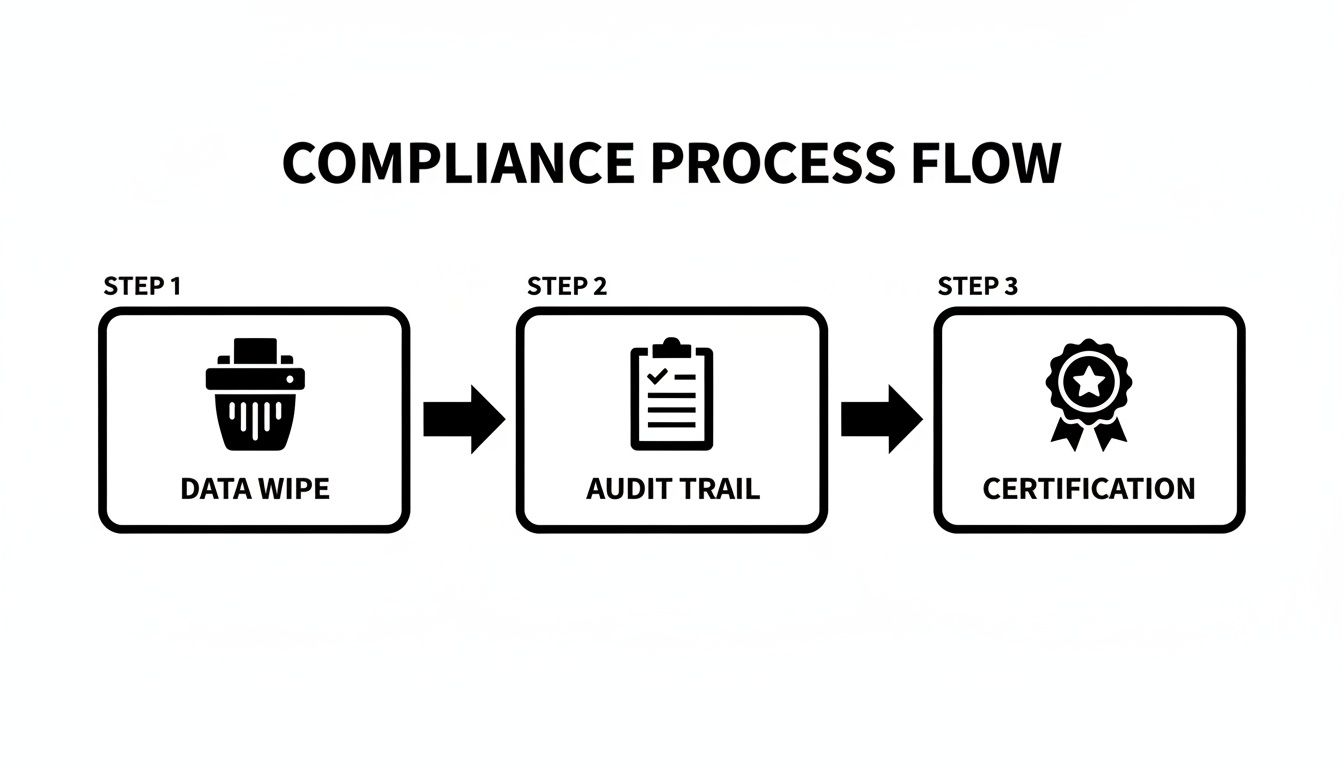
This simple three-stage process—a secure data wipe, a documented audit trail, and an official certification—is the backbone of any trustworthy ITAD program.
Case Study in Action
A mid-sized healthcare provider with 500+ employees had a huge problem. They needed to retire over 1,000 devices—laptops, servers, and patient tablets—all loaded with protected health information (PHI). Their "solution" was to stuff old equipment in a locked room, which was a massive compliance risk and a waste of space.By implementing a formal ITAD strategy with Dallas Fortworth Computer Recycling, they set up a quarterly pickup schedule. We provided on-site hard drive shredding, ensuring PHI never left their premises intact. All functional laptops and tablets were wiped, tested, and remarketed, generating a 15% return on their initial value. The broken equipment was responsibly recycled, and they received a full certificate of destruction and recycling for their audit records. We turned a logistical and compliance nightmare into a secure, value-generating process.
Common Questions About E-Waste And Its Impact
As IT professionals across the Dallas Fort Worth area manage the lifecycle of their technology, a few questions about e-waste come up again and again. Getting straight answers is key to navigating the complexities of compliance, security, and sustainability. This section tackles the most frequent queries we hear, offering clear insights to help you make the right decisions.
Each question gets to the heart of where technology management and environmental responsibility meet, providing practical guidance you can put to use right away.
What Is The Single Biggest Environmental Risk From Our Old Corporate Computers?
While a data breach is a massive business risk, the single greatest environmental threat from old corporate hardware is the slow, silent leaching of heavy metals into our soil and groundwater. Think of a landfill as a giant, leaky tea bag. When electronics are dumped there, rain and moisture seep through, creating a toxic brew.
Substances like lead from old CRT monitors, mercury from flat screens, and cadmium from batteries wash out and soak into the ground. These toxins don't just disappear; they build up. They can contaminate the water table that local communities rely on for drinking and farming, creating a long-term public health crisis that is incredibly difficult and expensive to fix.
This contamination creeps into the food chain, moving from plants to animals and eventually to us. That’s why proper disposal isn’t just a compliance checkbox—it's a fundamental issue of public health.
How Does Data Destruction Connect To Environmental Responsibility?
At first glance, wiping hard drives seems like a pure data security issue, completely separate from environmentalism. In reality, secure data destruction is the key that unlocks the single most sustainable e-waste solution: reuse.
When an organization knows with 100% certainty that its sensitive data has been permanently destroyed, it opens the door to giving that hardware a second life. A securely wiped laptop or server is no longer a data liability; it’s a valuable asset that can be safely refurbished and remarketed or donated to a good cause. This is the circular economy in action.
Extending a device's life is the most impactful way to reduce its environmental footprint. It avoids the enormous consumption of energy, water, and raw materials required to manufacture a new product from scratch, directly reducing demand for new mining and factory emissions.
Without verified, absolute data destruction, reuse is off the table for any responsible business. This makes professional data wiping and shredding powerful environmental tools, turning potential e-waste back into a productive resource.
Are All E-Waste Recycling Certifications The Same?
Not at all, and the differences matter. The two leading standards you’ll encounter are R2 (Responsible Recycling) and e-Stewards. While both hold recyclers to a very high standard for environmental safety and data security, they have different philosophies.
Think of them as two excellent, but distinct, paths to responsible recycling.
- e-Stewards: This certification is built on a foundation of global environmental justice. It enforces a strict zero-export policy for hazardous electronic waste, preventing it from being shipped to developing nations where it could harm vulnerable communities.
- R2 (Responsible Recycling): This standard offers a comprehensive and flexible framework covering the entire IT asset disposition (ITAD) process. It puts a heavy emphasis on worker health and safety, data security protocols, and maintaining a documented chain of custody from start to finish.
Knowing which certifications your ITAD partner holds helps you verify their processes and ensure their approach aligns with your company's compliance needs and corporate responsibility goals.
Can We Just Donate Old Equipment To Avoid Creating E-Waste?
Donating old equipment is a great way to support a nonprofit and extend an asset's life, but it has to be done right. Simply offloading outdated or broken devices can turn your disposal problem into the charity's financial burden.
A truly responsible donation program is more than just a drop-off. Most nonprofits don’t have the IT staff or budget to handle data wiping, repairs, or proper recycling for equipment that's too old or doesn't work. This can leave them stuck with an asset they can't use and a disposal bill they can't afford.
The best approach is to work with a certified ITAD partner who can manage the entire donation process for you. They handle the critical steps:
- Testing and Triage: Sift through all equipment to identify which devices are functional and have real-world value.
- Secure Data Wiping: Guarantee every donated device is completely sanitized, protecting both your business and the recipient.
- Refurbishment: Perform minor repairs or upgrades to make the equipment more useful and valuable to the nonprofit.
- Responsible Recycling: Ethically dismantle and recycle any hardware that isn’t suitable for donation.
This managed process ensures the charity receives a ready-to-use asset, not a hidden liability. It makes certain your good intentions have a genuinely positive impact while keeping your organization secure and compliant.
Managing the lifecycle of your IT assets responsibly is a critical component of modern business operations. At Dallas Fortworth Computer Recycling, we provide the secure, compliant, and environmentally sound solutions you need to turn your retired technology into a strategic advantage. Let us help you build an ITAD program that protects your data, recovers value, and upholds your commitment to sustainability. Learn more about our services and schedule a consultation today.