
Electronics Recycling Pickup Fort Worth A Guide for Businesses
For any business in Fort Worth, an electronics recycling pickup is more than just a cleanup task—it's a critical service for securely retiring old IT assets like computers, servers, and hard drives. Working with a certified partner is essential. It guarantees you're meeting environmental rules and, more importantly, ensures that your sensitive company data is completely destroyed, protecting you from data breaches and costly regulatory fines.
Why Your Fort Worth Business Needs a Strategic Recycling Partner
That closet full of old company laptops might seem harmless, but it’s a ticking clock of unmanaged risk. This isn't just about clearing out clutter; it's a fundamental part of your company's data security and risk management strategy. Every obsolete server, hard drive, and company phone holds a digital footprint that, if mishandled, could easily become a devastating data breach.
Think about a local healthcare provider that tosses old computers without certified data destruction. If patient records are pulled from those devices, the organization faces massive HIPAA fines and a public relations nightmare. Or imagine a Fort Worth financial services firm that hands off old servers to an uncertified scrapper, only to find its confidential client data for sale on the dark web. These aren't just hypotheticals—they are the real-world consequences of improper IT asset disposition.
Beyond Disposal: A Proactive Security Measure
Treating electronics recycling as a simple disposal task is a huge mistake. It’s better to view it as a proactive security measure. When you schedule a professional electronics recycling pickup in Fort Worth, you’re putting the final, crucial step on your data's lifecycle. The goal is to create a secure, documented trail that proves your organization acted responsibly from start to finish.
A strategic partnership gives you several key advantages:
- Guaranteed Data Security: Certified vendors provide documented proof of data destruction, whether it's through software wiping that meets NIST 800-88 standards or physical shredding.
- Regulatory Compliance: It ensures you’re following all relevant laws, including federal regulations like HIPAA and FACTA, as well as Texas-specific environmental rules.
- Brand Protection: Responsible recycling is a clear sign of corporate social responsibility, which strengthens your company’s reputation with customers, partners, and stakeholders.
The Growing E-Waste Challenge
The need for professional recycling is getting more urgent every day. Globally, e-waste is being generated five times faster than it's being properly recycled. The UN recently reported that the global recycling rate was just 22.3% in 2022 and is on track to drop to 20% by 2030.
Here in Texas, while state programs collected over 17 million pounds of electronics in a single year, that number barely makes a dent. For IT leaders, this trend highlights the very real risk of retired assets ending up in landfills with company data still intact. Choosing a certified partner helps you secure your data and be part of the solution.
Choosing a certified recycler is not an expense; it's an investment in risk mitigation. The cost of a secure pickup is minimal compared to the potential financial and reputational damage from a single data breach.
Ultimately, a structured approach to electronics disposal is non-negotiable. An effective strategy for IT asset disposition in Fort Worth transforms the process from a logistical headache into a documented, secure, and compliant business function. This ensures that when your technology reaches its end-of-life, your data and your reputation don't go with it.
How to Prepare for a Smooth Pickup
Organizing an electronics recycling pickup in Fort Worth that runs like clockwork really comes down to a little groundwork. A bit of prep before our truck arrives ensures the whole process is efficient, secure, and doesn't get in the way of your day-to-day business. This isn't about creating complex spreadsheets; it's just about having a clear, practical plan.
A smooth pickup starts with knowing what you have. The first step is to create a basic inventory list. It doesn't need to be perfectly detailed, but it should capture the general types and quantities of equipment you're retiring.
Create a Simple Asset Inventory
Start by walking through your storage areas, server rooms, and offices. For an initial quote, a simple count is often all we need. Just jot down approximate numbers, like "about 50 laptops," "10 rack servers," or "3 pallets of mixed peripherals." This initial list gives your recycling partner a solid idea of the scope and helps us plan for the right truck size and team.
If your company requires more detailed tracking for compliance or accounting, that's when you'll want to note serial numbers for major assets like servers and laptops. This becomes crucial later for matching specific assets to the Certificate of Data Destruction.
Segregate and Stage Your Equipment
Once you have a handle on your inventory, the next move is to physically group the items. This one step can save a massive amount of time and prevent confusion on pickup day. Think of it like sorting recyclables at home—it makes the entire process more efficient for everyone.
Group your assets into logical categories:
- Data-Bearing Devices: This includes laptops, desktops, servers, and any loose hard drives that require certified data destruction.
- High-Value Assets: Newer or specialized equipment that might be good candidates for remarketing or refurbishment.
- General E-Waste: Keyboards, mice, cables, printers, and other peripherals that will be sent straight to material recovery.
This simple sorting helps our pickup team work quickly and ensures every item is routed correctly the moment it leaves your facility. For more detailed tips on handling these devices, you can also check out our guide on how to dispose of old computers safely.
Pro Tip: Use different colored painter's tape or large, clear signs to label each segregated pile. For example, use red tape for "Data Destruction" and green tape for "General Recycling." This visual cue is incredibly helpful for both your internal team and our pickup crew.
Failing to handle e-waste properly introduces a sequence of risks that can severely impact a business. This flow shows how a single data breach can escalate into major financial and reputational damage.
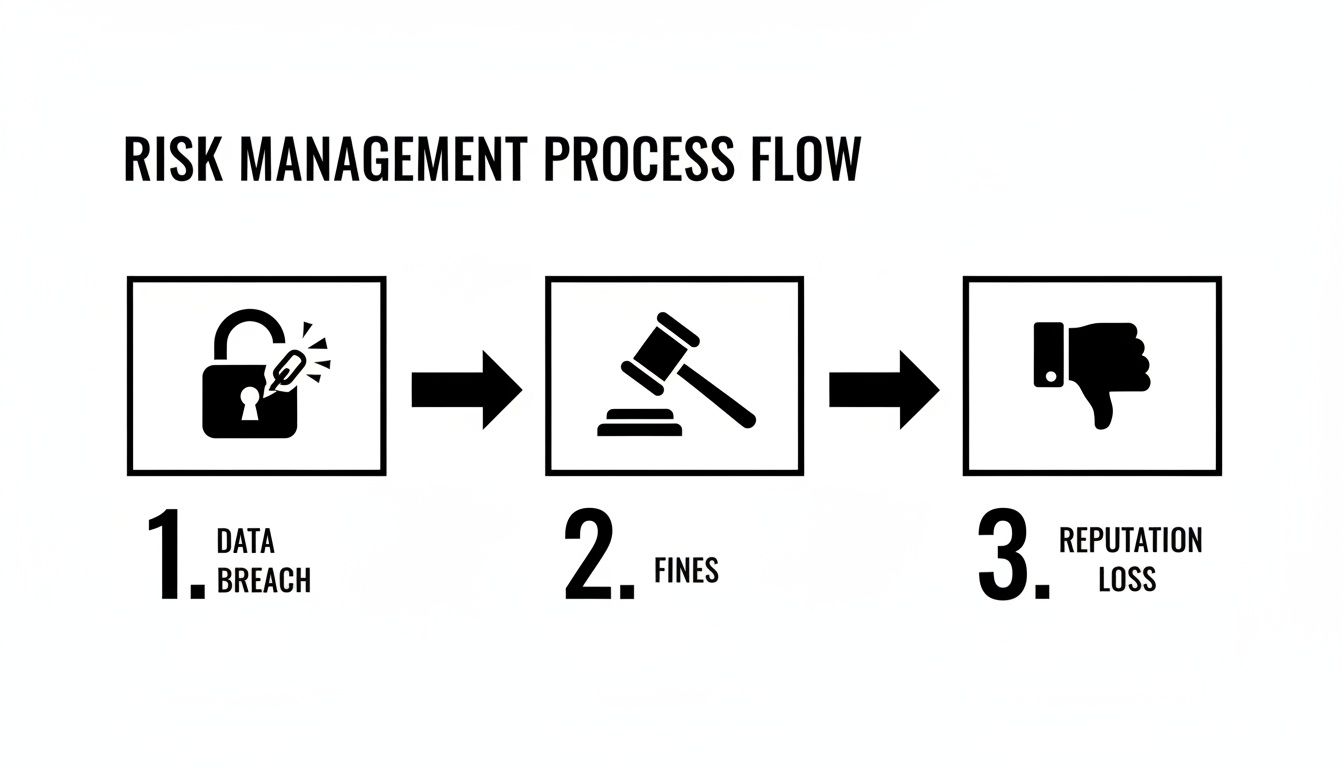
The visualization makes it clear: a single mishandled device can trigger a costly chain reaction, making secure pickup preparation a critical risk management step.
Designate a Secure Pickup Area
Finally, choose a dedicated staging area for all the equipment. This should be a secure, easily accessible spot, like a vacant office, a designated corner of your warehouse, or a conference room near an exit. The ideal location minimizes disruption and provides a clear path for our team to move equipment out of the building.
Consider these logistical points when selecting your staging area:
- Accessibility: Is it close to a loading dock or ground-floor exit? Are there stairs, narrow hallways, or tight corners to navigate?
- Security: Is the area lockable or can it be monitored to prevent unauthorized access to the equipment before pickup?
- Space: Is there enough room to safely palletize the assets without blocking fire exits or high-traffic pathways?
Communicating these details to your recycling partner ahead of time is key. Letting us know we'll need a pallet jack or will be navigating a few flights of stairs allows our team to come fully prepared. By taking these practical steps, you ensure your electronics recycling pickup in Fort Worth is a seamless and secure success from start to finish.
Ensuring Data Destruction and Full Compliance
Handing over old electronics can feel like a moment of truth for any organization. The data on those servers, laptops, and hard drives is your most critical asset, and making sure it's completely destroyed is non-negotiable. This is where a professional electronics recycling pickup Fort Worth service becomes an essential partner in your security and compliance strategy.
When you retire an IT asset, you have two main options for data destruction. Understanding the difference is key to protecting your organization.
Software Wiping vs. Physical Destruction
Software-based wiping is a sophisticated process where data is overwritten multiple times, making it unrecoverable. The industry gold standard for this is the NIST 800-88 guideline, which outlines a detailed framework for media sanitization. This method is ideal for newer, high-value hard drives you might intend to refurbish and resell, since it preserves the hardware.
On the other hand, physical destruction is exactly what it sounds like. We run the hard drive through an industrial shredder, reducing it to small, unsalvageable fragments. This method offers absolute, undeniable proof of destruction and is often the required choice for older drives or for companies in highly regulated fields like healthcare and finance where there can be zero ambiguity.
The Certificate of Data Destruction: Your Proof of Compliance
Imagine a financial firm in Fort Worth undergoing a strict audit. The auditors will demand undeniable proof that every retired device containing client data was handled correctly. This is where the Certificate of Data Destruction (CoDD) becomes your most important document—it’s your legal proof of compliance.
A legitimate CoDD from a professional vendor should always include:
- A Unique Serial Number to tie the certificate to a specific job.
- Your Company's Name and Address.
- The Destruction Method Used, clearly stating whether it was software wiping (and to what standard) or physical shredding.
- A Serialized List of the hard drives or devices destroyed.
- An Authorized Signature and date from the recycling partner.
This document is your shield. It proves you took every necessary step to comply with regulations like HIPAA, FACTA, and other data privacy laws. Without it, you have no verifiable way to demonstrate due diligence if a data breach investigation ever occurs. For a closer look at this process, our overview of hard drive shredding in Fort Worth provides more detail.
A Certificate of Data Destruction isn't just paperwork—it's your legally defensible record that proves you fulfilled your data security obligations. Never work with a vendor that cannot provide a detailed, serialized certificate.
Following the Chain of Custody
How can you be sure your assets are secure from the moment they leave your office? It all comes down to a strict chain-of-custody protocol. This process documents every single touchpoint, from your loading dock to the final disposition at our secure recycling facility.
Think of it like a high-security courier service. Here’s how it works:
- On-Site Asset Logging: Before anything is loaded, our team inventories and serializes all data-bearing devices at your location.
- Secure Transport: Assets are moved in locked, GPS-tracked vehicles directly to our processing facility. No stops, no exceptions.
- Facility Check-In: Upon arrival, the inventory is cross-checked against the initial log to ensure every single item is accounted for.
- Final Reporting: You receive a full report that confirms the chain of custody was maintained and your assets were destroyed or recycled exactly as planned.
This documented trail gives you complete transparency and the auditable proof needed to satisfy any internal or external compliance requirement. It ensures no device goes missing and that every piece of equipment is handled according to the highest security standards.
Alright, you’ve inventoried your old electronics and have them ready to go. The next big questions are always the same: "What's this going to cost?" and "How does the pickup actually work?"
Arranging an electronics recycling pickup in Fort Worth is a pretty smooth process, but the pricing can look different from one recycler to another. Knowing what to expect helps you get a clear, fair price without any last-minute surprises on the invoice.
Most of the time, the cost comes down to the types of electronics you have and how much of it there is. For a standard office cleanout with a mix of PCs, monitors, and networking cables, you’ll typically see a fee based on the total weight or a simple flat rate for the pickup.
But if you’re getting rid of higher-value equipment—think newer enterprise servers or networking gear—you might be looking at a revenue-sharing situation. In that case, the recycler sells the remarketable assets and shares a portion of the proceeds back with you.
Getting a Handle on Pricing Models
The cost for your project really depends on what's on your inventory list. Some recyclers will offer free pickups for larger-volume projects because the value of the recycled materials and reusable assets covers their labor and transport costs. For smaller jobs, a modest pickup fee is more common.
It's also smart to ask about any extra charges that might not be obvious upfront. Be sure to specifically ask if there are fees for things like:
- Difficult Logistics: Navigating multiple flights of stairs, using freight elevators, or long-haul moves from your IT closet to the loading dock can sometimes add to the cost.
- Specialty Equipment: Things like old, bulky CRT monitors or certain types of industrial machinery often have special handling fees due to the hazardous materials inside.
- Data Destruction Services: While we and many other certified recyclers bundle this in, always confirm if hard drive shredding or data wiping is a separate line item.
Here’s a pro tip: When you request a quote, give them your inventory list and ask for a single, all-in price. This ensures the number you get covers everything—labor, transportation, and certified data destruction—so there are no billing surprises later.
To help you budget, here’s a look at a few common scenarios we see in the Fort Worth area.
Comparing E-Recycling Scenarios in Fort Worth
This table breaks down potential costs and logistics for different kinds of electronics recycling jobs. It’s a good starting point for understanding what your project might involve.
| Pickup Scenario | Typical Volume | Primary Service Needed | Estimated Cost Model | Key Logistical Consideration |
|---|---|---|---|---|
| Small Office Refresh | 10-20 Computers, Monitors & Peripherals | Basic Pickup & Recycling | Flat Fee or Per-Item Charge | Easy ground-floor access is ideal. |
| Mid-Sized Business Cleanout | 1-2 Pallets of Mixed IT Assets | Certified Data Destruction & Recycling | Per-Pound Rate or Free with Volume | Loading dock access is necessary for pallet jacks. |
| Data Center Decommissioning | 5-10 Server Racks, Storage Arrays | Asset Tagging, On-Site Data Destruction, Remarketing | Revenue Sharing or Project-Based Fee | Requires secure chain of custody and detailed reporting. |
| Lease Return Processing | 50+ Laptops & Docking Stations | Data Wiping, Cosmetic Grading, Asset Reporting | Per-Unit Processing Fee | Asset-level tracking and reporting are critical. |
As you can see, the scope of your project is the biggest factor. While some providers in Fort Worth might charge around $1 per pound or item fees from $5 to $25 for a single laptop, it's often possible to find more cost-effective solutions, especially for businesses.
Scheduling Your Fort Worth Pickup
Once you’ve found the right partner and agreed on the price, getting the pickup on the calendar is the easy part. To make it go as quickly as possible, just have a few details ready when you call or fill out their scheduling form.
Information to Have on Hand:
- Your Inventory List: A rough count is fine. It just helps the recycler know what size truck and how many technicians to send.
- Pickup Address & On-Site Contact: The full street address and the name and cell number for the person who will meet the crew.
- Building Access Details: Don't forget to mention security check-in rules, loading dock hours, or if your property manager requires a Certificate of Insurance (COI) from all vendors.
- A Few Preferred Dates: Giving a couple of ideal pickup windows helps the logistics team fit you into their schedule.
On pickup day, a professional crew will show up, confirm the scope of work, and securely load everything onto their truck. They do all the heavy lifting, so the process is quick and won't disrupt your day-to-day operations.
And if your company has multiple offices, it's good to know that many providers cover the entire Metroplex. For instance, our guide to computer recycling pickups in Dallas outlines the same seamless process for that side of town. With just a little bit of prep, your electronics pickup will be a simple, secure, and stress-free experience.
What to Look for in a Fort Worth Recycling Partner

Choosing the right partner for your electronics recycling pickup in Fort Worth is one of the most important decisions you'll make in your IT asset disposition plan. Not all recyclers are created equal. The vendor you select is directly tied to your company’s risk, so a thorough vetting process is non-negotiable.
Think of it this way: you wouldn't hand over your company's financial records to just anyone. Your old hardware deserves the same caution. An uncertified or careless recycler can expose your business to data breaches, steep regulatory fines, and lasting damage to your reputation.
The Gold Standard of Certifications
When you start evaluating recyclers, the first thing to look for is their certifications. These aren't just logos for their website; they are hard-earned proof that an independent auditor has verified their processes against strict industry standards.
Two certifications are recognized as the most reputable in our industry:
- R2v3 (Sustainable Electronics Reuse & Recycling): This is the leading global standard. An R2v3 certified recycler has proven they adhere to best practices for data security, environmental protection, and worker safety. It guarantees a documented chain of custody and an absolute prohibition on illegal exporting.
- e-Stewards: Developed by the environmental nonprofit Basel Action Network, the e-Stewards standard puts a heavy focus on preventing the export of hazardous e-waste to developing nations. It’s another top-tier credential that signals a true commitment to responsible recycling.
Partnering with a recycler holding these certifications is your best line of defense. It proves you've done your due diligence and ensures your old equipment won’t become an environmental liability. If you want a deeper look at what goes into this, our guide on R2 certified electronics recyclers breaks down the benefits in more detail.
Critical Questions to Ask Any Potential Vendor
Beyond certifications, you need to ask some direct questions to really understand a vendor's operations. Their answers will tell you everything you need to know about their professionalism, security, and reliability. A legitimate partner will have no trouble giving you clear, detailed responses.
Here are the essential questions every IT manager should be asking before signing a service agreement:
- Do you carry professional liability and data breach insurance? This is non-negotiable. It protects your organization if a data breach or accident happens during pickup, transit, or processing.
- Are all your employees background-checked and trained in data security? The people physically handling your assets must be trustworthy. Insist on a vendor with a rigorous hiring and training program.
- How do you audit your downstream partners? No recycler processes every single commodity in-house. They must have a formal system for vetting the partners who receive materials like plastics and metals, ensuring the entire chain is secure and compliant.
- Can I see a sample Certificate of Data Destruction and serialized asset report? Ask for examples of their documentation. You need to confirm their reports are detailed enough to satisfy your company’s compliance and auditing requirements.
Choosing a partner based on the lowest price is a major gamble. A certified, insured, and transparent recycler provides a level of security and peace of mind that far outweighs any minor cost savings you might find elsewhere.
Fortunately, the local infrastructure here in Fort Worth is built for this level of security. The region is home to one of the largest electronics recycling plants in the entire Southwest, operated by Universal Recycling Technologies (URT). This massive 198,000-square-foot facility processes over 10 million pounds of e-waste annually, using advanced sorting technology to maximize material recovery.
The presence of such a sophisticated, certified plant shows the scale of responsible processing available right here in North Texas. It gives local businesses the ability to manage their IT retirements with complete confidence.
Common E-Recycling Questions Answered
Even with a solid plan in place, it’s normal to have a few questions before scheduling an electronics recycling pickup in Fort Worth. Here, we tackle the most common queries we get from local businesses, giving you the clear answers needed to finalize your IT asset disposition strategy with confidence.
What Specific Types of Electronics Can We Include in a Pickup?
Most certified e-recycling providers accept a broad range of business and IT equipment. This almost always covers the standard office gear and backend infrastructure your organization relies on.
You can typically count on including:
- Computers and Laptops: Desktops, all-in-ones, and notebooks from any manufacturer.
- Servers and Networking Gear: Rack servers, blade servers, switches, routers, and firewalls.
- Peripherals: Monitors, keyboards, mice, printers, scanners, and docking stations.
- Telecommunications Equipment: VoIP phones, office phone systems, and video conferencing units.
If you have specialized equipment from industries like healthcare or manufacturing, it’s always smart to double-check. The best practice is simply to share a preliminary inventory list with your recycling partner to confirm every single item is accepted.
Is There a Minimum Amount of Equipment for a Free Pickup?
This varies from one provider to another, but free pickups are definitely available for the right projects. Generally, the service is offered at no cost for larger-scale dispositions where the value of the recycled commodities or remarketable assets offsets the recycler’s logistical expenses.
Think of a full data center decommissioning or an office-wide tech refresh involving hundreds of devices—those projects often qualify. For smaller jobs, like a handful of desktops and monitors, a pickup fee is common to cover transportation and labor. We always recommend contacting your chosen recycler with an equipment list to get a straight answer for your specific situation.
Key Takeaway: Don't assume you won't qualify for a free pickup. A quick call with an inventory estimate is the best way to get a clear, no-obligation answer based on your specific situation in the Fort Worth area.
How Can We Be Sure Our Sensitive Data Is Truly Destroyed?
This is one of the most critical questions, and any reputable partner will give you a multi-layered answer that guarantees peace of mind. First, they use certified data destruction methods that align with government standards like NIST 800-88, performed either through software wiping or physical shredding.
Second, a strict and documented chain of custody is maintained from the moment the equipment leaves your facility. This ensures every single data-bearing device is tracked and accounted for at all times.
Finally—and most importantly—you should receive a formal Certificate of Data Destruction. This document is your legal proof of compliance. It lists the serial numbers of the destroyed hard drives, protecting your organization from liability in case of a future audit or data breach investigation.
What Happens to Electronics After They Are Picked Up?
Once our team collects your equipment, it’s transported directly to a secure, certified recycling facility. There, the assets are carefully triaged by trained technicians to determine the proper handling path for each item.
The process follows a clear, responsible workflow:
- Sorting: Items are first sorted to identify their potential for reuse versus recycling.
- Testing and Refurbishment: Devices that still have a viable lifecycle are tested, professionally wiped of all data, and refurbished for resale.
- De-manufacturing: Any end-of-life electronics are carefully dismantled into their core components.
- Material Recovery: These components are then separated into raw commodities—like plastic, metal, and glass—which are sent back into the manufacturing supply chain.
Working with a certified partner ensures that no hazardous e-waste is ever illegally exported or dumped in a landfill. This commitment guarantees a fully compliant and environmentally responsible process from start to finish.
Ready to schedule a secure and compliant electronics recycling pickup for your Fort Worth business? The team at Dallas Fortworth Computer Recycling is here to help. We provide certified data destruction, transparent reporting, and responsible recycling for organizations of all sizes. Contact us today to get a quote and simplify your IT asset disposition process. Learn more at https://dallasfortworthcomputerrecycling.com.