
Austin Wood Recycling Cedar Park Texas: 7 Top Options

Finishing a construction project or a large grounds maintenance run in Cedar Park usually ends with the same bottleneck. Trucks are loaded, the crew is burning time, and someone still has to decide where the wood waste goes. Clean brush, stump material, pallet wood, and mixed debris do not move through the same channels. If you send the wrong load to the wrong yard, you lose time at the scale, risk rejection, and turn a simple dump run into a scheduling problem.
That is why austin wood recycling cedar park texas searches usually come from working operators, not casual browsers. Contractors need a disposal plan that fits the material, the route, and the next stop on the day’s schedule. Grounds care professionals need predictable intake rules. Site supervisors need to know whether a facility will move a tandem dump quickly or make a crew wait. Procurement teams and compliance managers also need to separate organics from mixed waste before the truck leaves the site.
The best option depends on four things. Load type, haul distance from Cedar Park, pricing predictability, and whether the yard helps or slows your workflow. Some sites are excellent for clean brush and tree trimmings. Others work better as a fallback when your primary recycler is full, closed, or too restrictive for the day’s material.
Below is the operational playbook. These are the seven options professionals should compare first.
1. Austin Wood Recycling (AWR)

Austin Wood Recycling is the clear first call when the load is vegetation-only and the job is commercial scale. This is not a small neighborhood brush dump. It is a full-service operator built around land clearing, contract grinding, hauling, and mulch and soil production.
For North Austin and Williamson County work, AWR matters because it combines yard intake with field services. If you need one vendor to clear, grind, haul, and then deliver finished products back to another project, that simplicity saves dispatch time.
Where AWR fits best
AWR has been operating since 1987 and processes over 2 million cubic yards of organic material annually, according to the Austin Business Journal coverage of the company’s operations and expansion plans (Austin Business Journal on Austin Wood Recycling). That scale shows up in practice. Large vegetation loads are the sweet spot.
It is also a serious equipment operation. The company uses 25 Diamond Z tub and horizontal grinders, each costing about $2 million, and manages more than 350 pieces of equipment with more than 200 employees, as summarized in the same Austin business reporting and company profile coverage. That matters for contractors because capacity usually means fewer surprises during peak season.
What works and what does not
What works:
- Best for clean vegetative loads: Brush, tree debris, land-clearing material, and pallet-adjacent wood streams that are still clearly organic and uncontaminated.
- Best for operational bundling: One vendor can support clearing, grinding, hauling, and material purchasing.
- Best for higher-volume jobs: AWR’s model is built for commercial throughput, not just homeowner drop-offs.
What does not:
- Not for mixed C&D: If the load includes drywall, plastic, treated lumber, or random jobsite contamination, expect problems.
- Not ideal for buyers who need posted prices: Tipping and haul pricing are not posted in a simple public schedule. You need to call.
If your truck contains even a small amount of mixed debris, separate it before dispatch. A clean organic load gets processed faster than a questionable one.
A practical note for mixed project managers. If your site also generates retired electronics, servers, or network gear, keep those materials on a separate chain of custody and use a dedicated partner for electronic disposal in Austin. A wood recycler and an IT asset disposition vendor solve different compliance problems.
2. Whittlesey Landscape Supplies & Recycling (Brush Dump)

Whittlesey Outdoor Materials Supplies & Recycling is the most practical choice when pricing visibility matters more than maximum industrial capacity. For Cedar Park contractors, that is a real advantage. If you are quoting jobs tightly, posted dump guidance is easier to build into an estimate than “call for current rates.”
Whittlesey is also well suited to grounds care teams who regularly dump brush and then turn around and buy mulch, rock, soil, or other bulk materials. That keeps your material flow tighter than using one site for disposal and another for supply.
Why contractors like it
The Round Rock proximity is the biggest operational win. It is close enough to support quick in-and-out runs for crews working Cedar Park, Leander, and North Austin without sending trucks deep into South Austin traffic.
The acceptance rules are also more usable for everyday field estimating than many public facilities. If you are dispatching multiple smaller trailers instead of one large transfer load, transparency matters.
A few practical trade-offs stand out:
- Strong fit for small and mid-sized grounds maintenance crews: Fast dump turns matter more than ultra-high intake volume.
- Useful for estimating: Published pricing makes it easier to quote cleanup work with fewer surprises.
- Good for circular routing: Dump brush, reload with outdoor supplies, and keep the truck productive.
The operational catch
Whittlesey’s system works best when crews follow site rules. Some brush dump locations require PPE such as hard hats and safety vests. That is not a problem for disciplined commercial crews, but it can slow down owner-operators who treat a brush yard like a casual drop site.
The other issue is load consistency. Clean brush is simple. Oddball material is not. If the truck is carrying mixed jobsite trash with the brush, the driver may spend more time sorting than expected.
For teams that manage multiple waste streams across the same project, this is also where planning matters. Brush and organics can move through a recycler like Whittlesey, while obsolete devices and e-scrap should go through a separate compliance path. Dallas Fortworth Computer Recycling has a useful overview of the environmental impact of electronic waste if you are building a broader diversion plan for mixed commercial jobs.
3. Austin Landscape Supplies – Brush Recycling Center (Georgetown)
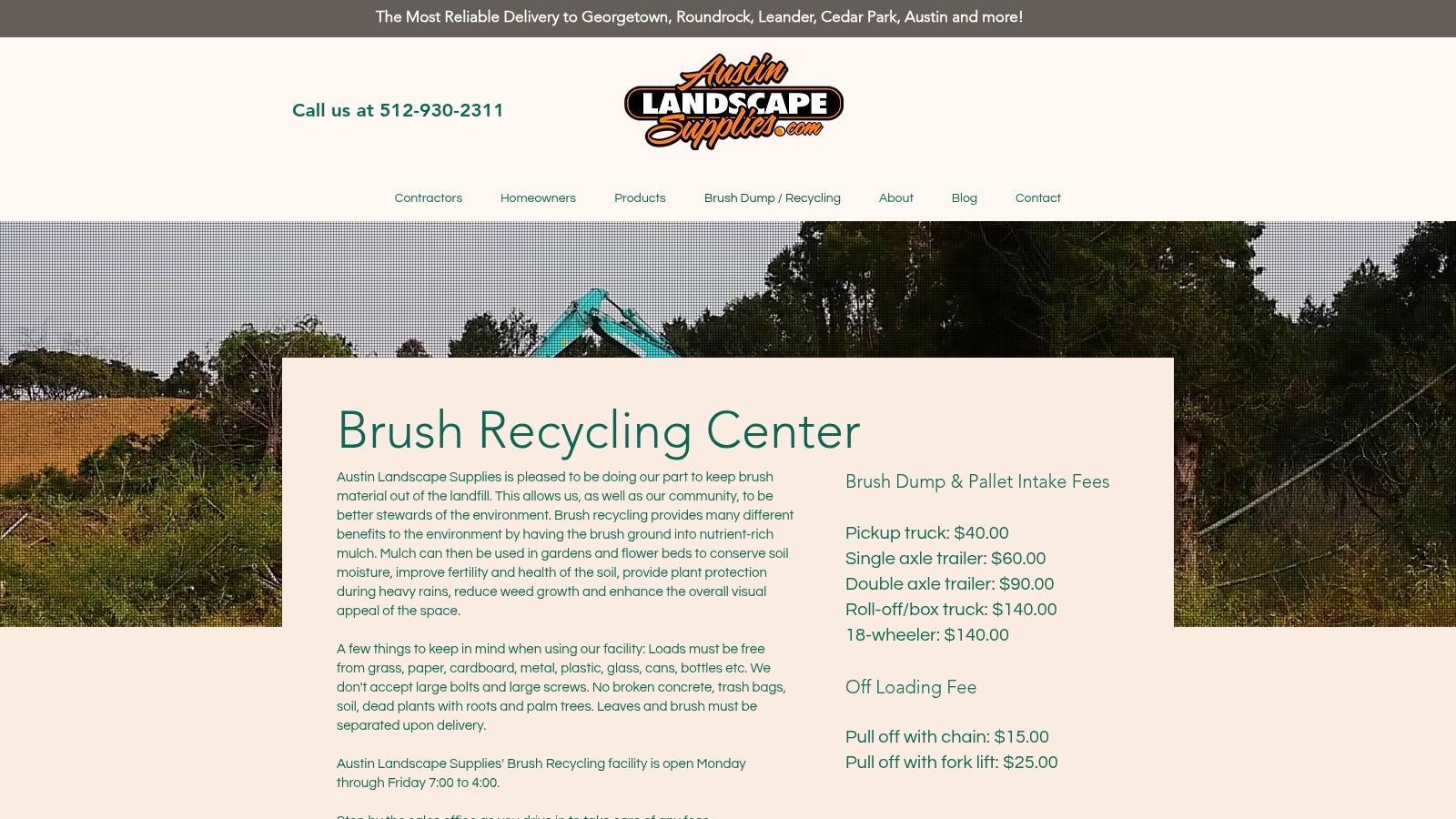
Austin Outdoor Supplies Brush Recycling Center is the disciplined choice for crews that value clarity over flexibility. Georgetown is a workable route from Cedar Park, especially for small contractors covering the north side of the metro.
This site is not trying to be everything. That is the point. It is best when you have clean brush, want staffed unloading support, and need straightforward acceptance rules.
Best use case
For smaller trailers, pickup loads, and routine outdoor area cleanup, this option is easy to build into a weekly pattern. Crews know the weekday drop-off window, know the material has to be clean, and know they can also source mulch or soils if needed.
That predictability makes it easier to train drivers. Fewer gray areas usually means fewer rejected loads.
A few strengths stand out:
- Clear acceptance rules: Crews can prep the load correctly before leaving the site.
- Good for North Corridor work: Georgetown is convenient for jobs running Cedar Park, Leander, Liberty Hill, and Georgetown.
- Staffed operation: Off-loading help reduces confusion for less experienced drivers.
Main limitation
Weekend planning is the pain point. Brush drop-off is centered on weekday operations, so this is not the best answer for Saturday cleanup overflow. If your crews work six-day schedules, you need a backup yard.
It is also a clean-load facility. Mixed debris and contamination will break the workflow quickly. For professionals, that means pre-sorting on the jobsite is not optional. It is part of route planning.
If your project also includes retired office devices, point-of-sale hardware, or server-room electronics from the same property, split those materials before dispatch and use a separate provider for electronic recycling in Austin, TX. Combining organics handling with electronics disposition in one truck usually creates more disposal friction than it solves.
4. Texas Disposal Systems (TDS) – Texas Organic Products/Composting (Creedmoor)
Texas Disposal Systems is the regional heavy-duty option when reliability matters more than proximity. From Cedar Park, the Creedmoor haul is longer. That is the first trade-off and the one that decides most jobs.
Still, there are times when the extra drive is worth it. Large brush loads, peak-season surges, storm cleanup, and jobs where you want to dump organics and reload compost or mulch in one stop all point toward TDS.
When the longer haul makes sense
Crews justify the extra drive in one of two situations. Either the load size is big enough that a high-capacity processor is worth the fuel and labor, or the truck needs to return with material for another site. That second scenario is where TDS can fit very well operationally.
A one-stop dump-and-reload pattern is efficient when the routing supports it. If the truck empties brush, then leaves with compost or mulch for a scheduled install, the added mileage can still pencil out.
Do not compare facilities on tipping fees alone. Compare total crew hours, drive time, fuel, and whether the truck returns empty or loaded with saleable material.
The downside from Cedar Park
Distance is the obvious problem. On paper, a lower disposal rate can still lose against a closer yard once you count travel time. For owner-operators and small grounds care businesses, that ends the discussion.
Pricing also needs a phone call. If your team wants fully transparent posted rates before dispatch, TDS is less convenient than some brush-specific competitors.
For companies managing larger sustainability programs, TDS is relevant because it sits inside a broader recycling and diversion conversation. For electronics, servers, and decommissioned IT infrastructure, that path remains separate. Dallas Fortworth Computer Recycling outlines that broader materials view in its overview of Texas recycling services.
5. Round Rock Brush Recycling Center (municipal)
The Round Rock Brush Recycling Center is not a general commercial solution. It is a targeted municipal option, and that distinction matters. If you qualify, it is one of the most cost-effective choices in the North Austin orbit. If you do not qualify, it is irrelevant.
That makes it useful for homeowners, resident-directed cleanups, and some small crews doing work directly for Round Rock households.
Where it shines
This is the right site when the client is local, the material is straightforward tree trimmings or branches, and residency requirements can be met without hassle. The public-facing structure also makes it easier for residents who want a simple answer without negotiating commercial yard rules.
The free self-serve mulch pickup is another practical advantage for small local projects. If the customer wants mulch and the project stays within municipal rules, that reuse loop is hard to beat.
Where it breaks down
Commercial operators should be realistic. Municipal facilities often come with ID checks, address verification, and material or volume limits. That can be fine for resident-oriented jobs and a poor fit for production crews trying to keep trucks moving.
Storm periods can also change the experience. Public sites get crowded when neighborhoods are cleaning up at the same time. A crew that could turn two private-yard runs in the same period may only complete one municipal run if lines are long.
The operational takeaway is simple. Use this center when eligibility is clear and the load is modest. Do not build your entire weekly disposal plan around a municipal site unless your client mix consistently supports it.
6. Williamson County Landfill – Hutto Recycling Center (WM)
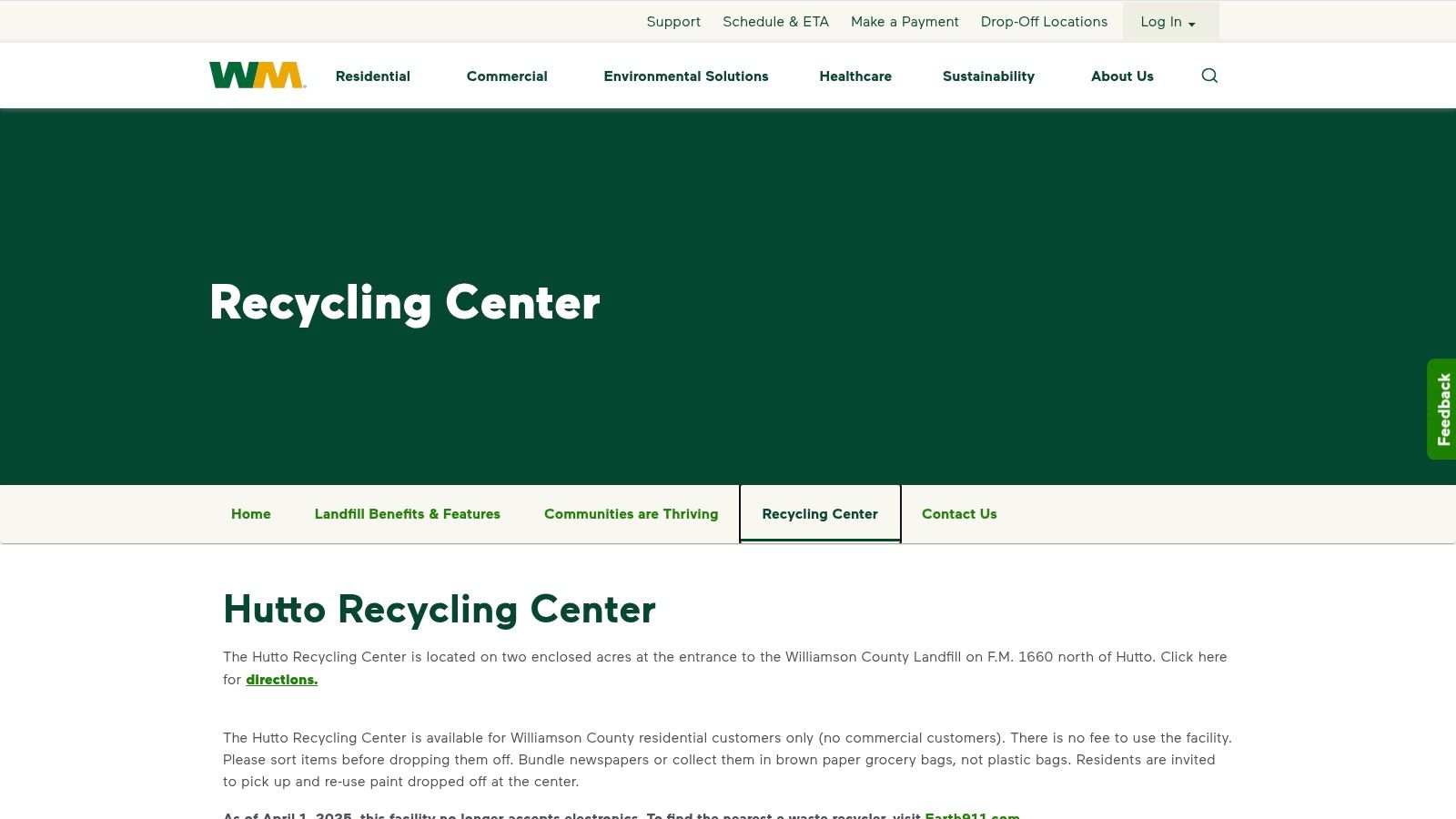
The Williamson County Landfill Recycling Center and Daily Operations works best as a county-level fallback. It is not the first recommendation for clean brush if you already have a specialized recycler closer to the job. It becomes useful when you need a broader disposal destination, a known public facility, or a northeast route that already points toward Hutto.
Why it earns a spot on the list
Specialized wood recyclers are usually faster for pure organics. But field operations do not always get pure organics. Loads change. Schedules slip. Preferred yards hit delays. That is where a county-linked facility can help.
It is especially practical for Williamson County residents and contractors working the northeast side of the service area. If your route already moves through Hutto, the detour can be minor.
The center also periodically handles announced organics programs such as live Christmas tree recycling. That does not make it a dedicated commercial brush processor, but it does show that organics are part of the operating picture.
What to verify before dispatch
Call first. This is one of those facilities where green-waste acceptance and related fees can vary by program, timing, or local operations. Do not send a truck based on assumptions.
Use it when:
- You need a fallback destination
- You are already routing through Hutto
- The job involves county-level public drop-off logic rather than private-yard speed
Avoid relying on it when:
- You need dedicated brush-yard turnaround
- You need guaranteed handling of a very specific wood stream without advance confirmation
Mixed commercial projects can also generate retired workstations, printers, or data center hardware along with pallet wood and packaging. That is where a separate enterprise workflow matters. Dallas Fortworth Computer Recycling supports those programs through enterprise IT equipment recycling in Texas.
7. Austin Water – Hornsby Bend Brush/Yard Trimmings Drop-Off
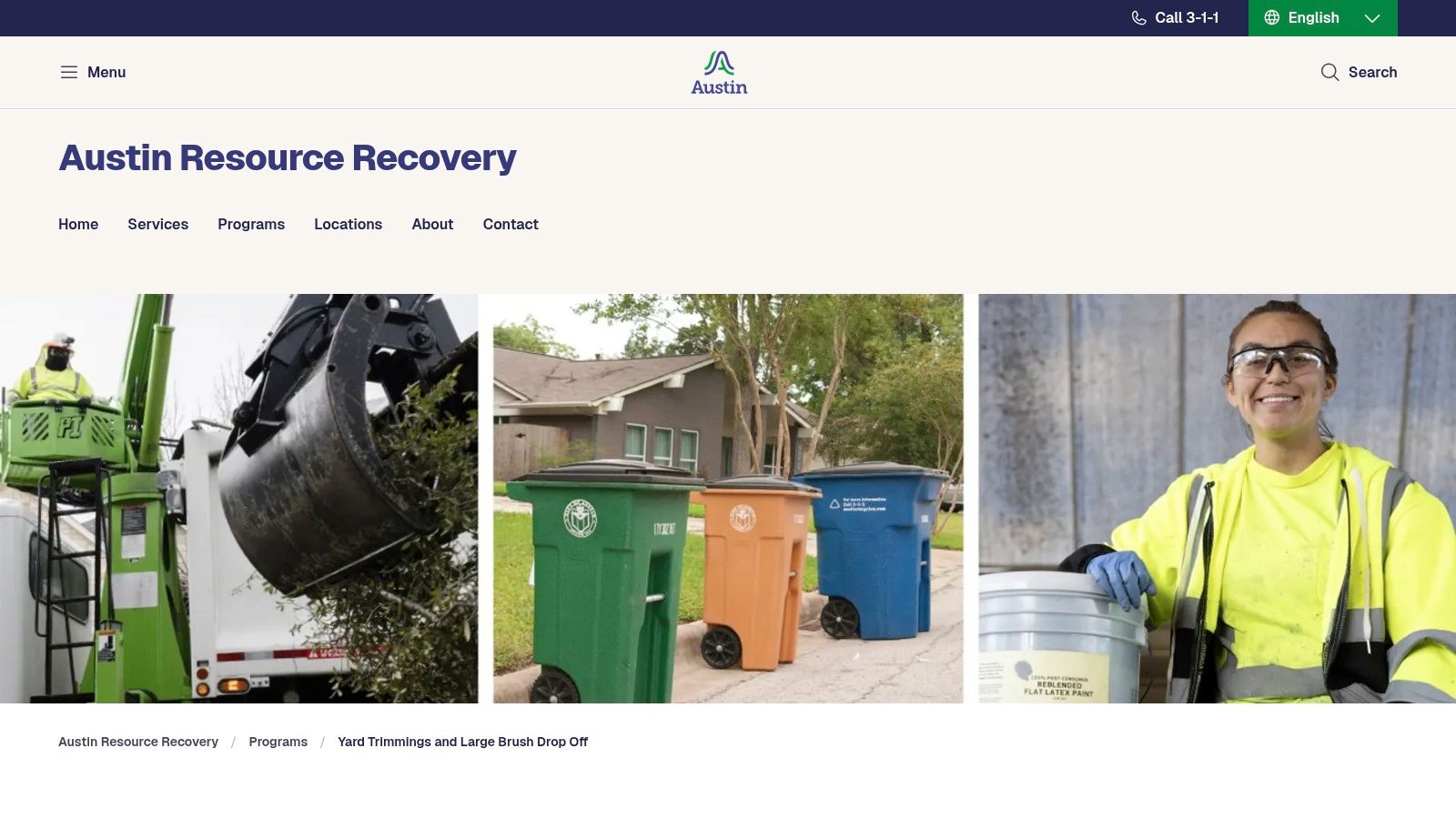
Austin Water’s Hornsby Bend brush drop-off program is a strong public option for qualified Austin and Travis County residents. It processes yard trimmings and brush into city mulch and Dillo Dirt compost, which gives it a clear circular-use purpose.
For a Cedar Park-based contractor, though, this is usually a client-specific option rather than a standard operating base. The southeast location adds significant drive time, and residency restrictions limit who can use it.
Best operational scenario
Hornsby Bend makes sense when the project is tied to an Austin or Travis County household and the crew is already working south or east of central Austin. In those cases, using the public program can align with the client’s municipal access and keep material inside the city’s reuse system.
It is also a good choice for smaller residential brush loads that fit public-facility rules better than commercial-yard protocols.
Why many pros use it selectively
From Cedar Park, the route is the issue. Even if the intake rules are clear, the truck still has to cross the metro. For high-frequency commercial operations, that is usually inefficient.
Commercial loads and larger quantities are also more restricted than what most private industrial yards will tolerate. So while the public guidance is often clearer, the flexibility is lower.
Hornsby Bend is a good resident drop-off option. It is usually not the best production-yard choice for contractors running multiple dump cycles per day.
This option belongs on the list because some jobs are resident-driven, not contractor-driven. When the customer qualifies and the location lines up, it can work well. For routine Cedar Park commercial disposal, most crews will prefer a closer private or local yard.
Austin-Area Wood & Brush Recycling Centers, 7-Point Comparison
| Service | Implementation Complexity 🔄 | Resource Requirements ⚡ | Expected Outcomes ⭐ | Ideal Use Cases 💡 | Key Advantages 📊 |
|---|---|---|---|---|---|
| Austin Wood Recycling (AWR) | High, full-service clearing, mobile grinding, multi-yard logistics | Heavy equipment & large fleet; accepts big trucks/trailers | Reliable high-volume mulch/soil supply; fast commercial cycles ⭐⭐⭐⭐ | Large commercial projects, municipalities, contractors needing one-vendor logistics | Very high capacity; in-house Texas Native products; fast turnaround |
| Whittlesey Outdoor Materials Supplies & Recycling (Brush Dump) | Low–Moderate, dedicated drop sites with simple grind workflow | Small–medium trucks/trailers; PPE sometimes required onsite | Transparent pricing and predictable per-site processing ⭐⭐⭐ | Contractors and residents near Cedar Park wanting posted fees | Published price lists; convenient Round Rock location |
| Austin Outdoor Supplies – Brush Recycling Center (Georgetown) | Low, staffed weekday drop-off with clear acceptance rules | Small trailers feasible; staffed off-loading during weekdays | Predictable costs and local, timely processing ⭐⭐⭐ | Small contractor loads and homeowners in North Austin/Williamson County | Clear line-item pricing; proximity to Cedar Park/Leander |
| Texas Disposal Systems (TDS) – Organic/Composting (Creedmoor) | High, large integrated organics campus, commercial procedures | Commercial hauler access; long-haul possible; large-volume handling | High-capacity, reliable processing during peaks/storms ⭐⭐⭐⭐ | Large contractors/haulers needing bulk compost/mulch and steady throughput | Large-scale operations; on-site buy-back of compost/mulch |
| Round Rock Brush Recycling Center (municipal) | Low, municipal self-serve with posted hours and staff option | Resident ID required for free drop-off; limited volumes; possible lines | Very cost-effective for eligible residents; free mulch reuse ⭐⭐⭐ | Round Rock residents and small crews serving local addresses | Free/low-cost intake and free self-serve mulch for qualifying users |
| Williamson County Landfill – Hutto Recycling Center (WM) | Moderate, county landfill recycling center with seasonal programs | County facility access; variable green-waste acceptance; call ahead | Reliable county-level handling; useful fallback when sites are full ⭐⭐⭐ | Williamson County residents and nearby contractors needing backup options | County-run facility with broad materials handling and clear directions |
| Austin Water – Hornsby Bend Brush/Yard Trimmings Drop-Off | Low–Moderate, city drop-off integrated with compost program | Austin/Travis County resident access; commercial limits apply | Consistent public mulch/compost production (Dillo Dirt); steady operations ⭐⭐⭐ | Austin/Travis County residents or projects able to haul to Travis County | Part of city circular program; consistent public processing and products |
Making the Right Choice for Your Wood Waste Stream
The right disposal site is not the one with the best marketing. It is the one that matches the load, the route, and the pace your crew needs to maintain.
For pure commercial brush and land-clearing material, Austin Wood Recycling remains the strongest operational choice in this market. Its long operating history, broad service model, and industrial-scale processing make it the best fit for contractors who need more than a basic dump site. If the load is clean and organic, AWR is usually where professionals should start.
If you care most about pricing visibility and a smoother estimating process, Whittlesey and Austin Outdoor Supplies are easier to work into job costing. They are especially practical for grounds care professionals, irrigation contractors, and small tree crews that need routine brush disposal without the uncertainty of unposted rates. Those yards reward crews that pre-sort properly and arrive with clean loads.
TDS belongs in the conversation when reliability and integrated organics handling matter more than drive time. It is not the closest option from Cedar Park, but large processors can make sense when the job is big enough or when you are combining disposal with material pickup. The distance hurts. The one-stop logistics can offset it on the right route.
Municipal and county facilities require more discipline in how you use them. Round Rock’s center is excellent for eligible residents and some resident-oriented cleanup work, but it is not a broad commercial answer. Hornsby Bend has the same limitation from a different angle. Good public option, narrower use case. The Hutto Recycling Center is a backup worth knowing, especially if your route already points northeast or your primary yard is unavailable.
The main mistake crews make is treating all wood waste as one category. It is not. Clean brush, untreated lumber, pallet wood, mixed construction debris, and contaminated loads, each belong in different streams. If you sort on-site, confirm acceptance before dispatch, and choose the nearest facility that fits the material, you cut idle time and reduce rejected loads.
That is the practical answer behind most austin wood recycling cedar park texas searches. Choose the yard based on material first, distance second, and posted pricing third. If you reverse that order, you pay for it in crew time.
If your project also includes retired computers, network gear, medical devices, lab equipment, or full data center hardware, Dallas Fortworth Computer Recycling can handle the electronics side with secure, compliant IT asset disposition and nationwide pickup support. That gives contractors, facility managers, and procurement teams a cleaner plan for mixed projects where wood waste and electronic waste need separate, documented disposal channels.