
Texas Roadhouse: A Case Study in Scalable Operations
A restaurant chain rarely belongs in an IT operations discussion. Texas Roadhouse does. It reported US$4.631 billion in 2023 revenue according to its company profile and history summary, and that scale changes the frame. This isn’t just a hospitality brand. It’s a distributed operating system with hundreds of physical endpoints, live inventory risk, customer-facing software, and compliance-sensitive workflows.
For IT and operations leaders, texas roadhouse is useful because its complexity is familiar. Replace steaks with servers, coolers with clean rooms, or dining rooms with clinics, and the management problem looks similar. You still need asset visibility, process standardization, escalation logic, uptime, and local execution that aligns with central policy. The same thinking behind IT asset management best practices applies here: know what’s deployed, monitor it continuously, define thresholds, and build repeatable responses.
The interesting lesson isn’t that texas roadhouse grew large. Many chains do. The lesson is that it appears to have paired physical expansion with systems that support consistency across a wide footprint, especially in supply chain monitoring and digital ordering. That combination matters more than branding. It’s what turns a chain into an enterprise.
An Introduction to Texas Roadhouse as an Enterprise Model
Most coverage of texas roadhouse focuses on the dining experience. The stronger business story sits behind the dining room.
This company operates like a large distributed network. Restaurants are the edge. Corporate standards act as the control layer. Digital ordering, store operations, and supply chain monitoring function as the connective tissue. For an operations leader, that’s an essential subject.
Why IT leaders should pay attention
A business with this footprint has to solve a familiar set of enterprise problems:
- Distributed execution: Every location has to perform consistently without becoming fully autonomous.
- Compliance monitoring: Temperature control and food safety demand auditable, real-time oversight.
- Customer channel integration: Mobile ordering, delivery, and in-store operations have to stay aligned.
- Exception handling: Local managers need alerts and workflows they can act on quickly.
Those aren’t restaurant-specific issues. They’re enterprise management issues.
Practical rule: When a company scales across hundreds of sites, operational discipline becomes a technology problem as much as a staffing problem.
Texas roadhouse is especially relevant because its systems span both the back end and the front end. Some organizations invest heavily in customer apps while neglecting operational instrumentation. Others build strong internal controls but leave customers with fragmented digital experiences. Texas Roadhouse offers a case where both domains appear to matter, which is why it’s worth studying as an enterprise model rather than a consumer brand.
The Foundation of Growth From Startup to Global Chain
Public company filings show a chain that grew far beyond its original concept and into a multi-market operating system. That matters to IT and operations leaders because growth at this scale changes the management problem. A single restaurant can rely on founder oversight. A large chain needs repeatable site deployment, standardized systems, and controls that hold up across hundreds of locations.

Texas Roadhouse traces its founding to 1993 in Clarksville, Indiana, and the company’s investor materials show a business that now operates at national and international scale. In its 2023 annual report, Texas Roadhouse reported revenue of $4.63 billion for fiscal 2023 and described a system that included company restaurants, domestic franchise units, and international locations. For an enterprise audience, the more useful conclusion is structural. The company expanded without abandoning a tightly managed operating model.
That kind of expansion usually depends on disciplined replication. New units require site selection criteria, kitchen equipment standards, network connectivity, POS deployment, staff onboarding, vendor coordination, and audit routines that can be repeated with low variance. If any one of those layers drifts, growth turns into exception management.
What that scale requires
| Enterprise requirement | Why it matters at Texas Roadhouse |
|---|---|
| Standardized rollout | New restaurants need consistent systems, equipment, and process templates so openings do not create avoidable operational variance |
| Controlled localization | International and franchise markets need room for local constraints while preserving the core service model and brand standards |
| Asset lifecycle management | Terminals, kitchen devices, networking gear, and facility systems have to be replaced on a schedule without disrupting store performance |
The lifecycle point is easy to miss, but it matters. Chains that open and refresh locations continuously also build a recurring stream of retired hardware and electronic equipment. The same governance questions faced by restaurant operators appear in other distributed enterprises, especially around disposal policy, compliance, and sustainability. That is why many operations teams study responsible e-waste recycling practices for aging IT and device fleets as part of expansion planning rather than as an afterthought.
Texas Roadhouse is useful here because its growth story is less about brand awareness than execution discipline. Chains do not stay coherent across a large footprint by accident. They do it by turning local restaurant work into a managed system with repeatable infrastructure, clear standards, and operating feedback loops that can scale.
Dissecting the Menu and Supply Chain Infrastructure
A menu is often treated as a branding artifact. In enterprise terms, it’s closer to a standardized product catalog.
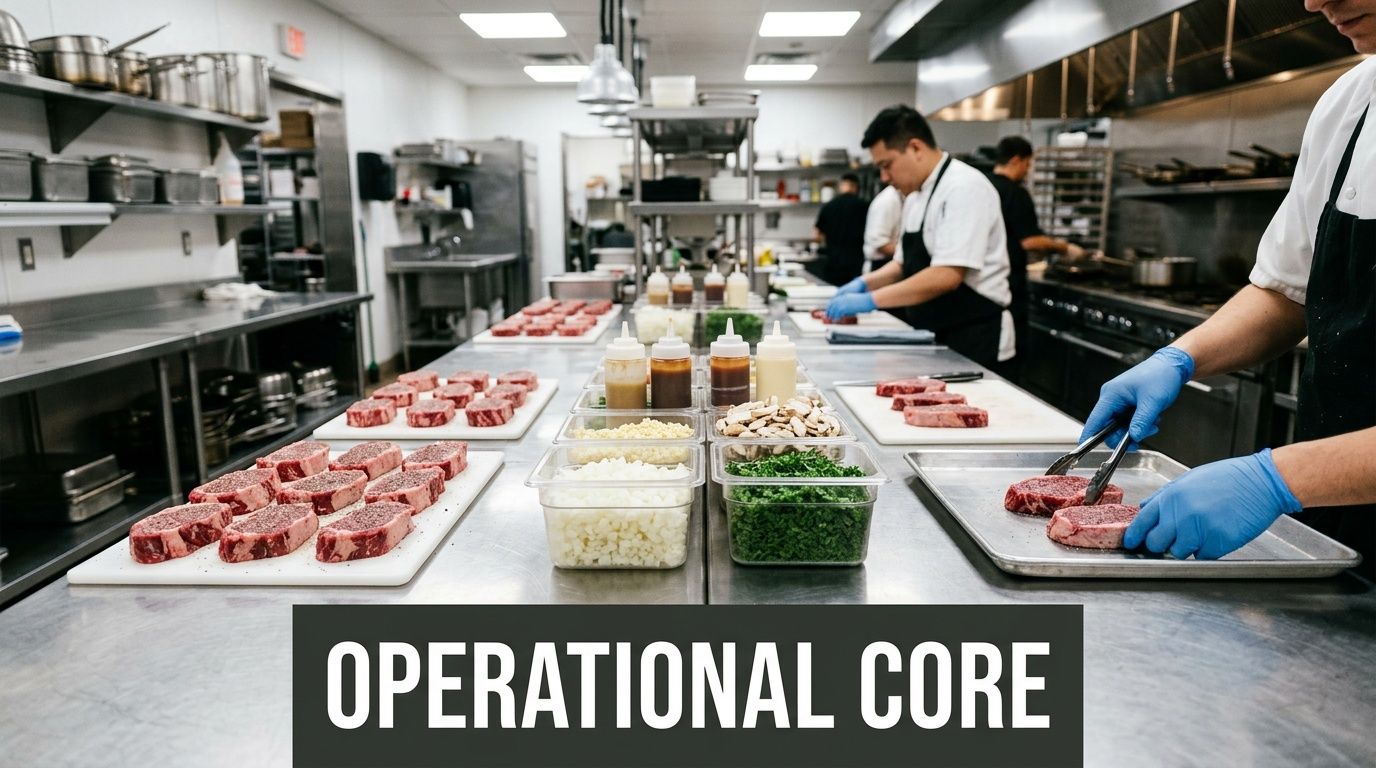
Texas roadhouse doesn’t merely sell meals. It manages a repeatable portfolio of inputs, preparation steps, storage requirements, and service expectations. Every item on the menu creates upstream demands on procurement, cold-chain handling, kitchen sequencing, and labor coordination. That’s why the menu and the supply chain should be analyzed together.
The menu as an operating discipline
For IT leaders, the best analogy is a managed service catalog. The customer sees a clean front-end choice. The operator sees dependencies.
A menu item requires:
- Defined ingredients: Procurement has to source consistently enough to keep quality stable.
- Storage controls: Perishable inventory needs tight monitoring from delivery through in-store holding.
- Process timing: Kitchen execution has to coordinate preparation stages without creating bottlenecks.
- Training repeatability: Staff need clear procedures so output remains consistent across locations.
That model scales only when variation is controlled. Too much menu complexity would strain kitchens, inventory planning, and staffing. Too little variety would weaken demand. The operating challenge is balance.
The visibility gap in digital kitchen modernization
One of the more useful signals for analysts is what the company hasn’t publicly detailed. An analysis of texas roadhouse target market and technology coverage notes that the company’s 'Roadie First' technology and digital kitchen upgrades are aimed at boosting efficiency, but quantitative metrics on wait time reductions or ROI are not publicly detailed. For operations leaders, that absence is meaningful.
It suggests two things.
First, texas roadhouse likely sees workflow technology as a practical enabler rather than a marketing story. Second, outside observers still lack the implementation data needed to benchmark rollout complexity, integration overhead, or post-deployment gains.
The absence of public ROI data doesn’t make the initiative weak. It means decision-makers should focus on architecture and process fit, not promotional claims.
That’s a familiar situation in enterprise IT. Teams often know a system improves coordination before they can isolate a clean financial metric. The same logic applies in regulated hardware environments, where standardization and retirement planning matter just as much as acquisition, especially for organizations managing large fleets as described in enterprise IT equipment recycling for Texas organizations.
The Technology Stack Driving Operational Excellence
The most instructive technical case inside texas roadhouse is its automated temperature monitoring system; restaurant operations here starts to resemble industrial telemetry.
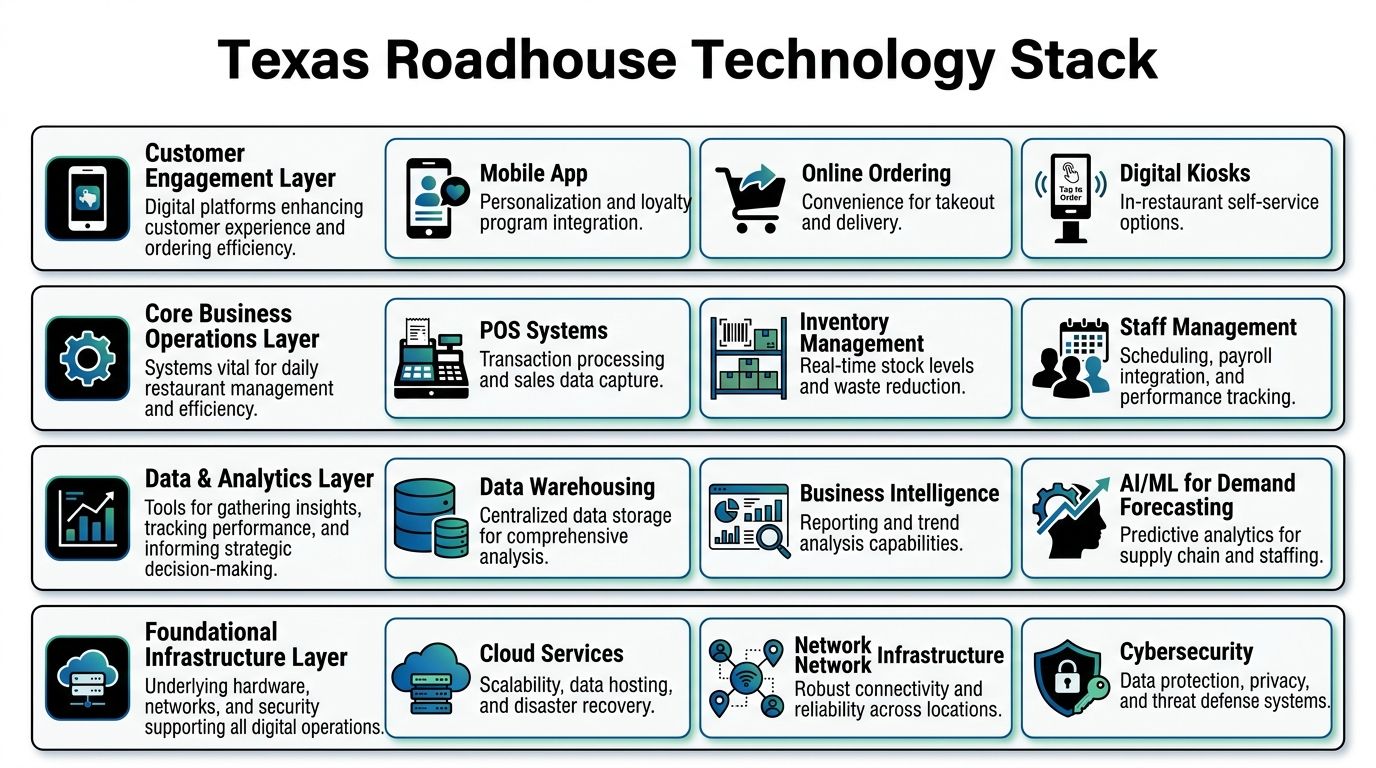
According to AlertMedia’s description of Texas Roadhouse operations technology, Texas Roadhouse uses an automated IoT temperature monitoring system in its supply chain. Networked thermometers in trucks and coolers continuously track data, triggering alerts on deviations, which eliminates manual checks and provides a real-time anomaly detection model relevant for any regulated industry.
That one use case says a lot about the company’s operating maturity.
What the system likely solves
Manual checks create predictable weaknesses. They’re periodic, labor-dependent, and vulnerable to skipped steps. A networked monitoring model changes the control structure.
Instead of asking staff to verify conditions on a schedule, the system watches continuously and pushes exceptions to humans only when action is needed.
That matters because it shifts labor from collection to response.
Core design principles visible in the model
- Continuous sensing: Trucks, coolers, and freezers become monitored assets rather than blind spots.
- Threshold-based automation: Teams don’t need to inspect every reading. They need high-confidence alerts.
- Local response paths: Store-level managers can intervene quickly when equipment or product conditions drift.
- Auditability: Automated logs create a stronger compliance trail than handwritten checks.
Why this matters outside restaurants
Healthcare providers, laboratories, and data center teams should recognize the pattern immediately. The monitored asset changes, but the logic doesn’t.
A server room, vaccine fridge, and restaurant freezer all require the same operating structure:
| Control need | Restaurant example | Cross-industry equivalent |
|---|---|---|
| Sensor input | Cooler temperature | Rack or room environmental monitoring |
| Alert threshold | Unsafe holding condition | HVAC or equipment drift outside accepted range |
| Escalation path | Store manager response | NOC, facilities, or compliance team response |
| Retained record | Food safety documentation | Audit trail for regulated operations |
Operational insight: The value of IoT isn’t the sensor. It’s the escalation design that turns sensor data into an action before a loss occurs.
Texas roadhouse also offers a good reminder that invisible infrastructure often creates more value than visible software. Customers may notice an app. They won’t notice cold-chain telemetry unless it fails. Yet the telemetry may do more to protect revenue, safety, and brand trust.
This is also why technology lifecycle planning matters. Any organization deploying distributed sensors, network gear, mobile endpoints, and local devices needs disciplined retirement and replacement workflows, not just procurement. That’s the same governance challenge many teams address when evaluating IT asset management software for distributed environments.
How Digital Transformation Fuels Financial Performance
The cleanest financial signal in texas roadhouse’s public story comes from customer-facing digitalization. In this instance, technology moved from operational support into direct revenue impact.
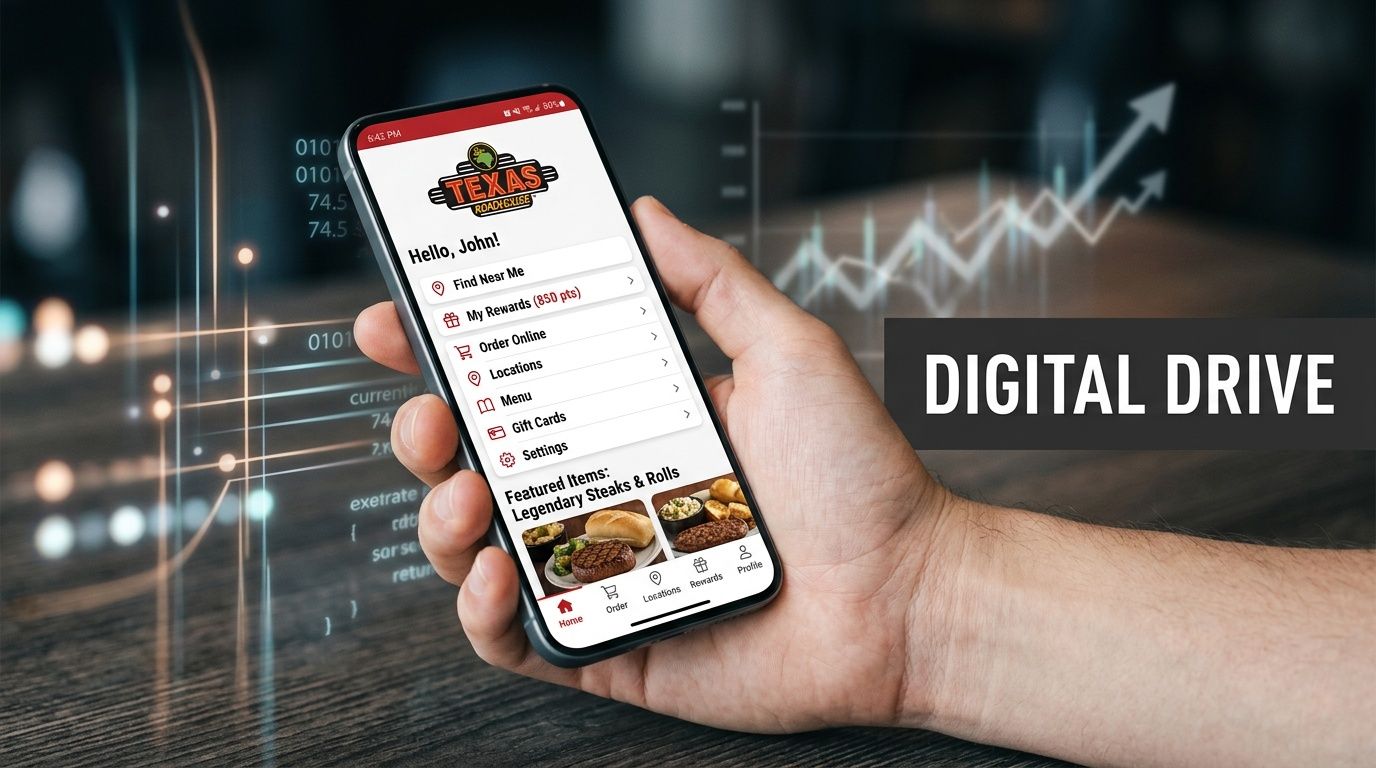
A market commentary on Texas Roadhouse digital innovations states that through digitalization like mobile ordering, Texas Roadhouse achieved 59.9% earnings growth in a recent quarter, with total revenue hitting $1.44 billion, a 23.5% year-over-year increase. The same source ties those investments to same-store sales growth at both company-owned and franchise locations.
Why this is a strong IT business case
A lot of organizations still classify customer-facing software as convenience infrastructure. That framing understates its role.
For texas roadhouse, mobile ordering, delivery channels, and e-commerce capabilities appear to function as growth infrastructure. They don’t just digitize the same transaction. They widen access, reduce friction, and increase ordering opportunities without requiring a proportional increase in front-of-house interaction.
Three strategic lessons stand out:
- Digital channels can monetize demand that physical workflows miss. Customers who won’t wait, call, or dine in still become reachable.
- Unified order flow reduces channel conflict. If mobile, delivery, and in-store systems don’t align, the customer experience degrades fast.
- Scale rewards backend readiness. Once demand shifts into digital channels, weak POS integrations and fragmented order management become visible immediately.
The broader lesson for enterprise leaders
Many IT teams get asked to justify app modernization as a customer experience initiative. Texas roadhouse suggests a stronger framing. Treat it as a revenue architecture decision.
Better digital channels don’t merely support sales. In some operating models, they become one of the main mechanisms through which sales grow.
That doesn’t mean every app investment pays off. It means the right customer-facing stack can move from “nice to have” to financially material when it integrates cleanly with operations.
Managing Customer Experience at Scale
Customer support is where many distributed businesses reveal whether their systems are mature or improvised.
Texas roadhouse appears to use a mix of centralized and local response channels. That’s a common model because some issues belong with store managers, while others require corporate visibility. The hard part isn’t offering multiple paths. It’s creating a record of what happened after the complaint entered the system.
A customer service directory discussing Texas Roadhouse phone support notes that the main line is 1-800-839-7623 and that escalated complaints reportedly may result in gift cards or vouchers, but aggregated data on resolution times and success rates is not publicly available. For enterprise operators, that gap is the key takeaway.
What mature support operations usually require
Public complaint channels are only the intake layer. The more important systems sit behind them:
- Case logging: Every complaint needs a trackable record, not just a conversation.
- Ownership rules: Teams need to know whether the store, district, or corporate office is responsible.
- Closure discipline: A case shouldn’t disappear because the first response was fast.
- Feedback loops: Repeated complaints should feed operational improvements, not just one-off recoveries.
The management lesson
A distributed brand can feel responsive and still lack strong KPI visibility. That’s a risk.
If leadership can’t see patterns in complaint categories, handoff delays, or closure quality, service recovery becomes anecdotal. In regulated sectors, that’s the same reason organizations insist on documented handling and chain of custody for incidents and retired devices, especially when sensitive information is involved in workflows like secure data destruction.
Customer experience at scale isn’t only about being polite. It’s about building systems that convert messy human interactions into usable operational intelligence.
Frequently Asked Questions for Patrons and Visitors
What should IT and operations leaders study in the Texas Roadhouse model?
Focus on repeatability at store level. The company’s operating model depends on hundreds of locations executing a consistent guest experience while handling local variation in labor, demand, and inventory. For enterprise leaders, the useful lesson is how digital tools, standardized processes, and centralized oversight can support distributed execution without forcing every location into the same conditions.
Why does the waitlist matter more than reservations in this case study?
Waitlist management is an operations signal, not just a customer convenience. It reflects how the brand balances table turns, kitchen capacity, staffing, and demand peaks in real time. A reservation-heavy model optimizes for predictability. A waitlist-focused model often reflects a business that needs more flexibility at the unit level.
What is the main supply chain lesson from Texas Roadhouse?
Menu consistency requires disciplined procurement, forecasting, and in-store preparation. That makes the menu an operating system as much as a marketing asset. IT and supply chain leaders should pay attention to how a restaurant concept turns perishable inputs into a standardized output across many locations, because the same coordination problem appears in retail, healthcare, and field service networks.
How does digital customer experience connect to financial performance?
Digital experience affects throughput, not only brand perception. Accurate store information, online ordering flows, waitlist visibility, and complaint intake all reduce friction that can slow revenue capture or increase service recovery costs. In a chain model, even small failures in these systems can scale across many units.
What risks come with a distributed operating model like this one?
Local variation can improve responsiveness, but it also creates control risk. Store-level differences in hours, staffing, service handling, and execution can weaken reporting quality if systems are not tightly integrated. That is the same management problem seen in multi-site healthcare groups, logistics fleets, and franchise-heavy retail networks.
What should a visitor check before going to a location?
For patrons, the practical step is still simple. Confirm the specific location’s hours, waitlist or reservation policy, and holiday schedule through official channels before visiting. For operations leaders, that routine customer behavior highlights a larger issue. Location data has to stay accurate across every customer-facing system, or the brand absorbs the cost of preventable confusion.
Dallas Fortworth Computer Recycling helps organizations retire technology with the same discipline strong operators bring to active infrastructure. If your team needs a partner for compliant IT asset disposition, data center decommissioning, electronics recycling, or documented chain-of-custody workflows, visit Dallas Fortworth Computer Recycling to evaluate a secure, enterprise-ready process.