
A Guide to Dallas Auto Recycling for Your Fleet

When a Dallas-Fort Worth business has a vehicle fleet, auto recycling becomes much more than a simple consumer task. It evolves into a critical part of corporate asset management. For any organization, Dallas auto recycling is a strategic process that requires a formal disposal plan to manage risk and recover value from retired vehicles.
Your Guide to Dallas Fleet Vehicle Recycling
Retiring a company vehicle is a far more complex process than simply sending it to a local scrap yard. It’s best to think of it as a specialized form of asset disposition, not unlike how your company handles old IT equipment.
Just as servers and laptops hold sensitive corporate data, your fleet vehicles contain telematics data, valuable materials, and hazardous fluids. All of these demand a secure, compliant disposal strategy. This guide offers a practical roadmap for fleet managers, asset managers, and procurement officers who are responsible for managing end-of-life vehicles. A proper plan turns a potential liability into a secure and efficient process, protecting your organization while recovering financial value.
A New Perspective on Vehicle Disposal
Disposing of corporate vehicles involves unique challenges that set it apart from consumer recycling. For a business, the stakes are significantly higher. The process touches on legal, environmental, and data security considerations that must be professionally managed. Much like the structured approach needed for Dallas-Fort Worth electronics recycling, a formal plan is essential.
Key areas of focus for any organization should include:
- Data Security: Modern vehicles store a surprising amount of information, including GPS history, connected device data, and operational logs. This data must be professionally destroyed to prevent a breach.
- Environmental Compliance: Your vehicles contain fluids, batteries, and other materials that are regulated as hazardous waste. Improper handling can lead to serious fines from agencies like the TCEQ and EPA.
- Chain of Custody: You need an auditable paper trail, including a Certificate of Destruction, to prove the legal transfer of ownership and release your company from any future liability.
The parallels between retiring a fleet vehicle and retiring an IT asset are striking. Both carry similar risks and require the same level of professional oversight. The table below offers a quick comparison.
Vehicle Disposal vs IT Asset Disposal at a Glance
| Consideration | Vehicle Fleet Disposal | IT Asset Disposal |
|---|---|---|
| Data Risk | Telematics, GPS history, and infotainment system data. | Hard drives, servers, and storage media with corporate data. |
| Hazardous Waste | Battery acid, engine oil, coolant, and refrigerant. | Heavy metals like lead, mercury, and cadmium in circuit boards. |
| Legal Document | Certificate of Destruction and title transfer records. | Certificate of Data Destruction and recycling reports. |
| Value Recovery | Scrap metal, salvaged parts, and precious metals. | Reusable components, precious metals, and remarketed devices. |
As you can see, both processes require a documented, secure, and compliant approach to protect your organization. Treating a retired vehicle with the same care as a retired server is the first step toward building a sound asset disposition program.
The Auto Recycling Process from Start to Finish
Ever wonder what actually happens to a fleet vehicle once it's taken out of service? It’s not just a trip to the junkyard. Instead, it enters a highly organized process that works like a reverse assembly line, designed to safely recover every last bit of value. For any asset manager in the Dallas-Fort Worth area, understanding this journey is key to responsible asset disposal.
The whole thing starts with secure transportation from your location to the recycling facility. Once it arrives, the first—and most critical—step is de-pollution. This is where trained technicians get to work, carefully draining all hazardous fluids. We’re talking fuel, engine oil, coolant, brake fluid, and refrigerants. The vehicle's battery, full of corrosive acid and lead, is also removed to ensure nothing harmful leaches into the environment.
Dismantling and Data Destruction
With the hazardous materials out of the way, the vehicle is moved on for dismantling. Here, any valuable or reusable components are salvaged. Skilled technicians pull major parts like engines, transmissions, alternators, and starters. Even smaller items still in good shape, such as mirrors and body panels, are recovered. These parts are then inspected, cataloged, and made available to repair shops and consumers.
At the same time, a step crucial for any business takes place: data destruction. Modern fleet vehicles are packed with technology. Their infotainment and telematics systems can store sensitive GPS location history, connected phone data, and detailed route logs. A professional recycler will perform certified data destruction on these systems, guaranteeing your company’s private information is wiped clean and completely unrecoverable. You can learn more about this vital process in our guide on how to shred and recycle electronic media.
This infographic shows how it all fits together, linking vehicle disposal with your company's broader asset management and IT security strategy.
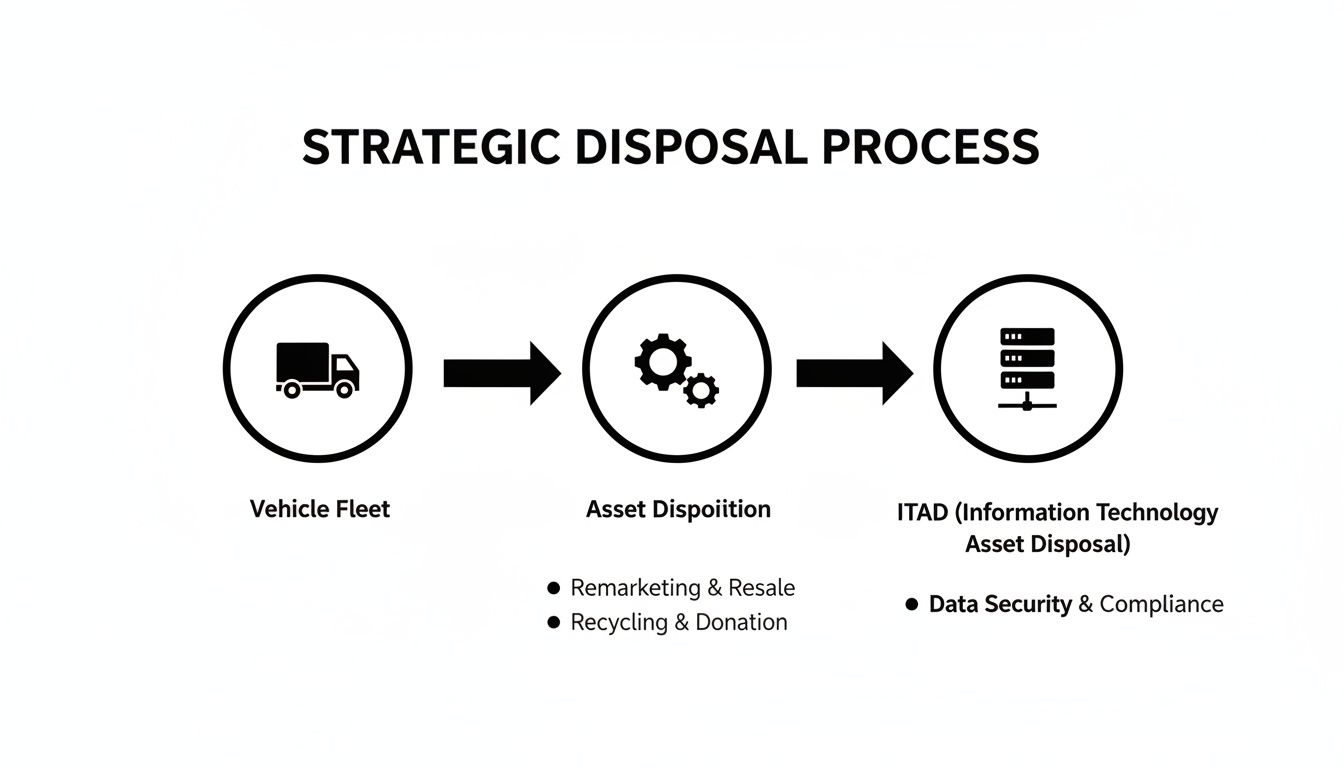
As you can see, vehicle retirement isn’t an isolated event. It’s an integral part of a secure corporate process that includes asset disposition and ITAD.
Shredding and Material Recovery
After all the valuable parts, hazardous materials, and sensitive data systems have been removed, all that's left is the vehicle’s metal shell—often called the "hulk." This shell is then fed into a massive industrial shredder, a powerful machine that can tear the entire frame into fist-sized pieces of metal in just a few seconds. This is the heart of the auto recycling operation.
Once the vehicle is shredded, the real magic happens. A series of powerful magnets and advanced sensors go to work sorting the materials. Ferrous metals like steel are pulled out by the magnets, while other materials like aluminum and plastics are separated using sophisticated sensor-based systems.
This careful sorting process is what makes auto recycling so incredibly efficient. It's a perfect example of responsible material recovery in action. In fact, an estimated 86% of a vehicle's material content is recycled or reused. Nationally, that adds up to over 4 million vehicles recycled each year. Here in the DFW area, local wrecking yards process more than 100,000 end-of-life vehicles annually.
The recovered metals and plastics are then cleaned, melted down, and sold as raw materials to manufacturers. From there, they’re ready to be made into entirely new products. This closed-loop system conserves natural resources and saves a tremendous amount of energy, completing the vehicle's journey from a retired company asset back into a valuable commodity.
Navigating Dallas Environmental and Regulatory Rules
When it's time to retire a fleet vehicle in Dallas, it’s not as simple as just having it hauled away. The entire process is governed by a web of strict rules designed to protect both the environment and your organization from serious liability. Successfully navigating this landscape means staying compliant with both Texas and federal regulations.
Think of it as a mandatory compliance checklist for every single asset you retire. Agencies like the Texas Commission on Environmental Quality (TCEQ) and the U.S. Environmental Protection Agency (EPA) have set clear, non-negotiable guidelines. One misstep in your Dallas auto recycling process can open your business up to significant fines and legal trouble, which is why a compliant partner isn't just a good idea—it's essential.
Hazardous Waste Management Is Non-Negotiable
A huge part of regulatory compliance centers on handling hazardous materials. Every single vehicle is full of fluids that can cause real environmental damage if they aren't managed with professional care. This is one of the most critical jobs for any auto recycler.
Your recycling partner must have documented, repeatable procedures for safely draining and managing these substances:
- Engine Oil and Coolant: Both are toxic and require collection and processing at a licensed facility.
- Gasoline and Diesel Fuel: As flammable hazards, all fuel must be completely drained from the tank and lines.
- Battery Acid: Lead-acid batteries are highly corrosive and full of heavy metals. They need specialized recycling to keep them out of our soil and water.
- Refrigerants (Freon): These are potent greenhouse gases that must be captured using certified equipment, as mandated by EPA Section 609 standards.
The improper disposal of just one vehicle can lead to thousands of dollars in fines. A certified recycler takes on this responsibility, giving you the documentation to prove every hazardous material was handled in full compliance with state and federal law. This is what shields your business from environmental liability.
Beyond fluids, the electronics in modern vehicles are a growing concern. As cars and trucks get smarter, they contain more circuit boards and electronic modules that need proper handling. You can learn more in our complete guide to e-waste recycling in Dallas, as many of the same principles apply.
The Power of Paperwork and Proper Title Transfer
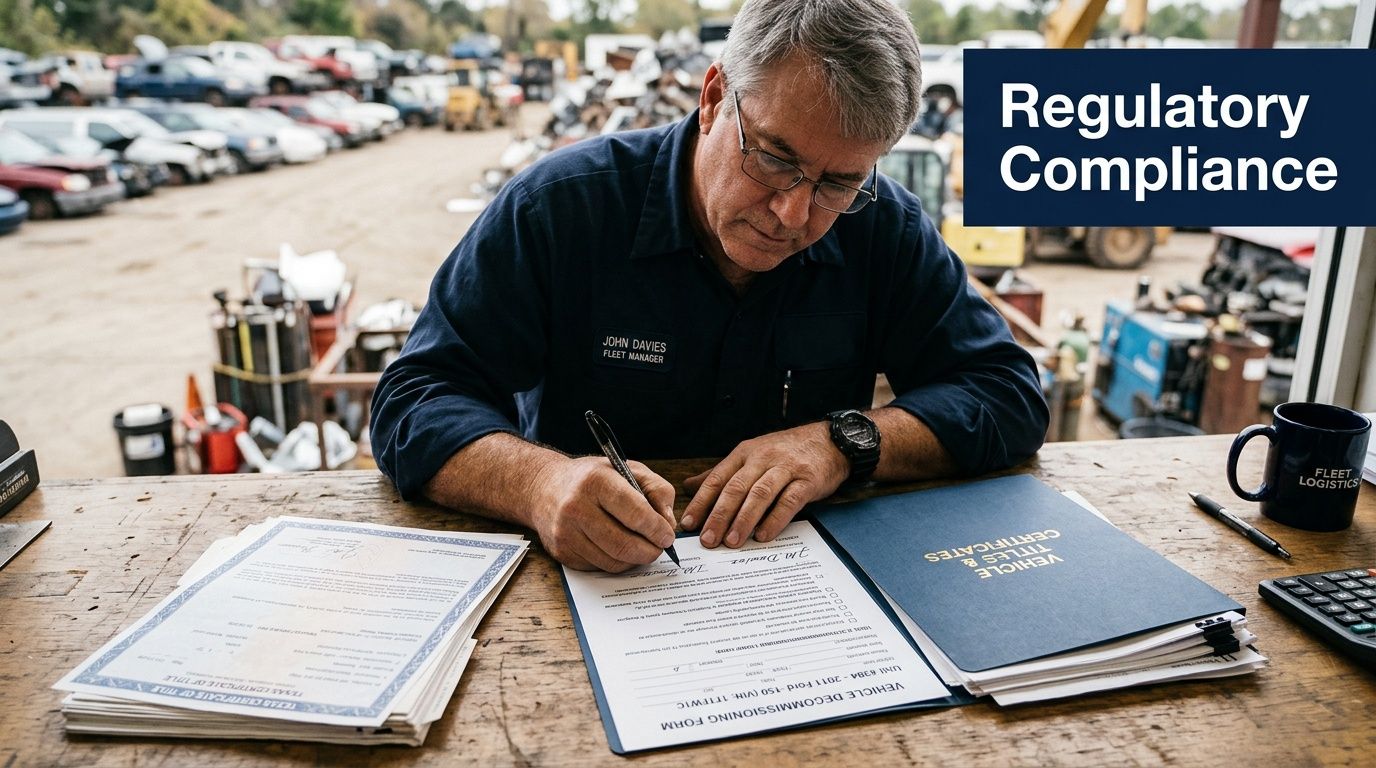
The single most important step in legally protecting your organization is creating a clean break from the asset. This is done with two critical documents that a professional recycler must provide. Think of them as your legal shield.
- Correct Title Transfer: The vehicle’s title must be properly signed over to the recycling facility. This is the first step in legally transferring ownership and releasing your company from any further responsibility for the vehicle.
- Certificate of Destruction (COD): This is your ultimate proof. A COD is a formal record confirming the vehicle has been dismantled and its VIN has been reported to the state as permanently retired.
Without a Certificate of Destruction, you have no official proof that the vehicle is off the road and no longer in your name. This leaves you wide open to liability for anything that happens with that vehicle down the line, from future parking tickets to accidents. A professional partner in Dallas auto recycling includes this documentation as a standard part of their service, giving you a clear, auditable paper trail and complete peace of mind.
Why Responsible Auto Recycling Makes Business Sense
When you manage a fleet of vehicles, responsible Dallas auto recycling is more than just a line item for compliance. It's a strategic decision that pays real dividends. Moving past a simple "check-the-box" approach reveals a powerful business case built on three pillars: environmental leadership, economic recovery, and critical risk management.
A professionally managed program doesn't just clear assets off your books; it strengthens your bottom line and reinforces your commitment to the circular economy. This isn't just about disposal—it's smart asset management.
The Pillar of Environmental Stewardship
Embracing responsible recycling is a direct and measurable way to support your company’s Environmental, Social, and Governance (ESG) goals. In a market where both consumers and investors are looking for real commitment to sustainability, a documented green practice builds a powerful brand image. It's a proactive stance that demonstrates corporate responsibility right here in the Dallas community.
The scale of this local opportunity is enormous. Dallas residents and businesses discard a staggering 86,000 tons of recyclable materials every year. If properly recycled, those materials could have conserved nearly 50 million gallons of oil and freed up over a million cubic yards of landfill space. For a DFW organization, participating in a compliant program is a tangible way to lead on this front. You can find more details on Dallas's recycling challenges and opportunities on DallasCityNews.net.
This effort aligns perfectly with the broader benefits of recycling, which we cover in our guide on the benefits of responsible e-waste recycling.
Turning Costs into Economic Returns
It’s a common myth that vehicle disposal is purely a cost center. In reality, a professional auto recycling program can generate revenue, turning what you thought was an expense into a financial gain. Your retired fleet vehicles are packed with valuable commodities.
- Salvaged Parts: In-demand components like engines, transmissions, and alternators are often harvested and sold to the secondary market.
- Scrap Metal: A vehicle's frame, primarily steel and aluminum, holds significant value based on current commodity prices.
- Precious Metals: Catalytic converters contain valuable metals like platinum and rhodium that are recovered during the recycling process.
A transparent recycling partner will provide detailed settlement reports, showing you exactly how much value was recovered from each vehicle. This process transforms your end-of-life fleet from a liability into a predictable revenue stream.
Mitigation of Financial and Reputational Risk
Perhaps the strongest business case for responsible auto recycling is risk mitigation. A certified, fully documented process is your best defense against the crushing liability that can result from improper disposal. It shields your company from unforeseen legal battles and financial penalties.
Choosing a certified partner is like purchasing a robust insurance policy against future problems. It transfers the liability for environmental compliance and data security from your organization to a specialist equipped to handle it.
This protection covers two critical areas. First, it ensures all hazardous materials are managed according to EPA and TCEQ regulations, preventing steep environmental fines. Second, it guarantees that all sensitive data from telematics, GPS, and infotainment systems is permanently destroyed, protecting your company from a data breach that could cost you dearly in both fines and reputation.
How to Choose the Right Dallas Auto Recycling Partner
Picking the right vendor for your fleet's end-of-life process is the most important decision you'll make to protect your company. Let’s be clear: not all Dallas auto recycling services are the same. Your goal is to find a professional asset disposition partner, not just a basic scrap yard.
Think of it this way: you’re vetting a high-security vendor, not just a disposal service. You need a partner who understands corporate risk and can manage environmental liability, data security, and chain-of-custody paperwork with total precision. They need to operate with the same rigor you'd expect from an ITAD provider.

Key Questions to Vet Potential Partners
To properly protect your organization, you have to ask the right questions. Any reputable partner will welcome this level of scrutiny and have clear, verifiable answers ready. Use this as a starting point for vetting any potential Dallas-area recycler.
- Licensing and Insurance: Can you provide verifiable proof of your TCEQ license and environmental liability insurance? This is the first, non-negotiable step to confirm they operate legally and are insured against accidents.
- Data Destruction Process: How do you handle the data on infotainment and telematics systems? Ask for a detailed walkthrough of their methods and whether they issue a Certificate of Data Destruction.
- Chain of Custody: What documentation do you provide to prove chain of custody from pickup to final destruction? A professional partner should offer serialized tracking and a final Certificate of Destruction for every single vehicle.
- Environmental Procedures: Can you explain your process for draining and managing hazardous fluids and batteries? They must be able to show how they comply with EPA regulations and responsibly process these materials.
A professional asset disposition partner acts as an extension of your own risk management team. Their ability to give you clear, documented answers to these questions is the best sign they can protect your interests. A simple scrap yard will likely struggle here.
Verifying Certifications and Capabilities
Asking the right questions is only half the battle. You have to verify the credentials they give you—don't just take their word for it. A partner who handles vehicle disposal with the same level of security as an ITAD provider will often hold certifications that prove their commitment to best practices.
It helps to know the standards used in related industries. For instance, understanding the requirements for a R2 Certified electronics recycler gives you a fantastic baseline for what a secure, auditable process should look like. While R2 is an electronics standard, a top-tier auto recycler will operate with that same mindset: focused on security, accountability, and environmental responsibility.
Ultimately, your decision comes down to one thing: trust backed by proof. A handshake is not enough when your company's reputation and bottom line are at stake. The right partner will give you all the documentation you need to prove every vehicle was handled securely, every byte of data was destroyed, and every regulation was followed.
Your Fleet Recycling Action Plan
It's time to put this knowledge into practice. A formal vehicle retirement plan is no longer a "nice-to-have"—it's an essential part of modern risk management and corporate responsibility for any Dallas–Fort Worth organization.
Treating your end-of-life fleet vehicles with the same level of security you apply to your IT assets is now the standard. This protects your business, recovers maximum value, and aligns with Dallas's larger sustainability goals.
Your Immediate Next Steps
Here’s a straightforward, four-step plan to get your company started on strategically managing its vehicle end-of-life cycle.
Inventory Your Fleet: Get a clear picture of what you have. Identify every vehicle approaching its end-of-life based on your internal criteria for age, mileage, or maintenance costs, and build a forward-looking retirement schedule.
Audit Current Policies: Take a hard look at your existing asset disposal and data security protocols. Do they specifically account for the telematics, GPS history, and personal data stored in modern vehicles? If not, they need to be updated immediately.
Vet Dallas Recycling Partners: Don't just pick the first name you find. Identify and properly vet at least two professional Dallas auto recycling partners using the criteria we’ve covered. Insist on seeing proof of their licensing, insurance, and data destruction capabilities.
Run a Pilot Program: Before committing your entire fleet, test the process. Send one or two non-critical vehicles to your chosen partner and evaluate their performance on communication, documentation, and overall service from pickup to the final report.
This kind of strategic recycling is vital for our community’s environmental health. The City of Dallas's Zero Waste Plan is working to address the fact that 35% of materials in residential garbage are recyclables that end up in landfills. When your company uses a certified program, you become a critical part of the solution. Learn more about Dallas’s zero-waste initiatives.
Frequently Asked Questions About Fleet Recycling
For businesses managing fleet vehicles, the end-of-life process can bring up plenty of questions. Getting clear, quick answers is key to confidently handling your Dallas auto recycling strategy. Below are some common questions from organizations just like yours.
What Documents Do I Need to Recycle a Company Vehicle?
To start the process, you will need the vehicle's title to officially transfer ownership to the recycling facility. This is the first step in legally removing the asset from your company’s books and financial records.
However, the single most critical document you must receive back is a Certificate of Destruction. This certifies that the vehicle has been permanently dismantled and its VIN retired, releasing your company from all future liability associated with that asset.
Think of a Certificate of Destruction as your final legal shield. Without it, you have no auditable proof that your company is no longer responsible for the vehicle, which can create significant risk down the line.
Is My Company’s Data Safe When We Recycle a Vehicle?
The security of your data depends entirely on the partner you choose. Modern fleet vehicles are essentially mobile data centers, storing sensitive information in their infotainment and telematics systems. This often includes GPS location history, connected phone contacts, and private corporate route data.
A professional recycler will provide certified data destruction services, much like wiping a computer hard drive. This process ensures all your company's proprietary data is permanently and verifiably erased, protecting you from a potential data breach.
Can We Make Money from Recycling Our Fleet?
Yes, absolutely. A retired vehicle is not just junk; it's a collection of valuable commodities. The value of scrap metal—primarily steel and aluminum—combined with any salvaged parts can often offset or even exceed the costs of transportation and processing.
The final financial return depends on the vehicle's condition, its model, and current market prices for metals. A transparent partner will provide a detailed settlement report that breaks down the value recovered, turning a disposal cost into a measurable financial gain.
When your organization needs a secure, documented, and compliant partner for retiring fleet vehicles or IT assets, trust Dallas Fortworth Computer Recycling. We provide the same level of security and chain-of-custody assurance for all corporate assets. Contact us to build your compliant disposal plan today at https://dallasfortworthcomputerrecycling.com.