
Electronics Recycling Pickup Plano A Complete Guide for Businesses
Arranging a professional electronics recycling pickup in Plano is the most secure and compliant way for businesses to dispose of end-of-life IT assets. This process involves partnering with a certified IT Asset Disposition (ITAD) vendor who handles secure logistics, audited data destruction, and environmentally responsible processing, ensuring your company meets all legal and security requirements.
Your Guide to Compliant Electronics Recycling in Plano
For IT managers and procurement teams in Plano, managing retired electronics is a task loaded with responsibility. It’s not just about clearing out a storage room—it’s a critical part of a structured ITAD strategy. Leaving old servers, laptops, and hard drives to collect dust creates a significant security risk, while improper disposal can lead to steep regulatory fines and lasting damage to your company's reputation.
This is exactly why partnering with a professional B2B e-recycling service is non-negotiable for any organization handling sensitive data or large volumes of equipment. The stakes are simply too high for guesswork.
The Business Case for Professional ITAD
The core reasons for a formal disposition process are crystal clear, especially when you consider the potential downsides of getting it wrong.
- Data Security: A single discarded hard drive containing customer data or intellectual property can trigger a catastrophic data breach. Professional services guarantee data is irretrievably destroyed, not just "deleted."
- Environmental Compliance: Plano, like many Texas municipalities, has strict rules preventing e-waste from entering landfills. Certified recyclers ensure hazardous materials like lead and mercury are handled correctly, keeping you on the right side of regulations.
- Operational Efficiency: Managing an asset cleanout internally drains valuable IT resources. A dedicated partner handles the logistics, from inventory to transport, freeing up your team to focus on their core mission.
A compliant process is straightforward: secure your assets, schedule a pickup with a certified vendor, and receive the documentation you need to prove compliance.
This ensures every device is accounted for, all data is destroyed, and every component is recycled or repurposed according to strict environmental standards.
The local provider landscape is a mix. Some companies, like MARRS LLC, offer nationwide business pickups with per-item or per-pound fees, focusing on recovering precious metals while adhering to EPA and Texas DEQ rules. However, for comprehensive ITAD that prioritizes end-to-end security and logistics, a dedicated partner is key. You can explore how our dedicated ITAD services for Plano businesses provide this critical level of assurance.
Kicking Off Your Pickup: The Asset Inventory
The first real step in arranging an electronics recycling pickup in Plano is building an asset inventory. This isn't just about making a list; it’s the blueprint that allows a recycling partner to grasp the project's scope, give you an accurate quote, and map out the logistics for a secure, efficient pickup.
Your job starts with a walk-through of your facility to document every piece of retired IT equipment. Don't just count the desktops and laptops. Your inventory needs to include servers, networking switches, monitors, printers, keyboards, mice, and all the cabling that goes with them. If you're in a specialized field like healthcare or manufacturing, be sure to add items like lab instruments, diagnostic machines, and industrial control panels.
Building a Simple, Functional Inventory
You don't need fancy software for this. A basic spreadsheet is all it takes to capture the details your vendor needs to assess the job properly.
Create a sheet with these essential columns for each asset:
- Item Type: (e.g., Laptop, Server, Monitor)
- Brand/Model: (e.g., Dell Latitude 7400, Cisco Catalyst 9300)
- Quantity: The total count of identical units.
- Location: Where the equipment is stored (e.g., IT Closet, Storage Room 3B).
- Data-Bearing? A simple "Yes" or "No" to flag devices that need data destruction.
This simple document is the foundation for your entire disposition project. It clears up any guesswork and helps your recycling partner show up with the right team and tools for the job.
Pro Tip: If you can, consolidate all the equipment into one accessible area before you even make the call. Moving everything to a spare office or a corner near your loading dock makes the pickup day go infinitely smoother and keeps disruption to a minimum.
Categorizing Items and Flagging Special Needs
With your master list complete, you can start grouping similar items. For instance, all your standard laptops can become a single line item if they don't require individual asset tracking.
The most important part, however, is flagging anything that needs special handling. This is where you'll note devices with sensitive data requiring physical hard drive destruction for compliance, or any items that might contain hazardous materials.
Many certified recyclers have specific protocols for certain electronics. Older CRT monitors and televisions, for example, almost always have a fee attached because their leaded glass requires expensive and specialized processing. The same often goes for large multifunction printers or copiers. Being upfront about these items ensures there are no surprises on your final invoice.
The positive impact of doing this right is huge. A 2024 report from United Electronic Recycling, for example, showed their North Texas operations kept nearly 5 million pounds of e-waste out of landfills. They manage everything from CPUs to printers (with a small fee), providing a clear framework for secure and compliant disposal that helps local businesses and the environment.
Once you have this detailed inventory, you're ready to contact a vendor. This preparation changes your first call from a vague inquiry into a productive planning session, paving the way for a seamless pickup. To see what comes next, check out our full guide on business computer recycling in Plano.
Ensuring Data Security and Regulatory Compliance
When you schedule an electronics recycling pickup, you aren't just getting rid of old hardware. You're handing over devices packed with your organization's most sensitive data. We’ve seen it time and again—the single biggest risk in IT asset disposition is a data breach from a supposedly "retired" device. For any business in Plano, a mistake here can lead to crippling fines and a permanent loss of customer trust.
The whole conversation about data security really comes down to two paths: software-based data wiping or physical destruction. Deciding which one is right for you isn't about personal preference; it's driven by your specific compliance needs and security policies. Understanding the difference is absolutely critical.
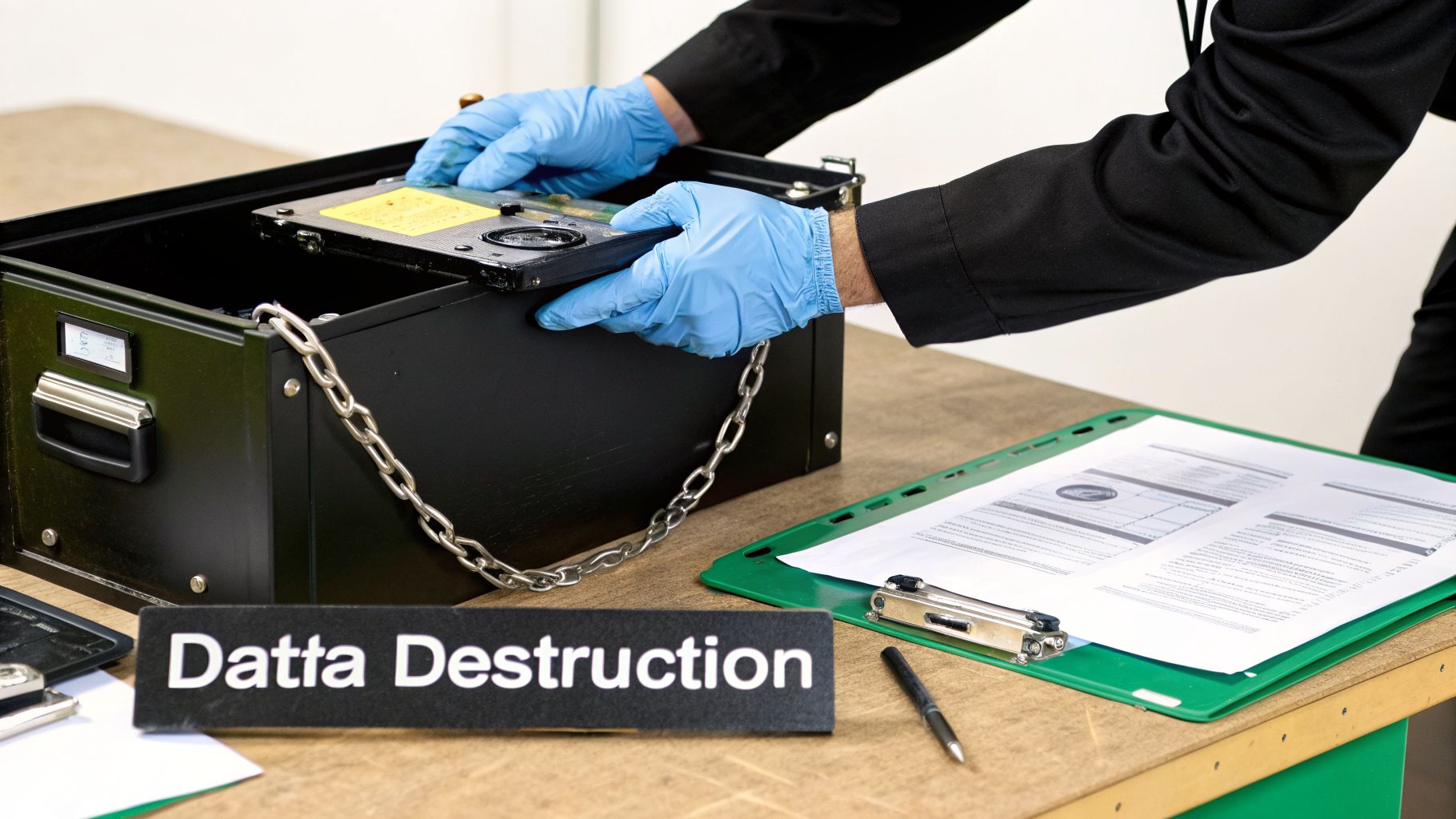
Data Wiping Versus Physical Destruction
When IT managers ask us about the best approach, we first look at the assets themselves and the data they hold. The two primary methods serve different purposes, and choosing correctly is key to a secure and efficient process.
Let's break down the options in a simple table so you can see the pros and cons side-by-side.
| Feature | Data Sanitization (Wiping) | Physical Destruction (Shredding) |
|---|---|---|
| Process | Software overwrites data with random characters. | Drives are mechanically shredded into small, unusable pieces. |
| Asset Outcome | Preserves the physical drive for reuse or resale. | Completely destroys the drive, making it unusable. |
| Best For | Newer, valuable assets; ESG programs; recovering asset value. | Highly sensitive data (PHI, PII); older or low-value drives. |
| Security Guarantee | High; data is forensically unrecoverable if done correctly. | Absolute; 100% guarantee data can never be accessed. |
| Compliance Alignment | Meets NIST 800-88 "Purge" standards. | Meets NIST 800-88 "Destroy" standards. |
| Environmental Impact | Promotes reuse, a core part of the circular economy. | Materials are recycled, but the reuse potential is eliminated. |
For many of our clients, a hybrid approach works best. We might physically destroy older server drives that held critical IP while wiping newer laptops to recover value through resale. The right partner will help you build a strategy that makes sense for your specific inventory.
Consider a healthcare clinic in Plano retiring a batch of laptops containing patient health information (PHI). Under HIPAA, the clinic is legally obligated to render that data completely irretrievable. In this case, choosing a vendor that provides on-site shredding and a verifiable Certificate of Destruction is the only way to ensure full compliance and eliminate risk.
The Power of Proper Documentation
No matter which method you use, the entire process must be documented from start to finish. This isn't just paperwork—it's your legal and security shield. A certified ITAD partner will provide two non-negotiable documents.
- Chain-of-Custody Record: This document tracks your assets from the moment they leave your facility until their final disposition. It lists serial numbers and proves that nothing was lost or misplaced along the way.
- Certificate of Data Destruction: This is your official, auditable proof that the data was destroyed according to industry standards. It details the method used (wiping or shredding) and the specific devices that were processed.
This documentation is your frontline defense in an audit or legal challenge. It proves you performed your due diligence and took concrete steps to protect sensitive information. When you're vetting vendors for your electronics recycling pickup in Plano, always ask to see examples of their documentation.
For organizations navigating complex regulations, getting this right is non-negotiable. If you're looking for deeper insights, you can learn more about certified data destruction services in Plano and how they align with compliance needs. A reputable vendor will always be transparent about their processes and provide the proof you need for complete peace of mind.
Decoding Pickup Logistics Costs and Timelines
One of the first questions we always get from IT leaders is, "So, what's our electronics recycling pickup in Plano actually going to cost?" There’s no simple, flat-rate answer. The final price is a direct reflection of your specific project, and knowing the variables helps you budget accurately and avoid any surprises down the line.
The cost really boils down to the value of your assets versus the labor needed to handle them. A pickup loaded with newer, reusable gear like recent-generation servers or laptops might be very low-cost, or even free. On the other hand, a truckload of old CRT monitors and bulky printers will definitely have recycling fees attached.
Key Factors That Shape Your Quote
When we build a quote, we're looking at a few key variables. The most significant factors are:
- Volume and Weight: More equipment means more labor and transportation. Most quotes are built around either the number of pallets or the total weight of the assets.
- Asset Type: Items that require special handling, like those old CRT monitors or large multifunction printers, carry recycling fees. In contrast, newer servers or networking hardware often have resale value that can offset your costs.
- Site Accessibility: A pickup from a ground-floor office with a loading dock is straightforward. A project on the fifth floor with no elevator access is a different story. Logistical hurdles like stairs, long carries to the truck, or a need for after-hours service will influence the price.
- Data Destruction Services: The level of security you require has a direct impact on cost. On-site hard drive shredding, for example, is a premium service compared to off-site software wiping because it requires specialized equipment and trained personnel on your premises.
Understanding Value Recovery
Not all your old electronics are just a cost to be managed. Many IT assets hold significant residual value, a concept we call value recovery. This is where your recycling partner assesses your equipment for its potential on the secondary resale market. Any revenue we generate from selling refurbished assets is then credited directly back to your project.
For many of our clients, value recovery completely offsets the costs of logistics and data destruction. In some cases, it even results in a net payment back to your company, turning a disposal project into a revenue opportunity.
This is precisely why a detailed inventory is so crucial at the start—it lets us spot the valuable assets right away. You can see more on how these logistics and value recovery fit together in our guide to nationwide business electronics recycling pickups.
The sheer scale of e-waste is staggering, which is why regulations are tightening. Texas initiatives recently collected over 17 million pounds of e-waste in a single year, a number that drives home the need for compliant partners. With local Plano ordinances banning e-waste from standard trash, secure disposal isn't optional—it's mandatory.
While some items carry recycling costs—roughly $1 per pound or $5-$40 per item for things like monitors—a skilled partner maximizes the recovery of valuable materials like gold and copper to help absorb those fees. For a closer look, you can see the full report on the TCEQ website. This makes a professional electronics recycling pickup in Plano not just a compliance task, but a smart financial decision.
Your Essential Pre-Pickup Preparation Checklist

A smooth pickup is all about good prep work. Once you've got your assets inventoried and have scheduled your electronics recycling pickup in Plano, a few final steps will make all the difference. Taking care of these details ensures the pickup day is quick and efficient, keeping disruptions to a minimum for everyone involved.
The single best thing you can do is get all your equipment into one central, easy-to-reach spot. A vacant office, a cleared-out conference room, or an area right by your loading dock works perfectly. This simple step saves our logistics crew from hunting through different offices and storage closets, which speeds up the entire process and lets your team get back to work faster.
While you're at it, do one last check to make sure no personal items have accidentally made their way into the pile. An employee’s old cell phone or a breakroom microwave doesn't belong with corporate IT assets. Setting these items aside beforehand prevents any confusion on pickup day.
Finalizing Your Assets for Handover
Before the truck arrives, there are a couple of small but important details to wrap up. These tasks help clarify what's being handed over and make the process seamless.
A question we get a lot is about internal asset tags. Should you remove them? That really depends on your company's own asset management policy. If your internal process requires you to log each tag's final status, then go ahead and remove them. However, if your recycling partner is handling the asset reporting, it’s often better to leave the tags on for their scanning process. Just be sure to confirm this with your vendor ahead of time.
Also, take a moment to complete any internal paperwork needed to officially sign off on the asset disposal. This creates a clean break in your own records and keeps everything aligned with your financial and operational procedures.
Key Takeaway: The goal is to hand over a clean, organized collection of assets. This level of preparation reflects well on your organization and helps your recycling partner work securely and efficiently—a core benefit of working with an R2 certified electronics recycler.
Designating a Day-Of Contact Person
Finally, choose one person on your team to be the main point of contact for the pickup day. This individual will need to be there to meet our crew, direct them to the equipment, and sign the initial chain-of-custody forms.
This person’s job is pretty straightforward:
- Be available at the scheduled arrival time.
- Provide access to the building and the staged equipment.
- Verify the pickup scope against the inventory list you prepared.
- Sign the initial paperwork to confirm the handover.
Having a dedicated contact eliminates confusion and ensures someone with authority is on-site to handle any questions. It’s a simple but crucial step for accountability and a secure, orderly transfer of your retired IT assets.
Even with the best-laid plans, a few questions always pop up when it's time to arrange an electronics recycling pickup in Plano. We've worked with hundreds of IT leaders and business owners, and we hear the same great questions time and again. Here are the answers you need to move forward with confidence.
Can Our Business Get a Free Electronics Recycling Pickup in Plano?
Yes, a free pickup is definitely on the table for many businesses. It all comes down to the value of the equipment you're retiring.
If your project involves a good amount of newer, valuable IT hardware—think recent-generation laptops, enterprise servers, or modern networking gear—a free pickup is very likely. The resale value from these assets is often enough to cover all the logistics, labor, and data destruction costs.
On the other hand, if the equipment is mostly older, low-value items, the pickup will usually have a fee. Things like old CRT monitors, decade-old desktops, printers, and miscellaneous peripherals have recycling costs but no resale value. In these situations, the fee is typically based on the total weight or a per-item schedule.
What Documentation Should We Receive After the Pickup?
Once your assets are picked up and processed, your ITAD partner should provide two non-negotiable documents. These are more than just receipts; they're your official record of compliant disposal.
Certificate of Recycling: This document confirms that your e-waste was handled in an environmentally responsible way, meeting all local, state, and federal rules. It’s your proof that you didn't send hazardous materials to a landfill.
Certificate of Data Destruction: This is arguably the most critical piece of paper you’ll get. It’s the auditable proof that every data-bearing device was sanitized or physically destroyed according to certified standards, like those from NIST. This certificate is your defense against liability if a security audit or legal question ever arises.
Always get confirmation from your vendor upfront that they provide both of these documents. Without them, you don't have the proof you need to show due diligence and protect your organization from risk.
Are There Items That Recycling Services Won't Accept?
Most certified ITAD vendors are equipped to handle just about any type of electronic equipment you'd find in an office. Their services are built to take everything from servers and computers to the jungle of cables and keyboards that pile up in IT storage closets.
However, a few items might require special handling or come with specific fees due to the hazardous materials they contain. These typically include:
- UPS Batteries: The lead-acid batteries inside need specialized recycling.
- Old CRT Monitors: Their leaded glass is expensive to process safely.
- Large Copiers/MFPs: These sometimes have their own unique disposal protocols.
As a general rule, non-electronic items aren't accepted. This means things like office furniture, light bulbs, smoke detectors, or regular office trash need a separate disposal service.
How Far in Advance Should We Schedule a Pickup?
The right amount of lead time really depends on the size of your project. For a standard office cleanout with a few pallets of gear, scheduling one to two weeks in advance is usually plenty of time for the vendor to arrange a truck and crew.
For larger, more complex jobs, you’ll want to plan further out. If you’re looking at a full data center decommissioning, a multi-floor building refresh, or a project that requires sensitive on-site work, give your vendor at least three to four weeks' notice. This ensures they can dedicate the right resources, plan out the logistics, and execute the project smoothly.
Ready to schedule a secure and compliant pickup for your business's retired IT assets? The team at Dallas Fortworth Computer Recycling offers end-to-end ITAD solutions, from certified data destruction to responsible recycling. Contact us today to get a transparent quote and simplify your IT disposition process. Learn more at https://dallasfortworthcomputerrecycling.com.