
R2 Certified Telecom Recycling Atlanta: Secure ITAD
Your network cutover is complete. The new switches are live, the firewall rules have been migrated, and the old gear is now sitting in a cage, closet, or spare conference room waiting for someone to “recycle it.”
That's the point where many Atlanta organizations create an avoidable compliance problem.
Retired telecom equipment isn't just e-waste. It can hold configuration backups, credentials, VPN details, access lists, and enough environment detail to create security exposure if it leaves your control the wrong way. Add batteries, power supplies, fiber gear, and mixed rack hardware, and the project turns into a disposal, security, audit, and facilities issue at the same time.
The mistake is treating this like a junk-haul job. It isn't. For most IT directors, the main question behind R2 certified telecom recycling Atlanta isn't whether a vendor can pick equipment up. It's whether that vendor can prove, in writing, what happened to each asset from release through final disposition.
Your Atlanta Office Refresh Is Done What About the Old Telecom Gear
The familiar version of this story starts on a Friday afternoon. The migration team finishes the upgrade, the carrier confirms the cutover, and facilities wants the old equipment gone before the next tenant walkthrough or fire inspection. In one room you've got routers, switches, old firewalls, PBX hardware, UPS units, patch panels, and a pile of accessories nobody wants to inventory.
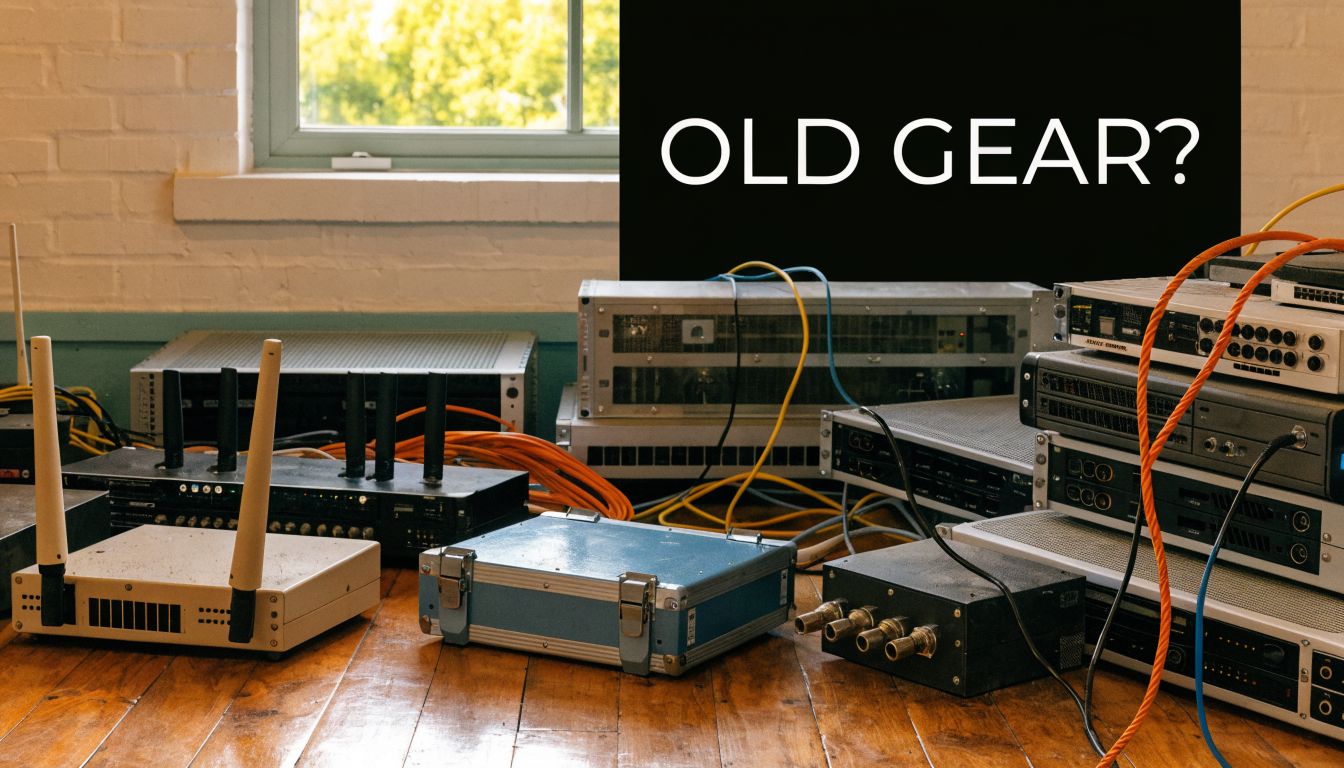
At that point, many teams still frame the problem too narrowly. They ask who can recycle it fast, or who can offer free pickup, instead of who can document the retirement properly. If your Atlanta sites include branch offices, clinics, warehouses, or multi-floor corporate space, the risk goes up because equipment is usually spread across closets and storage areas, not staged in one controlled location.
Some organizations start by reviewing local telecom services in Atlanta because they need help with both removal and disposition. That's sensible, but pickup is only the visible part of the job. The hidden part is whether you can defend the chain of custody later.
What makes old telecom gear risky
The liability usually sits in three places:
- Security exposure: Routers, firewalls, and network appliances may still contain saved configurations, credentials, and network details.
- Compliance failure: If assets leave the building without documented tracking, your team may not be able to reconcile them against the asset register during an internal review.
- Environmental handling mistakes: Mixed loads often include items that need controlled downstream processing, not basic scrap handling.
Old network hardware becomes a business liability the moment your team powers it down and loses active oversight.
What usually goes wrong
A few patterns show up repeatedly in telecom decommissions:
| Common shortcut | Why it fails |
|---|---|
| Facilities-only cleanout | It removes equipment, but often without serial-level reconciliation |
| Factory reset and donate | It sounds safe, but it rarely creates auditable proof |
| Bulk scrap pickup | It clears space fast, but it can collapse the chain of custody |
| One-page recycling certificate | It may satisfy no one if audit asks for asset-level evidence |
What works is more controlled. Someone needs to own the inventory, someone needs to verify release, and the disposition partner needs to produce evidence that matches the hardware list you started with.
What R2 Certification Really Means for Telecom Equipment
A lot of vendors use R2 certified as a trust signal. That's useful, but it's incomplete. For telecom assets, the label matters less than the operating model behind it.
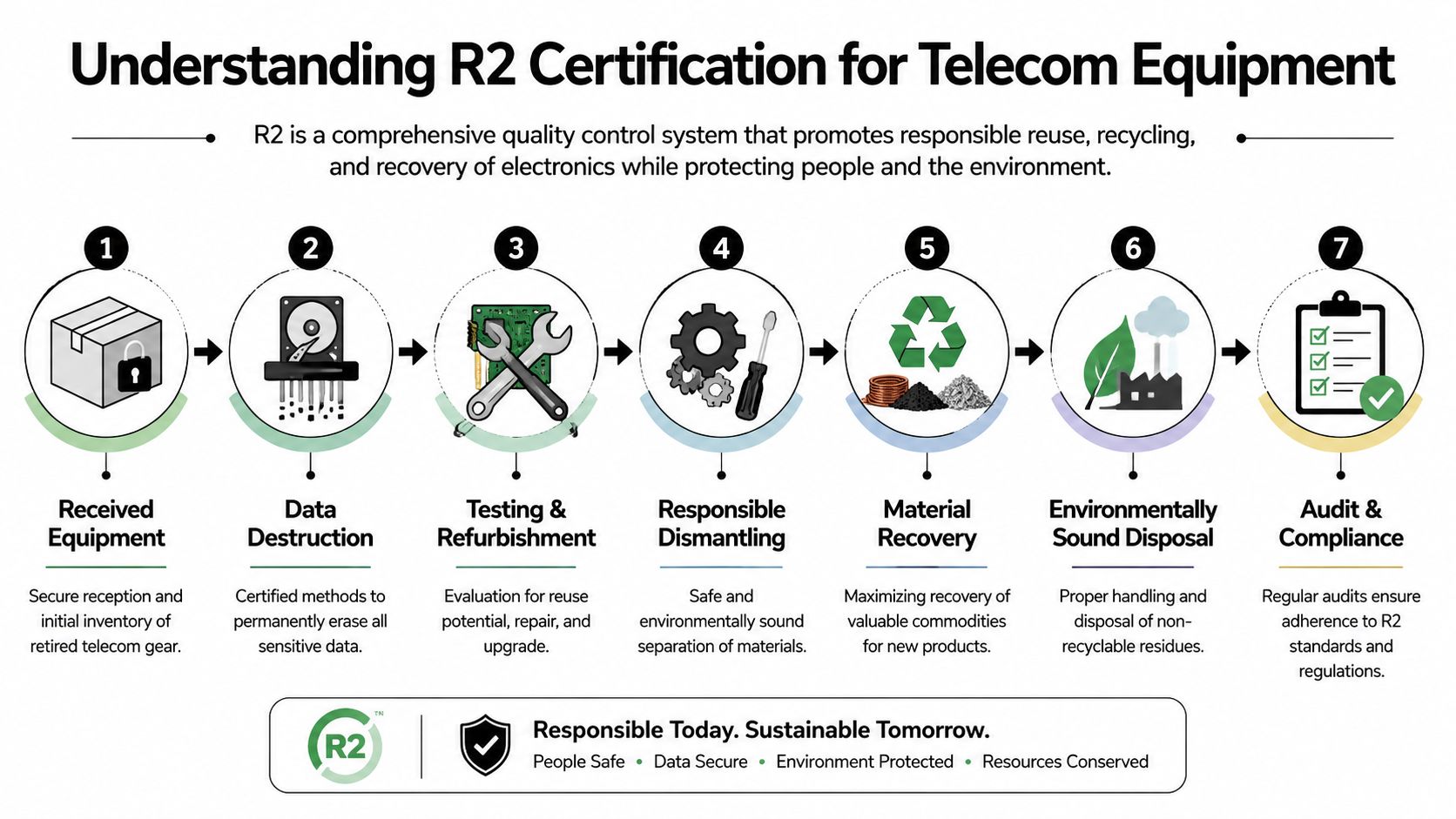
The best way to think about R2 is as a quality control system for retired electronics. It isn't just about collecting gear and issuing a certificate. It governs how equipment is received, tracked, evaluated for reuse, processed for recycling, and managed downstream after it leaves the first facility.
When vetting a provider, a resource on an R2 certified electronics recycler can help frame the baseline. But the practical question is still narrower: what does R2 mean for telecom gear specifically?
R2 is about traceability, not just collection
According to SERI's R2 standard overview, R2 certification covers the primary facility and its downstream vendors, which means the recycler must maintain responsible reuse and recycling controls across the chain of custody. That distinction matters.
For telecom assets, the first handoff is only part of the risk. The bigger compliance issue is what happens next. If a switch, firewall, or carrier appliance moves through undocumented downstream channels, your team may have no defensible record of where it went or how it was processed.
Why telecom equipment needs a stricter reading of R2
Desktop recycling is straightforward compared with network equipment. Telecom loads are usually mixed. One pickup might include:
- Data-bearing devices: routers, firewalls, switches, PBX systems, VoIP gateways
- Infrastructure hardware: racks, rails, patch panels, cable management
- Support components: batteries, power supplies, optics, cards, cabling
- Carrier or edge gear: appliances, specialty modules, legacy chassis
That mix creates two practical problems. First, not every asset needs the same handling path. Second, audit teams usually want proof that the recycler didn't treat the whole load as undifferentiated scrap.
The part buyers often miss
An R2 logo on a website doesn't tell you what documentation you'll receive.
That's where many IT directors get frustrated. They assumed “R2 certified” meant detailed evidence would automatically follow. It doesn't. A capable provider should still explain how it tracks assets, documents downstream movement, and distinguishes reuse from dismantling or material recovery.
Practical rule: If a recycler can't explain chain of custody past the pickup dock, the R2 label alone won't protect you in an audit.
What a strong R2 process looks like in practice
A disciplined telecom disposition workflow usually includes:
Controlled intake
Equipment is received against a manifest, then matched to the inbound inventory.Asset identification
The processor records enough information to tie each device back to the originating organization and retirement event.Evaluation for reuse
Equipment with remaining service life is tested and reviewed before any decision to dismantle.Segregated processing paths
Devices, batteries, power systems, and rack components don't get mixed into one generic stream.Downstream accountability
If items move beyond the primary facility, that movement stays inside documented and vetted channels.
This is why R2 certified telecom recycling in Atlanta should be treated as a governance question, not a hauling question. The standard's real value is the discipline around traceability and downstream control.
Securing Network Data Beyond the Hard Drive
Most data-destruction discussions are built around laptops, servers, and hard drives. Telecom hardware changes that conversation. A firewall may not look like a storage device to facilities or procurement, but to a security team it can still be a sensitive asset.
Routers, firewalls, switches, PBX systems, and network appliances often retain exactly the kinds of records you don't want floating around in secondary channels. That can include startup configs, saved credentials, VPN profiles, access control settings, and topology clues that make later intrusion easier.
Why factory reset isn't enough
Teams often assume a reset returns a device to safe condition. Operationally, that's a useful step. From a compliance standpoint, it's weak unless it's documented and tied to the specific device.
What matters is not just whether a device was sanitized. It's whether you can prove which device was sanitized, by what method, and how that record ties back to your asset list.
A provider offering certified hard drive destruction may already understand media sanitization controls, but telecom assets require that same rigor for nontraditional data-bearing equipment. The burden is higher because many organizations still underestimate what network devices store.
The benchmark that matters
A practical control point in Atlanta telecom disposition is NIST 800-88 aligned data destruction combined with serial-level tracking. STS Electronic Recycling describes R2v3-certified processing in a 600,000 sq ft facility with NIST 800-88 configuration destruction and serial-level tracking for network devices on its Atlanta networking equipment recycling page. That pairing is what turns a pickup into an auditable retirement event.
The logic is straightforward:
| Control | What it does |
|---|---|
| Serial-level tracking | Reconciles each device against the asset register |
| NIST 800-88 aligned sanitization | Creates a defensible method for wiping or destroying data-bearing media and configurations |
| Certificate output | Gives compliance and audit teams documentation they can review later |
What audit-ready handling looks like
When a telecom recycler says it provides secure data destruction, ask what evidence is produced for each category of network gear. A credible answer should address more than generic wiping.
Look for these specifics:
- Device-level reporting: Can they identify equipment by serial number?
- Method clarity: Do they explain whether they wiped, destroyed, or otherwise sanitized the asset?
- Exception handling: What happens when a serial can't be read, a unit is damaged, or a listed device is missing?
- Reconciliation support: Can your team match outbound inventory, received inventory, and final destruction records?
If the paperwork can't answer “which exact firewall was sanitized,” then it probably won't satisfy a serious compliance review.
Telecom data risk is often invisible to non-IT stakeholders
That's one reason these projects go sideways. The old PBX cabinet in a closet doesn't look sensitive to a building manager. A stack of branch switches on a pallet doesn't look like regulated data to finance. But your network team knows better.
The strongest programs treat every network-connected device as sensitive until the disposition record says otherwise. That mindset avoids the common split where servers get careful handling and telecom gear gets commodity treatment.
Navigating Atlanta Logistics and Chain of Custody
In telecom disposition, logistics is security in motion. If your equipment leaves the room under loose controls, the rest of the process is already compromised.
Atlanta adds practical complexity. Downtown office towers have dock schedules and elevator restrictions. Healthcare and government sites may require escorts. Branch offices often have small quantities spread across multiple addresses. Data centers may need coordinated unracking, palletizing, and staged removal to avoid disruption.
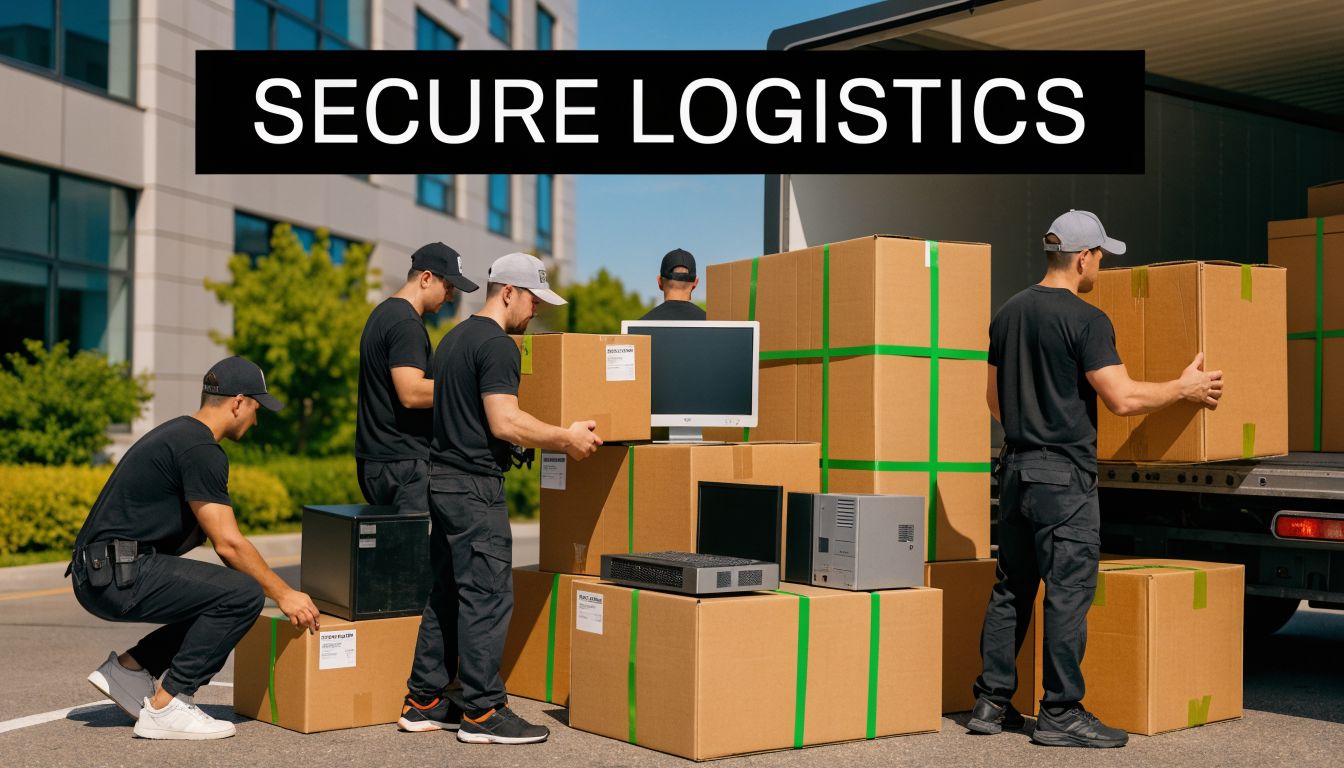
If the project involves cages, racks, and mixed infrastructure, many teams start by reviewing providers that handle data center ITAD because the operational discipline is similar. The point isn't the label. It's whether the provider runs handoffs like controlled events instead of moving-day improvisation.
Chain of custody starts before the truck arrives
The strongest projects are defined before pickup day. That means someone confirms what's being released, from which room, under whose authority, and in what condition.
A weak process sounds like this: “We have about two pallets of gear in storage.”
A defensible process sounds like this: “These serials were approved for retirement from these locations, and this person released them at this time.”
What Atlanta buyers should ask for
A recurring gap in the local market is telecom-specific proof. Many providers talk about certification but don't clearly detail how they manage mixed gear, serial-number reporting, or audit evidence. The R2 certification discussion at GCI captures that gap well. The issue for buyers isn't just whether a vendor is R2 certified. It's what evidence the buyer receives for audit.
That's the right question.
Here's the practical minimum I'd want on any Atlanta telecom removal:
- Pickup manifest: A list tied to the release event, ideally with serials where available
- Named custody transfer: Who released the assets and who accepted them
- Asset condition notes: Especially for damaged or incomplete equipment
- Site-level reporting: Important when equipment is collected from multiple offices or closets
- Final reconciliation package: So procurement, IT, and audit can all work from the same record set
The handoff at pickup is not admin work. It is the first piece of evidence in your audit file.
Mixed gear is where vendors reveal their process maturity
Telecom retirements rarely involve clean, uniform loads. More often, the project includes an awkward mix:
| Asset type | Common handling issue |
|---|---|
| Switches and routers | Need serial capture and data-aware processing |
| PBX and VoIP systems | Often retired in partial sets with cards and accessories |
| Fiber gear and optics | Small components are easy to lose without item discipline |
| Racks and rails | Bulky hardware complicates secure staging |
| Batteries and power supplies | Need separate handling channels |
A provider that only knows desktop pickups will often struggle here. You'll hear vague promises, broad recycling language, and very little detail on how mixed loads are documented.
How a nationwide provider can still deliver locally
Some IT leaders hesitate because they assume a national partner can't handle Atlanta logistics with enough control. In practice, a good nationwide ITAD provider should already operate through standardized intake, scheduling, transport, and reporting workflows that can be applied across metro markets.
That model often works better than relying on a loosely documented local-only operator because the documentation standards are already built into the service. The true test is not headquarters location. It's whether the provider can execute local pickup while preserving the chain of custody all the way through final disposition.
The Environmental and Financial Case for Responsible Recycling
Many businesses still use the term recycling when they mean clear it out. That is too blunt for telecom equipment.
Some retired gear should be dismantled and processed for material recovery. Some shouldn't. Enterprise switches, routers, and carrier hardware can retain second-life value if they're tested, sanitized properly, and routed into legitimate reuse channels. If a vendor shreds everything by default, you may be giving up both sustainability value and asset recovery.
Reuse is the better first question
One of the biggest blind spots in Atlanta ITAD is what happens after collection. Many providers say the right things about responsible recycling or zero-landfill outcomes, but they don't explain whether working telecom equipment is remarketed before destruction. The Atlanta market discussion at Excess IT Hardware highlights that unresolved issue and points out that the R2 framework prioritizes reuse.
That priority matters because telecom gear often has a longer useful life than general office hardware. It also often carries more residual value, especially when the equipment is complete, identifiable, and retired through a controlled process.
What good sustainability looks like in practice
The strongest environmental outcome isn't automatic shredding. It's a structured hierarchy:
Reuse where appropriate
If the equipment can be securely sanitized, tested, and placed back into legitimate service, that usually preserves the most value.Recover materials responsibly
When reuse isn't viable, dismantling and separation should happen through documented downstream channels.Dispose only as a last resort
Residuals still need controlled handling, but they should be the final path, not the default.
A useful overview of the broader benefits of e-waste recycling can help frame the sustainability side, but telecom buyers need to ask a sharper question than “Do you recycle responsibly?” They need to ask how the provider decides between reuse and recycling.
The business trade-off is simple
Fast bulk destruction feels clean because it eliminates uncertainty. But it can create two losses at once:
- You may destroy hardware that still had recoverable value.
- You may weaken your environmental reporting because you can't show a reuse-first approach.
That doesn't mean reuse should override security. It shouldn't. Sensitive assets that can't be sanitized or reconciled properly should not be remarketed. But “secure” and “reuse-first” are not opposites. A mature ITAD process is designed to support both.
Sustainability claims are much stronger when the recycler can explain which assets were reused, which were dismantled, and why.
What doesn't work
These signals should make you cautious:
- All-assets-go-to-shred messaging: Efficient for the vendor, not necessarily for you
- Zero-landfill slogans without detail: Good marketing, weak audit support
- No distinction between reusable and scrap assets: Usually means the program is commodity-driven
- No downstream explanation: Leaves ESG and procurement teams with thin documentation
For Atlanta organizations with Scope 3 attention, procurement scrutiny, or board-level reporting, the better standard is accountability. Not just whether the gear left the building, but whether the final outcome was justified and documented.
How to Vet Your R2 Telecom Recycling Partner
By the time you're comparing vendors, the biggest risk isn't usually technical. It's accepting broad claims where you need operational proof.
A telecom recycler can sound credible very quickly. R2 certified. Secure data destruction. Full chain of custody. Nationwide service. The right response isn't skepticism for its own sake. It's disciplined questioning. If the process is mature, the answers will be concrete.
Ask for evidence before pickup is scheduled
The first screen is simple. Don't evaluate promises. Evaluate documents.
A serious provider should be able to show current certification records, sample manifests, sample destruction certificates, and an explanation of how telecom assets are tracked through the process. If they can't supply that before the job starts, there's no reason to assume the paperwork will improve after your assets leave the building.
Telecom Recycling Partner Vetting Checklist
| Category | Vetting Question | Why It Matters |
|---|---|---|
| Certification | Is your R2 certification current, and does it apply to the facility handling our equipment? | Confirms the process is operating under an active standard, not an expired claim |
| Downstream control | How do you document downstream vendors and processing paths? | Telecom risk often continues after the first facility |
| Inventory | Do you provide serial-number-level reporting for routers, switches, firewalls, and appliances? | Asset-level reporting supports reconciliation and audit defense |
| Data destruction | How do you handle NIST 800-88 aligned sanitization for network equipment? | Telecom devices need documented sanitization, not generic reset language |
| Certificates | What certificates will we receive, and how are they tied to specific assets or pickup events? | Broad certificates may be too vague for compliance review |
| Logistics | Who performs pickup, and how is custody documented at release and receipt? | The chain of custody starts onsite |
| Mixed loads | How do you handle racks, batteries, PBX gear, optics, and miscellaneous telecom hardware in the same job? | Mixed telecom loads expose weak operating processes fast |
| Exceptions | What happens if serials are unreadable, counts differ, or equipment arrives damaged? | Exception handling is where mature providers stand out |
| Insurance and liability | What coverage do you maintain for onsite work and transport? | Internal risk teams often require this before approval |
| Reporting timeline | When do we receive manifests, reconciliation records, and final certificates? | Delayed records weaken audit readiness |
Listen for operational answers
The good vendors talk like operators. They describe release procedures, staging, reconciliation, and certificate logic. The weak vendors talk like marketers. They repeat “secure” and “compliant” without describing how either claim is made real.
These are the questions I'd use in a live call:
- For chain of custody: Who signs for release, who accepts the assets, and what record is created onsite?
- For telecom data risk: How do you sanitize firewalls, switches, and appliances that store configurations?
- For downstream governance: Can you explain what happens after initial sorting?
- For reporting: Can you show a sample manifest and a sample final certificate?
- For discrepancy control: What happens if our list and your received inventory don't match?
Audit lens: If you had to explain this provider's process to your compliance officer tomorrow, would their documents answer the questions without extra interpretation?
Red flags worth treating seriously
Some issues should stop the evaluation immediately:
| Red flag | Why it matters |
|---|---|
| “We wipe everything” with no method detail | Suggests weak sanitization controls |
| No sample paperwork | Usually means reporting is generic or inconsistent |
| No telecom-specific process explanation | Indicates desktop-style handling applied to network gear |
| Vague downstream story | Leaves a major compliance gap unresolved |
| Promise of simple pickup with paperwork later | Puts your assets in motion before evidence exists |
How to evaluate a nationwide provider for Atlanta work
A national provider can be a strong fit if it brings standardized controls to local execution. That means documented pickup procedures, disciplined inventory handling, support for serial-level reporting, and consistency across multiple sites.
This matters for Atlanta companies with distributed operations. If your retired gear sits in a headquarters office, a branch location, and a colocation space, the provider's ability to normalize records across all of them becomes more important than whether the company is physically headquartered nearby.
The ultimate decision criterion is simple. Choose the partner whose process you can defend in front of audit, legal, procurement, and security without filling in blanks yourself.
Choosing a Partner Is a Strategic Business Decision
Telecom disposition looks operational because the visible task is removal. In reality, it's a strategic risk decision.
The right partner protects three things at once. First, your security posture, by ensuring network hardware is sanitized and tracked properly. Second, your compliance position, by giving your team documentation that stands up to internal review. Third, your sustainability credibility, by treating reuse and downstream accountability as real operating requirements instead of marketing language.
That's why R2 certified telecom recycling Atlanta should never be reduced to “find somebody local to pick it up.” Location matters. Process matters more.
For an IT director, the practical test is straightforward. Can this provider document custody from release through final disposition? Can they produce asset-level evidence where needed? Can they explain how they handle telecom equipment specifically, not just electronics in general?
If the answer is yes, you're not just clearing space. You're closing out a network refresh in a way that protects the business.
Frequently Asked Questions About Telecom Recycling
Quick Answers to Common Questions
| Question | Answer |
|---|---|
| Do small volumes of telecom equipment still need formal ITAD handling? | If the gear is data-bearing or tied to a regulated environment, yes. A few firewalls or switches can create more risk than a larger load of non-sensitive equipment. |
| Is a factory reset enough before recycling routers and switches? | Not by itself. It may be part of device handling, but audit-ready disposition usually requires documented sanitization and device reconciliation. |
| What documentation should I expect from a qualified telecom recycler? | At minimum, expect a pickup or release record, asset tracking details where available, and final destruction or recycling documentation tied to the retirement event. |
| Can old PBX or VoIP systems still require secure handling? | Yes. Legacy telecom systems can still hold configuration details, call-related data, or user settings. Age doesn't remove the need for control. |
| What if some of the gear has no visible serial number? | Ask the provider how exceptions are documented. Missing or unreadable serials shouldn't disappear into the process without notation and review. |
| Should racks, batteries, and power supplies be included in the same project? | Often yes, but they shouldn't be treated as identical assets. A mature provider will separate handling paths and reporting logic for mixed infrastructure. |
| Is a local-only recycler always the best choice in Atlanta? | Not necessarily. A nationwide provider can be a better fit if it offers stronger documentation, standardized controls, and consistent reporting across sites. |
| What's the most important question to ask a recycler? | Ask what evidence you'll receive for audit. That question usually reveals whether the provider has a real telecom ITAD process or just a pickup service. |
The strongest telecom recycling projects aren't the fastest ones. They're the ones your team can explain six months later without guessing. If you can trace each retired asset from your Atlanta site through sanitization, reuse, or recycling, the project was done correctly.
If your team needs a nationwide ITAD partner that can support secure, compliant telecom disposition in Atlanta, Dallas Fortworth Computer Recycling is built for that kind of work. They serve commercial and public-sector organizations that need documented chain of custody, certified data destruction, responsible reuse and recycling, and practical pickup coordination across multiple locations. For IT directors who need more than a “we'll haul it away” promise, that kind of process discipline is what reduces risk.