
Business Electronics Recycling in Dallas
For businesses here in Dallas, electronics recycling is much more than just "getting rid of old stuff." It’s a crucial part of managing risk, staying compliant, and protecting your company’s reputation. The standard city recycling services, while great for residents, just aren't built to handle the complex data security and regulatory demands of a modern business.
This is where a specialized process called IT Asset Disposition (ITAD) becomes absolutely essential.
Why Dallas Businesses Need Specialized E-Waste Solutions
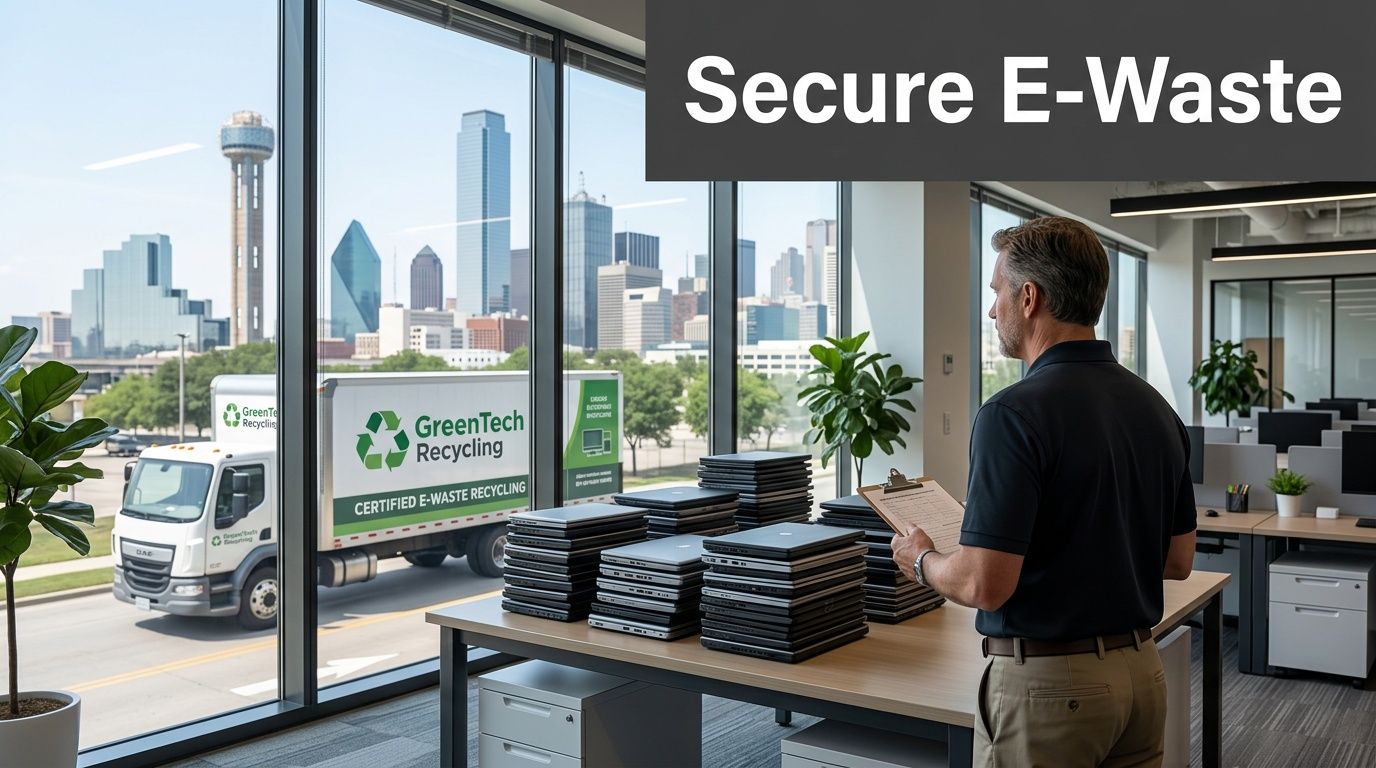
As a major hub for tech and commerce, Dallas generates a massive amount of electronic waste. Every single server, laptop, or company phone you retire holds a ton of potential liability. Tossing those devices into a standard recycling bin is like leaving your company’s financial records on a bench in Klyde Warren Park—it’s an unnecessary gamble with your sensitive data.
A specialized ITAD partner provides a completely different service. It's a secure, documented process built from the ground up to protect your organization from data breaches, environmental fines, and a damaged reputation. While city programs are a fantastic resource for household waste, they don't have the security protocols your business assets demand.
The City's Progress and The Business Imperative
Dallas has made incredible strides in its city-wide recycling efforts. Back in 2003, the city’s landfill diversion rate was a tiny 2 percent, recycling only about 10,000 tons of material. After a focused public campaign, those numbers shot up. By 2010, the city collected over 44,000 tons and hit 60 percent household participation.
This impressive turnaround shows how a dedicated strategy can transform waste management. For businesses, the lesson is clear: managing e-waste requires its own focused, professional approach.
The core difference really boils down to accountability. A professional ITAD service gives you a certified, auditable chain of custody that proves your assets were handled responsibly from the moment they leave your office to their final disposition. That's a guarantee no municipal program can make.
Comparing Your Options At a Glance
Understanding this distinction is vital for any IT manager or business owner responsible for company assets. The choice you make impacts everything from your data security posture to your company's public commitment to sustainability.
Think about the fundamental differences between dropping off a few old monitors at a city collection event and bringing in a professional ITAD partner for a server room decommission. The latter is built for business-level security, scale, and addressing the significant environmental impact of electronic waste.
To make it even clearer, here’s a side-by-side comparison.
Municipal Recycling vs. B2B ITAD Services At a Glance
The table below breaks down exactly what you get—and what you don't—from each option.
| Feature | Dallas Municipal Recycling | Specialized B2B ITAD Partner |
|---|---|---|
| Data Security | None. No certified data destruction provided. | Guaranteed. Certified data destruction (shredding/wiping) with certificates. |
| Compliance | Not designed for business regulations (HIPAA, FACTA). | Assured. Process is compliant with industry and federal regulations. |
| Reporting | No documentation or chain of custody. | Comprehensive. Detailed asset reports and certificates of destruction provided. |
| Scale & Logistics | Limited to small quantities at specific drop-off points. | Scalable. Handles large volumes with secure, scheduled on-site pickups. |
For any Dallas organization handling more than just a handful of devices, the need for a professional partner is obvious. It’s the only way to ensure your data, your reputation, and the environment are fully protected.
The Hidden Risks of Improper IT Asset Disposal
When a company server or a stack of old employee laptops reaches the end of its life, it's tempting to treat them like any other piece of used office equipment. But thinking of a retired IT asset like an old desk or filing cabinet opens your organization up to enormous, often unseen, risks.
Disposing of old technology without a secure, certified process is a high-stakes gamble with your company's future. It's like sending your most sensitive financial records through the mail in an unsealed envelope and just hoping for the best. In the world of data, that's a risk no Dallas business can afford to take.
The Threat of Lingering Data
The most immediate danger is the data left on hard drives. Even after you’ve deleted files or run a factory reset, that sensitive information often remains recoverable. In fact, a widely cited study found that 40% of used hard drives sold online still contained personally identifiable information (PII).
That lingering data is a goldmine for identity thieves and corporate spies. A single discarded laptop could easily contain:
- Customer lists and contact information
- Employee payroll, HR files, and social security numbers
- Proprietary trade secrets and internal strategies
- Financial statements and company bank account details
Once this information gets out, it’s impossible to pull it back. A data breach can destroy your reputation and lead to devastating financial losses. You can learn more about how a professional partner ensures your data is gone for good in our guide to secure data destruction services.
Navigating the Maze of Compliance and Regulations
Beyond the direct fallout from a data breach, there are serious legal and financial penalties for non-compliance. Several federal and industry-specific regulations dictate how organizations must protect sensitive information—even during disposal.
Simply tossing old electronics can be seen as a failure to protect consumer or patient data, leading to severe penalties. For any business, an “out of sight, out of mind” approach to disposal is a dangerously expensive strategy.
Key regulations that apply to businesses in Dallas include:
- HIPAA (Health Insurance Portability and Accountability Act): For any healthcare organization, improper disposal of devices with patient health information can lead to fines up to $1.5 million per violation.
- FACTA (Fair and Accurate Credit Transactions Act): This law requires businesses to completely destroy consumer information before discarding it. Violations can trigger federal and state penalties, not to mention civil lawsuits.
- GDPR (General Data Protection Regulation): If your company handles data from any EU citizens, the penalties for a breach are severe and can easily reach tens of millions of euros.
These regulations don't care if the exposure was accidental. If a hard drive from your office ends up in a landfill and the data is compromised, your organization is still on the hook for failing to protect it.
The Environmental and Reputational Costs
Finally, there’s the environmental fallout. Electronics are full of hazardous materials like lead, mercury, and cadmium. When e-waste is dumped in a landfill, these toxins can leach into the soil and groundwater, causing long-term environmental damage.
Working with an uncertified or questionable recycler can also backfire spectacularly. Many so-called "recyclers" do little more than ship containers of unprocessed e-waste overseas, where it is often dumped or handled in unsafe conditions. If your company’s logo is found on equipment in an illegal dumpsite, the damage to your brand’s reputation can be immediate and irreversible.
What a Secure ITAD Process Actually Looks Like
When you partner with a professional for IT Asset Disposition (ITAD), you’re not just getting rid of old equipment. You're engaging a structured, secure workflow designed from the ground up to protect your organization. Let's walk through the journey an old server or laptop takes, from your office to its final, documented disposition.
This is a world away from simply tossing old gear in a bin—a shortcut that can create massive liabilities.
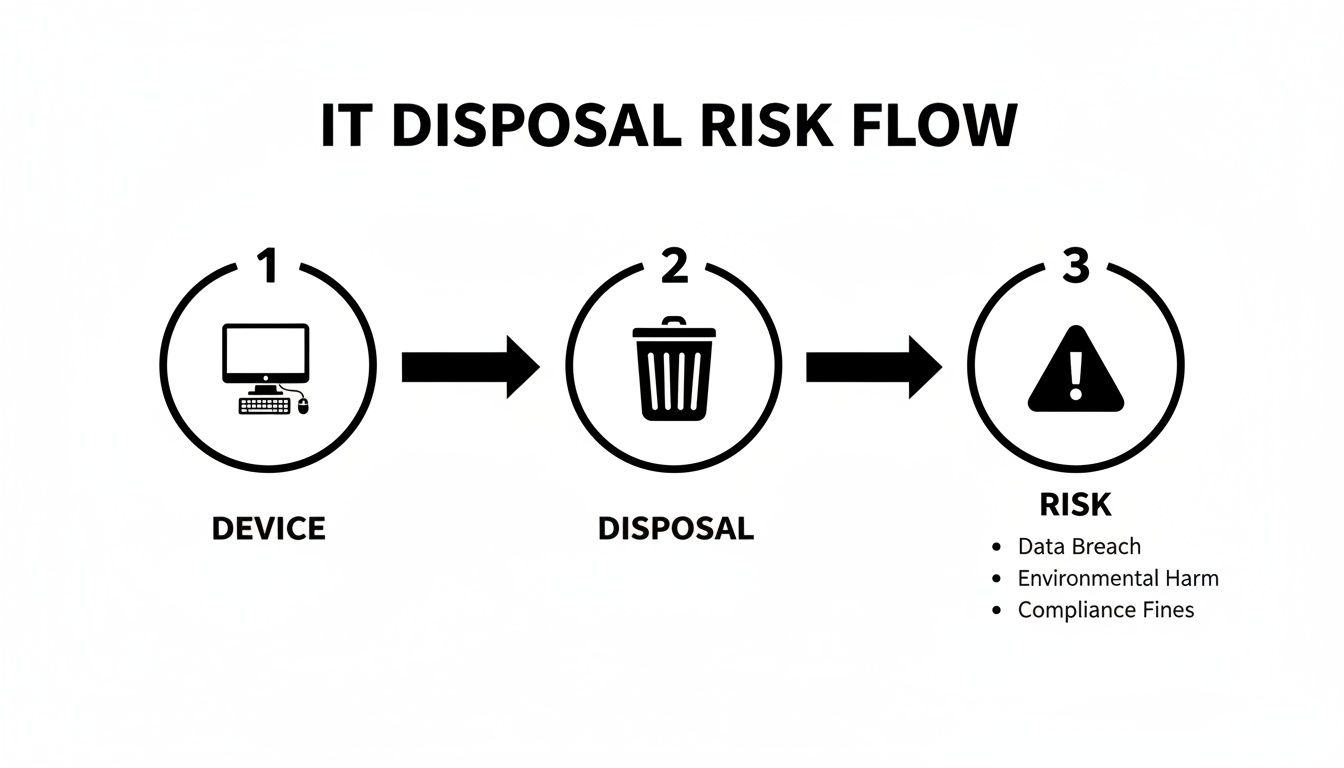
As you can see, the disposal method is the critical step that determines whether you achieve secure asset retirement or open the door to data breaches and steep compliance fines.
Stage 1: Secure Logistics and Chain of Custody
The process starts the second your equipment is staged for pickup. A true ITAD partner doesn’t just show up with a truck; they immediately establish a formal chain of custody. This is your auditable paper trail, documenting every touchpoint from your loading dock to the processing facility.
It works a lot like an armored car service, but for your data. Every pallet of equipment is inventoried, cataloged by serial number, and loaded onto a secure, GPS-tracked vehicle. This meticulous record-keeping is your first line of defense, proving you never lost control of your assets.
Stage 2: Certified Data Destruction
Once your equipment arrives at the secure facility, the most crucial step begins: destroying the data. This goes far beyond hitting "delete." There are two primary, industry-accepted methods to make sure data can never be recovered.
- Data Wiping: Using specialized software, this method overwrites the entire hard drive with random data, strictly following standards like NIST 800-88. This is the perfect solution for newer, working drives that can be refurbished, allowing you to recover value from them.
- Physical Shredding: For older, faulty, or highly sensitive drives, nothing beats physical destruction. Industrial-grade shredders grind hard drives, backup tapes, and other media into small, useless fragments, making data recovery physically impossible.
Afterward, you’re issued a Certificate of Data Destruction. This isn't just a receipt; it's a legal document proving your compliance.
A professional ITAD process is more than just recycling; it's a security service. The goal is to transform a potential liability—a hard drive full of data—into a certified, risk-free commodity. By understanding the full ITAD lifecycle, you can make more informed decisions. You might be interested in a deeper look into what exactly IT Asset Disposition is and how it benefits your business.
Stage 3: Responsible Recycling and Asset Remarketing
With all data verifiably destroyed, the assets are sorted for their next phase. Components that still have life in them are tested, refurbished, and prepared for resale. This not only puts money back in your budget to offset disposal costs but also supports a circular economy—the most sustainable form of recycling.
Items that can’t be remarketed are carefully de-manufactured. Materials like steel, aluminum, plastics, and precious metals are separated and sent to certified downstream partners. There, they're refined and put back into the supply chain for new products. This responsible approach is vital for a city like Dallas, which has struggled to meet waste diversion goals.
Stage 4: Final Certification and Reporting
The entire process concludes with a comprehensive reporting package. You'll receive a final, detailed report that includes the complete chain of custody logs, all Certificates of Data Destruction, and an environmental impact summary.
This documentation gives you a fully auditable trail from start to finish. It’s the ultimate proof that your organization handled its end-of-life IT assets responsibly and compliantly. It’s your peace of mind, codified.
What a Professional ITAD Partner Can Recycle
When you're facing a large-scale IT refresh, it’s natural to feel a bit overwhelmed by the sheer variety of equipment. You might be looking at a room full of old tech and wondering, "Can they really take all of this?" The short answer is almost always yes. A professional ITAD partner is set up to handle nearly every piece of technology your Dallas business uses, from standard office gear to highly specialized hardware.
Knowing what can be processed helps you get organized for a smooth, compliant project. It’s helpful to stop thinking of your old technology as one big pile of "e-waste." Instead, see it as distinct categories of assets, each with specific requirements for data security and responsible recycling. This approach makes the entire process—from pickup to final reporting—much more efficient.
Office and Enterprise IT Equipment
This is the bread and butter for most businesses. It covers the everyday tools your team relies on to get their work done. While these items might seem harmless, they are full of sensitive company data, customer information, and login credentials that demand professional destruction.
These items include:
- Laptops and Desktops: The primary devices holding work files, private emails, and critical access credentials.
- Monitors: Older CRT models contain hazardous materials like lead that require special handling, while all monitors have valuable, recoverable components.
- Smartphones and Tablets: These devices are a treasure trove of personal and corporate data, often with persistent access to cloud accounts and services.
- Printers, Scanners, and Copiers: It’s a commonly overlooked risk, but many modern office machines have internal hard drives that cache copies of every single document scanned or printed.
Properly managing the disposal of these assets is fundamental to business recycling in Dallas and ensures your data stays under your control. You can see a full list of accepted computer equipment for recycling to help you prepare your inventory.
Data Center and Network Hardware
Data center hardware forms the backbone of your IT infrastructure, and its disposal demands the highest possible level of security. These devices store enormous volumes of business intelligence, customer databases, and intellectual property. The financial and reputational cost of a data breach from a single retired server can be immense.
An ITAD partner treats this equipment like a bank vault on a pallet. The entire process is built around an unbroken chain of custody and verifiable data destruction, because one old server can contain the sensitive information of thousands of customers.
Specialized data center recycling covers:
- Servers (Rackmount and Blade): As the heart of your operations, these contain vast amounts of your most sensitive data.
- Storage Arrays (SAN/NAS): These systems are built for one purpose: to hold data. Their secure destruction is non-negotiable.
- Networking Gear: Switches, routers, and firewalls hold network configurations and logs that could expose security vulnerabilities if they fell into the wrong hands.
Specialized Business and Industry Equipment
Many Dallas businesses—from healthcare to retail—depend on specialized electronic equipment that doesn't fit into standard IT categories. These devices often have unique data storage and environmental factors, requiring a partner with specific experience to handle them correctly.
This category includes a wide range of devices, such as:
- Point-of-Sale (POS) Systems: Found in retail and hospitality, these terminals process and store payment card information.
- Medical and Lab Equipment: Devices from healthcare environments often contain Protected Health Information (PHI) and may require special handling if they were exposed to biohazards.
- Telecommunications Gear: This includes PBX systems, VoIP phones, and other communication hardware.
Dallas shows a strong commitment to recycling, with households generating 1,161 pounds of recycled materials annually—nearly 80% more than in Fort Worth. This strong regional infrastructure supports specialized B2B services, ensuring even unique equipment is processed responsibly. You can read more about the North Texas recycling landscape and its implications to better understand the local context.
How to Vet Your Dallas Electronics Recycling Partner
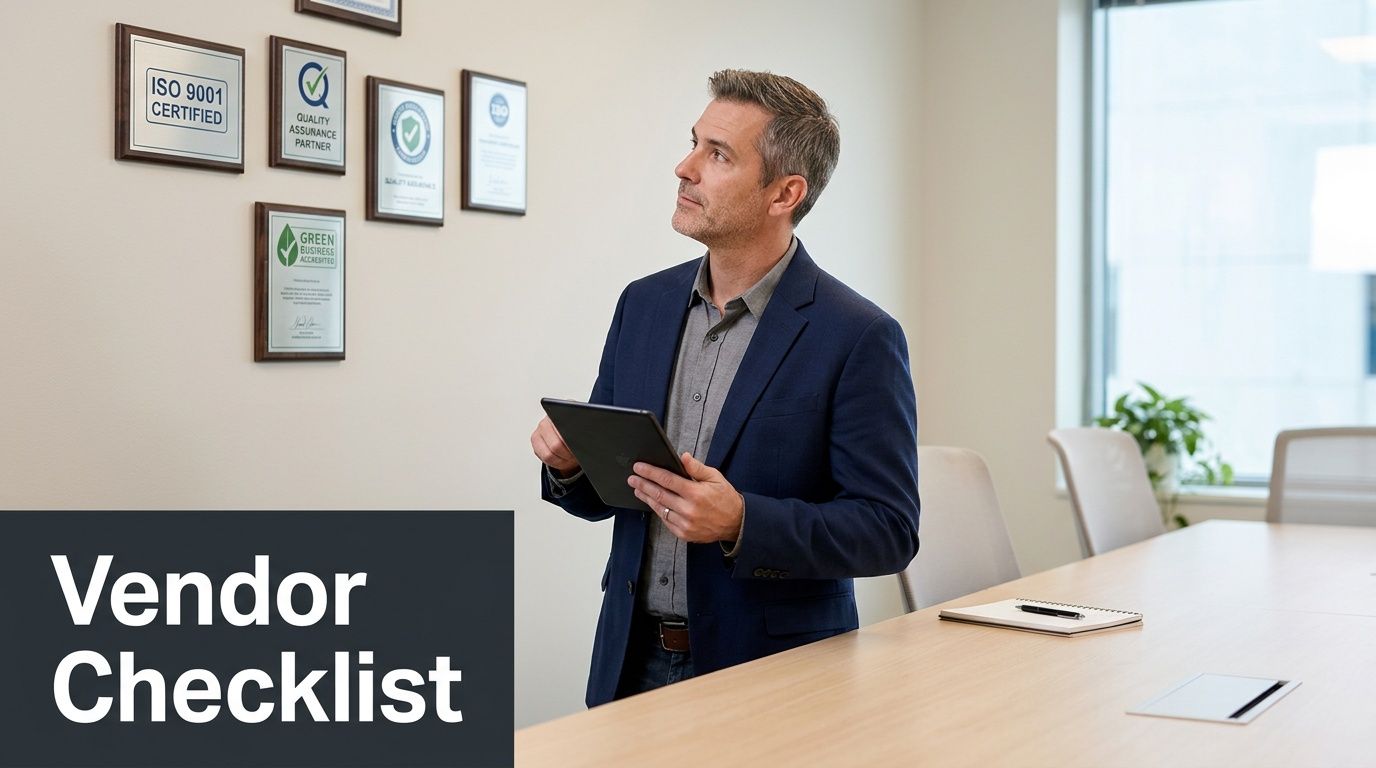
Choosing the right IT asset disposition (ITAD) partner is the single most important decision your business will make to protect its data and reputation. Here in Dallas, not all electronics recycling companies offer the same level of security, compliance, or transparency.
A slick website or a rock-bottom price can easily mask significant gaps in service—gaps that leave your organization exposed to data breaches and regulatory fines.
Think of it like hiring a specialized contractor for a critical job. You wouldn't just take their word for it. You’d verify their licenses, insurance, and track record. The same diligence is required here, where your company’s most sensitive information is on the line.
Ask About Industry Certifications
Certifications are your first and most reliable proof of a vendor’s commitment to industry best practices. They aren't just logos for a website; they represent demanding, third-party audits that verify a company’s processes for security, environmental stewardship, and worker safety.
For any business in Dallas, there are two crucial certifications to look for:
- R2v3 (Responsible Recycling): This is the leading standard for the electronics recycling and ITAD industry. An R2-certified vendor follows strict guidelines for data security and environmental protection and is prohibited from illegally exporting e-waste.
- e-Stewards: Another highly respected certification, e-Stewards has a strong focus on preventing the export of hazardous electronic waste to developing nations and mandates rigorous standards for data security.
When a vendor holds these certifications, it proves they operate at the highest level. You can learn more about what it means to be an R2 certified electronics recycler and see how it directly protects your business.
Verify Data Destruction Standards and Insurance
Simply hearing "we destroy data" is not good enough. You need to know exactly how a potential partner guarantees your information is permanently irrecoverable and what protections they offer if something goes wrong.
A legitimate ITAD partner will never be vague about their data destruction methods or insurance coverage. Transparency is the hallmark of a trustworthy provider, and they should provide clear, documented answers to your questions without hesitation.
Ask potential vendors if they follow specific data sanitization guidelines, such as NIST 800-88. This standard, set by the National Institute of Standards and Technology, is the gold standard for media sanitization. It outlines clear, documented procedures for purging and destroying data from digital media.
Just as important is their insurance coverage. Ask for proof of a robust liability policy that specifically covers data breaches. This ensures that in the unlikely event of an incident, your organization is financially protected.
Demand Transparent Chain-of-Custody Reporting
A secure ITAD process is an accountable one. Your vendor must be able to provide a complete, unbroken chain of custody for your assets from the moment they leave your facility. This documentation is your legal proof that you acted responsibly.
This reporting must include:
- Serialized Asset Tracking: A detailed inventory of every single device, tracked by serial number from pickup to final disposition.
- Secure Logistics: Confirmation that assets are transported in locked, GPS-tracked vehicles by vetted and background-checked personnel.
- Certificates of Destruction: Formal, legally binding documents that certify your data was destroyed in compliance with industry standards like NIST 800-88.
Without this comprehensive paper trail, you have no way to prove compliance in an audit or a legal dispute. A dependable partner provides this documentation as a standard part of their service, giving you the verifiable peace of mind your organization requires.
To help you navigate this process, we've created a checklist of key criteria to use when evaluating potential partners for electronics recycling in Dallas.
Vendor Selection Checklist for Secure ITAD Services
| Evaluation Criterion | What to Look For | Why It Matters |
|---|---|---|
| Industry Certifications | Active R2v3 or e-Stewards certification. Verify their status on the official certification body's website. | These certifications prove adherence to the highest industry standards for data security, environmental compliance, and operational integrity. They are not self-awarded. |
| Data Destruction Methods | Adherence to NIST 800-88 guidelines. Offers multiple destruction methods (wiping, degaussing, shredding) and provides a Certificate of Destruction. | This ensures data is rendered completely unrecoverable, meeting compliance requirements for regulations like HIPAA, GLBA, and PCI-DSS. |
| Insurance Coverage | Proof of insurance that specifically covers data breach liability and errors & omissions. Ask to see a copy of their insurance certificate. | General liability insurance does not cover data breaches. This specialized coverage protects your organization from financial loss in a worst-case scenario. |
| Chain of Custody | Detailed, serialized reporting from pickup to final disposition. Documented secure logistics (locked trucks, GPS tracking, vetted staff). | An unbroken chain of custody is your legal proof of due diligence. It demonstrates that you responsibly managed the asset disposal process from start to finish. |
| Downstream Transparency | A documented process for vetting and auditing their downstream recycling partners. | Ensures your e-waste isn't illegally exported or dumped. Protects your company's reputation and commitment to environmental responsibility. |
| Local Presence | A physical, secure facility in the Dallas-Fort Worth area that you can visit and inspect. | A local facility ensures accountability, faster service, and lower transportation risk compared to vendors who ship assets long distances to unknown locations. |
Using this checklist will empower you to cut through the marketing noise and select a partner who can genuinely protect your organization's security, compliance, and reputation.
Taking Control of Your IT Asset Disposition Strategy
Managing electronics recycling in Dallas doesn't have to be complicated. It all comes down to taking control. A secure IT Asset Disposition (ITAD) plan isn't just about getting rid of old equipment; it's a core business process that protects your data, ensures you meet compliance standards, and preserves your company’s reputation.
The risks of handling it incorrectly are simply too high to ignore. The good news is that creating a secure and responsible strategy is straightforward. The path from a closet full of old computers to documented peace of mind is much clearer than most people think. It starts with a simple shift in mindset: stop thinking of it as "tossing old tech" and start "strategically retiring company assets." This turns a major liability into a manageable, secure process.
Your Simple 3-Step Action Plan
You can take immediate, confident action with this simple plan. It breaks the entire process down into three manageable steps to get you started today.
Create a Full Inventory: First, identify and list all the IT assets your company needs to retire. Group them by type—laptops, servers, monitors, networking gear—to understand the full scope of your project.
Isolate High-Risk Devices: Next, physically separate any device that contains a hard drive or storage media. This includes everything from server hard drives and employee laptops to office copiers and smartphones that hold sensitive company or customer data. These items require certified data destruction.
Schedule a Professional Consultation: Finally, reach out to a certified ITAD specialist. A quick call is all it takes to get clear answers for your specific inventory, confirm your security needs, and receive a quote for secure pickup, data destruction, and recycling.
Managing your IT assets responsibly shouldn't be a complex, resource-draining headache. A secure, compliant, and environmentally sound disposition process is just one call or click away, turning a significant business risk into a streamlined solution.
This simple framework puts you in complete control. By working with a proven expert in electronics recycling, you guarantee that every single device is handled with the highest level of security and accountability. This proactive approach is the only way to fully protect your Dallas business from data breaches, regulatory fines, and environmental liability.
Don't let retired assets become a lingering risk. Take the first step by connecting with the experts at Dallas Fortworth Computer Recycling for a seamless and risk-free disposition experience.
Frequently Asked Questions About Business E-Waste
When it comes to professional electronics recycling, IT managers and business owners in Dallas often have the same core questions. Getting clear answers is the first step toward building a secure and compliant IT asset disposition (ITAD) program.
Here are straightforward answers to the questions we hear most often.
What Does Business Electronics Recycling Cost?
The cost of electronics recycling depends entirely on the type and quantity of your equipment. For assets with remaining value, like newer servers or laptops, the service may come at a net-zero cost or even generate a return for your business through our remarketing process.
For older items with no resale value or those containing hazardous materials like CRT monitors, a small fee may apply to cover the cost of safe handling and compliant recycling. A reputable partner will always provide a transparent, itemized quote upfront so there are no surprises.
What Kind of Documentation Proves My Data Was Destroyed?
This is one of the most critical questions to ask. The definitive proof of secure data destruction is a formal Certificate of Data Destruction. This legal document certifies that your data-bearing devices were destroyed in accordance with specific industry standards, such as NIST 800-88.
Your Certificate of Data Destruction is more than a receipt—it's an auditable record that confirms your compliance and protects your organization from liability. It details the date, method of destruction, and a serialized list of the assets processed, providing a complete paper trail for your records.
This certificate is your official proof that you fulfilled your due diligence in protecting sensitive information.
Can You Handle Pickups Outside the Immediate Dallas Area?
Absolutely. While our headquarters is in Dallas, our logistics network is designed to serve businesses nationwide. We regularly coordinate secure pickups for organizations across Texas and in other states.
Our process guarantees the same high level of security and chain-of-custody documentation, regardless of your location. Whether you have a single office in Plano or multiple sites across the country, we can build a logistics plan that meets your needs.
How Is Specialized Equipment Like Medical Devices Handled?
Specialized equipment, particularly from healthcare or laboratory settings, demands meticulous handling. These devices often contain Protected Health Information (PHI) and can have unique environmental handling requirements.
We treat this equipment with the highest level of security. Our process includes:
- Strict Chain of Custody: We document every step from pickup to final disposition to ensure full HIPAA compliance.
- Certified Data Destruction: We guarantee any stored patient or research data is permanently and verifiably destroyed.
- Specialized De-manufacturing: We safely process any materials that may have been exposed to biological agents, ensuring they are handled according to all environmental and safety regulations.
Take the guesswork out of your IT asset disposition strategy. For a secure, compliant, and documented solution for your business, contact the experts at Dallas Fortworth Computer Recycling to schedule your consultation today.