
Dallas Recycling: Secure IT Asset Disposal
Navigating IT asset disposition in Dallas presents unique challenges—and significant opportunities—for local businesses. This isn't just about getting rid of old hardware. It's a critical process involving data security, regulatory compliance, and environmental stewardship. A well-defined IT recycling strategy transforms a complex logistical headache into a secure, auditable process that protects your entire organization.
Why Your Business Needs a Dallas IT Recycling Strategy
For IT directors and compliance officers, managing end-of-life electronics is a high-stakes responsibility. Simply tossing old computers, servers, or hard drives is no longer an option, especially in a business environment where data protection is non-negotiable. A single mishandled device can easily lead to a devastating data breach, resulting in steep financial penalties and lasting reputational damage.
The pressure is coming from all sides. Regulations like HIPAA for healthcare and PCI for finance impose strict rules on how customer and patient data is managed, even long after the hardware it lives on is retired. Failing to comply can bring severe fines.
Beyond compliance, there's the environmental component. The city of Dallas continues to face challenges with its recycling infrastructure and landfill capacity, and local businesses play a huge role in this ecosystem.
By proactively managing e-waste, companies not only mitigate their own risks but also contribute positively to the city's broader environmental goals. This turns a mandatory task into a strategic advantage, showcasing corporate responsibility.
A formal IT recycling strategy provides a clear, documented framework for every stage of the disposition process. It ensures nothing gets overlooked, from the initial inventory all the way to the final, certified destruction of your data. For any modern organization, this approach is essential.
The Problem with Unmanaged E-Waste
Without a structured plan, disposing of old tech often becomes a chaotic, last-minute scramble. This ad-hoc approach creates several immediate risks:
- Data Breaches: Retired equipment can still hold sensitive corporate or customer information, making it a prime target for theft if not handled securely.
- Compliance Violations: Improper disposal can violate industry and federal regulations, leading to legal action and costly fines.
- Environmental Harm: Electronics contain hazardous materials that can contaminate soil and water if they end up in landfills. Responsible recycling prevents this pollution.
- Lost Value: Many retired assets have residual value that can be recovered through remarketing or component harvesting, but this opportunity is lost without a proper assessment.
The Role of a Certified Partner
This is where a specialized Dallas recycling partner becomes invaluable. Instead of trying to manage the complex logistics, compliance, and security internally, you can rely on an expert to handle the entire process correctly. A certified vendor simplifies everything.
They manage the secure pickup and transportation, certified data destruction, and detailed reporting. This provides a clear chain of custody, giving you the documentation needed to prove compliance during any audit. Partnering with a professional service transforms IT asset disposition from a major headache into a streamlined, secure, and responsible business function. You can learn more about the broader benefits of e-waste recycling in our detailed guide to see how it impacts your bottom line and sustainability targets.
How to Plan Your IT Asset Disposition Project
A successful IT asset disposition (ITAD) project is never an accident. It’s the result of proactive planning, not a last-minute scramble when the server room is overflowing or a lease is ending. We’ve seen it time and again: rushing the process leads to security holes, compliance violations, and missed opportunities to recover value.
A solid plan is your foundation for secure and compliant Dallas recycling of your company’s electronics. It all comes down to knowing what you have, defining your goals, and executing the plan with a partner you can trust.
This flow chart shows the simple, yet critical, path of a well-managed project.
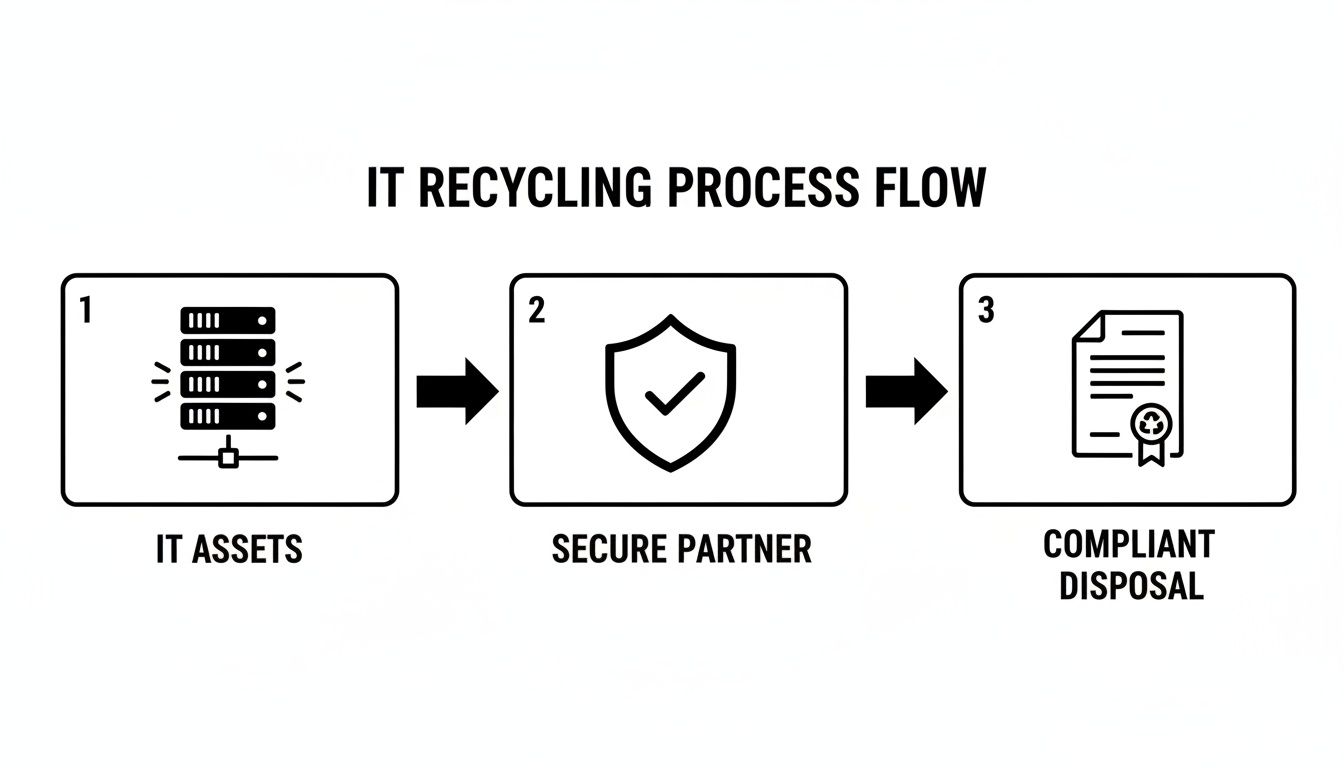
As you can see, a secure partner is the essential bridge between your old equipment and its responsible, documented disposal.
Conduct a Comprehensive Asset Inventory
The first real step is building a detailed inventory of every single asset you plan to dispose of. This isn’t just about counting laptops; it's about gathering the details that will shape the entire project. A vague list like "50 old PCs and some servers" just won't cut it.
Your inventory needs to be meticulous. For each device, you should capture:
- Asset Type: Is it a server, laptop, network switch, or something specialized like a medical monitor or point-of-sale terminal?
- Data Sensitivity: Does it hold Personally Identifiable Information (PII), Protected Health Information (PHI), or other regulated data? This dictates the required data destruction method.
- Condition and Age: Is the equipment still functional, is it damaged, or is it completely obsolete? This directly impacts its potential for reuse and remarketing.
- Location: Document where each asset is, especially if you have a large facility or multiple offices across the DFW area.
This detailed spreadsheet becomes your project’s master guide. It ensures every device is tracked from your facility to its final destination, forming the backbone of a secure chain of custody.
Define Clear Project Objectives
With your inventory in hand, you can decide what a successful outcome looks like for your organization. Different businesses have different priorities. Are you laser-focused on data security, or is maximizing the financial return from old assets a key goal?
Common objectives for an ITAD project often include:
- Ensuring Maximum Data Security: This is non-negotiable for most, especially those in healthcare, finance, or government. The goal is to guarantee that 100% of data is destroyed beyond recovery.
- Meeting Compliance Deadlines: An upcoming office move, data center migration, or regulatory audit often creates a firm deadline that drives the project's timeline.
- Maximizing Value Recovery: If you have newer, working equipment, remarketing those assets can offset disposal costs and sometimes even generate revenue.
- Achieving Sustainability Goals: Many companies now aim for a zero-landfill policy for their e-waste. This requires a partner who prioritizes responsible recycling and certified reuse programs.
For instance, a Dallas-based healthcare provider we worked with was decommissioning a lab. Their primary objective was a flawless chain of custody for equipment containing sensitive patient data. The entire plan prioritized serialized tracking and certified data destruction above all else.
Knowing the "why" behind your project is crucial. For organizations new to this, getting a handle on what IT asset disposition entails provides a great overview of the process and its benefits. Setting clear goals upfront establishes the metrics for success, ensuring your Dallas recycling efforts align perfectly with your business needs and legal obligations.
Ensuring Compliance With Certified Data Destruction
For any organization handling sensitive data, dragging files to the trash bin isn't just lazy—it's a direct invitation for a data breach. Real security for retired IT assets demands a certified, auditable destruction process. This isn't simply a best practice; it's a legal necessity under regulations like HIPAA, PCI, and NIST. A single misstep can lead to crippling fines and permanent damage to your company’s reputation.
Partnering with a specialized service for your Dallas recycling needs is the only way to guarantee your data is completely and permanently gone. It also ensures your e-waste is handled responsibly, a critical piece of modern corporate citizenship for any business in our area.
Why Deleted Files Aren't Really Gone
When you hit "delete" on a computer, the data doesn't vanish. The operating system just marks the space that file occupied as available to be overwritten someday. Until new data gets written over that exact spot, the original file is still there and can often be recovered with off-the-shelf software.
This creates a massive risk for any business. A discarded hard drive could still hold a treasure trove of financial records, client lists, or trade secrets, even if you thought you wiped it. This is exactly why professional data destruction isn't a "nice-to-have"—it's non-negotiable.
Understanding Your Data Destruction Options
Certified data destruction primarily comes down to two approaches: software-based wiping and physical destruction. The right choice depends on your hardware, how sensitive the data is, and whether you want to reuse the equipment.
Here is a quick comparison of the most common methods we use to help clients choose the right path for their assets.
Data Destruction Methods Compared
| Method | Description | Best For | Compliance Level |
|---|---|---|---|
| Multi-Pass Wiping | Software overwrites a drive with random data multiple times, following standards like NIST 800-88. | Functional hard drives that will be reused or resold. | High |
| Physical Shredding | An industrial shredder pulverizes drives into tiny fragments, making data recovery physically impossible. | Damaged, obsolete, or highly sensitive drives (e.g., SSDs, hard drives). | Maximum |
| Degaussing | A powerful magnetic field is used to instantly scramble and erase the data on magnetic media like tapes. | Magnetic tapes and older hard drives (not effective on SSDs). | High |
| Simple Deletion | Files are moved to the recycle bin; pointers to the data are removed, but the data itself remains. | Non-sensitive, personal files only. | None |
Choosing between wiping and shredding ultimately comes down to balancing value recovery with absolute security. A qualified ITAD partner can help you make the most cost-effective decision for each asset in your inventory.
Key Takeaway: The entire point of certified destruction is to make data irretrievable. Whether through software or brute force, the process must render the data completely unrecoverable and give you the paperwork to prove it.
The Certificate Of Data Destruction: Your Legal Proof
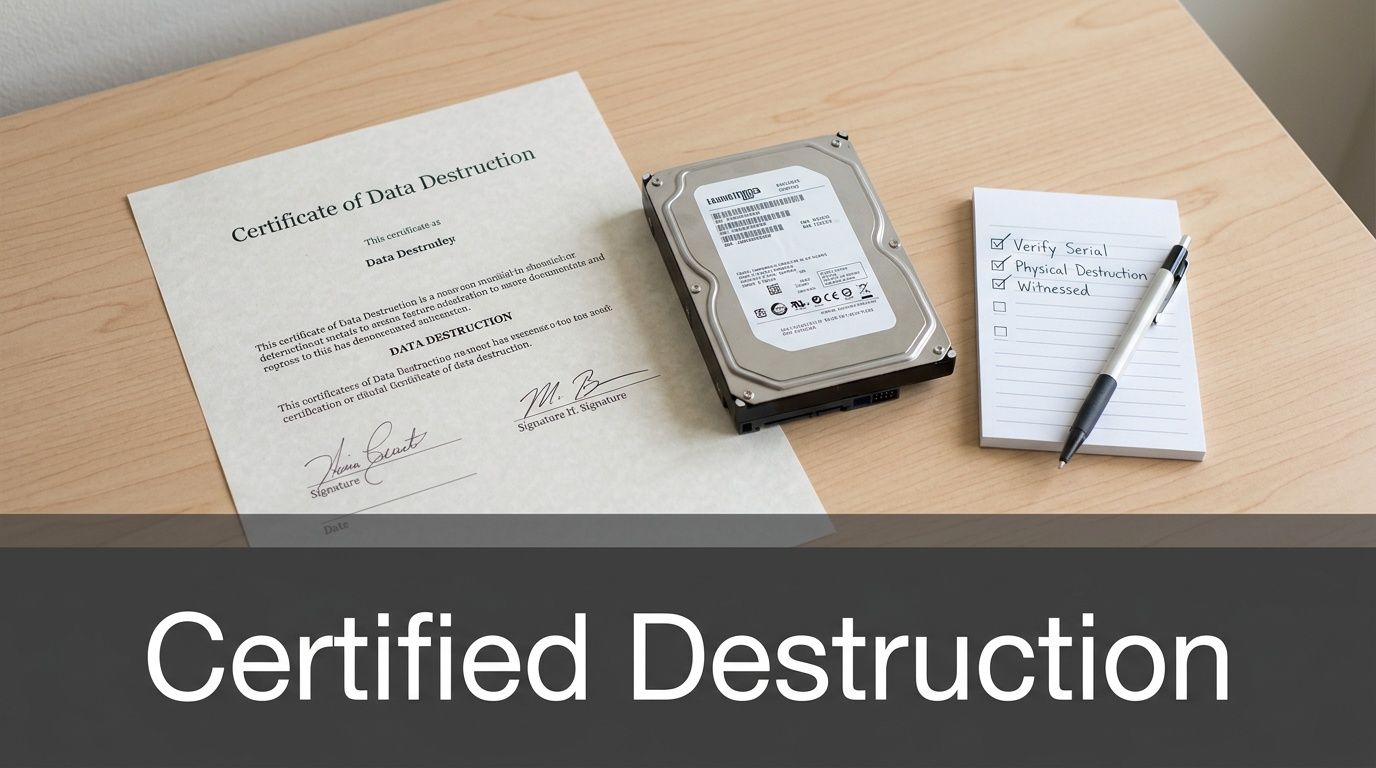
Once your data is destroyed, your recycling partner absolutely must provide a Certificate of Data Destruction (CoD). This document is far more than a receipt—it's your legal proof of compliance and due diligence.
A legitimate CoD has to include key details:
- The unique serial numbers of the destroyed hard drives.
- The method used for destruction (e.g., shredding, wiping).
- The date and location where the destruction took place.
- A transfer of custody statement that shifts liability to the vendor.
This certificate is your official record. If you ever face a compliance audit, the CoD is your first and best line of defense, proving you took the necessary steps to prevent a breach. You can learn more about why a Certificate of Destruction is essential for hard drives in our detailed guide.
Local Impact and Your Business's Responsibility
Choosing a certified partner for Dallas recycling also has a significant local environmental impact. Dallas has been working to improve its recycling rates since launching a 'zero-waste plan' back in 2013 to boost its then-20% diversion rate. Progress has been slow, and today the city's overall recycling rate hovers around 34%—still lagging behind many other major U.S. cities.
This puts continued strain on the McCommas Bluff Landfill and underscores the urgent need for responsible corporate waste management.
By using a specialized service that provides both certified data destruction and responsible e-waste processing, your business does more than just protect itself. You actively contribute to reducing landfill waste and promoting a healthier, more sustainable North Texas. It's where corporate security and civic responsibility meet.
Handling Your E-Waste Logistics and Pickup
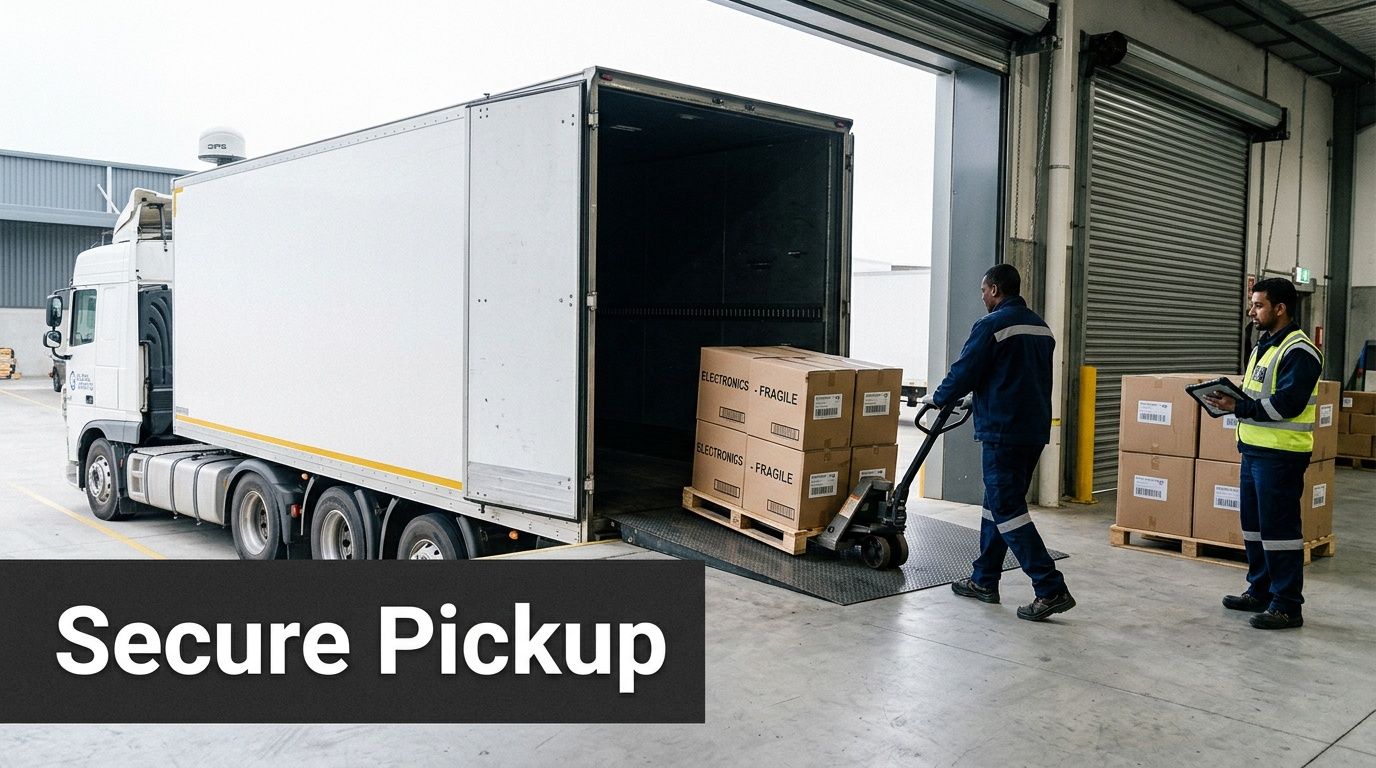
You’ve inventoried your IT assets and have a solid plan for data destruction. Now comes the physical challenge: getting all that bulky, sensitive equipment from your office to our facility. This logistical step is just as critical as the data destruction itself. A mishandled pallet or an unsecure truck can completely undermine all your hard work on security.
The whole process depends on maintaining a secure, unbroken chain of custody, and that starts the second your equipment leaves your control. Professional logistics for e-waste isn’t just a moving service; it’s a security operation. We turn a complex task into a simple, scheduled service that protects your assets when they are most vulnerable—in transit.
This is a big deal in Dallas. Local businesses and residents send a staggering 86,000 tons of recyclables to landfills every year. This massive volume, including 37,000 tons of paper and 27,000 tons of plastic, creates significant compliance risks for any company getting rid of regulated electronics. When you use specialized services for your Dallas recycling needs, you ensure your e-waste is diverted from this stream and processed securely.
Preparing Your Equipment for Secure Transit
Proper preparation is your first line of defense against damage or data loss during transport. Simply stacking old computers by the door won’t cut it. Our team will work with yours to follow best practices for packing and staging your assets for a secure pickup.
Key preparation steps often include:
- Secure Palletizing: Heavy items like servers and networking racks should be professionally shrink-wrapped and strapped to pallets. This prevents them from shifting or getting damaged during loading and transit.
- Asset Segregation: We recommend grouping equipment by type and data sensitivity. For example, keeping hard drives separate from monitors and making sure devices with PHI or PII are clearly marked for high-security handling.
- Using Secure Containers: For loose items like hard drives, laptops, and mobile devices, using locked and tamper-evident bins is essential. This guarantees no individual device can be accessed or misplaced.
A good partner provides all the necessary materials—pallets, gaylord boxes, and secure bins—and guides your team on how to pack everything for maximum security.
We recently worked with a financial firm in Downtown Dallas that was decommissioning a small data center. They had dozens of loose server drives loaded with sensitive client data. We provided them with sealed, lockable hard drive caddies that were inventoried on-site before being loaded onto our truck. That simple step gave them complete peace of mind.
The Non-Negotiables of Secure Pickup and Logistics
Not all pickup services are created equal. When choosing a Dallas recycling partner, you need to verify that their logistics meet strict security standards. The goal is a seamless, worry-free process, and a professional partner makes that happen. You can learn more about how a professional team handles a secure computer recycling pickup in the Dallas area and what to expect.
Here are the critical components of a secure logistics service:
- Vetted and Uniformed Personnel: The team arriving at your facility must be employed directly by the recycling company, not temporary contractors. They should be background-checked, insured, and easily identifiable in company uniforms.
- GPS-Tracked Vehicles: Every truck we use for transport is equipped with GPS tracking. This provides a real-time audit trail of your assets' location from your door to our facility, eliminating any gaps in the chain of custody.
- Flexible and Punctual Scheduling: Your business shouldn't have to stop for a pickup. A professional partner works with you to schedule service at a time that causes minimal disruption, whether it's during business hours, after hours, or on a weekend.
This level of professionalism ensures that your project, whether it's a small office cleanout or a full data center decommissioning, is executed with precision, security, and respect for your operations.
How to Choose the Right Dallas Recycling Partner
Picking the right IT asset disposal partner is the single most important choice you'll make in this entire process. It’s about more than just a price quote—you’re handing over your company’s data security, legal compliance, and reputation to another business. The wrong vendor can expose you to huge risks, while a great one becomes a trusted extension of your own team.
In the Dallas-Fort Worth area, you need a partner who gets the local business environment but also operates at the national standard for responsible electronics handling. The goal isn't just to find a pickup service; it's to find a consultant who will guide you to the right solutions for your specific IT assets. This decision will make or break your Dallas recycling program.
Look Beyond the Price Tag at Core Certifications
When you start evaluating vendors, the first thing to check is their certifications. These aren’t just logos on a website; they are hard proof that a company follows strict, third-party-audited standards for data security, environmental safety, and worker protection. Without them, you have no real guarantee of where your equipment actually goes.
The two certifications that matter most are:
- R2v3 (Responsible Recycling): This is the top global standard for the electronics recycling industry. An R2v3-certified facility has proven it follows a strict hierarchy for reuse, recycling, and safe disposal. You can learn more about what it takes to be an R2 Certified Electronics Recycler and why it's so vital for your business.
- e-Stewards: Developed by the Basel Action Network, this standard is known for its absolute ban on exporting hazardous e-waste to developing nations. It’s one of the highest bars for environmental and social responsibility.
A vendor with at least one of these certifications (especially R2v3) has already cleared a major hurdle. It shows they’ve invested heavily in the people, processes, and infrastructure to handle Dallas recycling the right way.
Verify Their Insurance and Risk Management Policies
What happens if there's a data breach while your assets are in your vendor's truck or facility? Who’s on the hook if an accident happens during pickup at your office? These aren't just "what-if" questions—they're fundamental business risks. A professional ITAD partner must have the insurance to cover you.
Ask every potential partner for their certificate of insurance. You need to see three key policies:
- Cyber and Data Breach Insurance: This covers the financial fallout from a data security incident. A vendor that carries this policy takes your data as seriously as you do.
- General Liability Insurance: This protects your business from property damage or injuries that could happen during on-site work.
- Pollution Liability Insurance: This is specific to environmental incidents and is the mark of a truly professional recycling operation.
A partner that hesitates or refuses to show you their insurance certificate is a serious red flag. This isn't optional; it's a non-negotiable part of protecting your own company.
Demand Downstream Transparency and Documentation
Once that equipment leaves your loading dock, you need to know exactly where it's going. This is called downstream transparency, and it’s a cornerstone of any compliant recycling program. Your partner must be able to provide a clear, documented chain of custody for every single asset.
This is particularly important in Texas. While recycling is growing, there's still a long way to go. In 2019, the state recycled 196,383 tons of non-ferrous metals. But with a per capita daily waste disposal rate of 7.20 pounds and nearly 44% of landfill waste being recyclable, businesses have a huge role to play. Partnering with a firm that provides solid documentation helps you meet your own compliance needs while contributing to a better statewide effort. You can see more on Texas recycling statistics and trends to understand the bigger picture.
For your own records and audits, you must get two documents from your vendor:
- Serialized Asset Reports: A detailed inventory listing every item received and processed, identified by its serial number.
- Certificates of Data Destruction: Your legal proof that all data on your devices was destroyed permanently and in accordance with industry standards.
Choosing a vendor who knows the DFW landscape, holds the right certifications, is properly insured, and provides total transparency is the only way to build an IT disposal program you can trust.
Common Questions About IT Recycling in Dallas
Even with a solid plan, IT asset disposal often brings up specific questions. As a Dallas-based partner focused exclusively on business clients, we've helped countless IT managers, compliance officers, and business owners navigate this process. Here are the answers to the most common questions we hear.
What Types of Business Electronics Do You Recycle?
We provide comprehensive recycling services for a wide range of commercial IT and electronic equipment. Our services are designed exclusively for B2B, government, and educational clients, offering a single solution for all corporate technology retirement needs.
We handle everything from entire data centers to standard office gear, including:
- Data Center Hardware: Servers, storage arrays (SANs), networking gear like switches and routers, and rack infrastructure.
- Office Equipment: Desktop computers, laptops, monitors, docking stations, printers, and peripherals.
- Specialized Assets: We have extensive experience with regulated equipment from healthcare and research, including medical devices and lab instruments.
- Telecommunications Systems: Business phone systems, video conferencing units, and other communication hardware.
Please note, we do not accept consumer electronics, residential e-waste, or household appliances. Our focus is strictly on providing secure, compliant solutions for organizations.
How Do You Guarantee Our Data Is Secure?
Data security is the most critical component of our service. We guarantee it with a documented, multi-layered process that meets or exceeds standards like NIST 800-88 and DoD 5220.22-M.
Our secure chain of custody begins the moment our vetted, uniformed personnel arrive at your facility in GPS-tracked vehicles. Once at our secure facility, you choose the destruction method that fits your security policy:
- Certified Data Erasure: We use multi-pass wiping software to completely overwrite all data on functional hard drives, making the original information unrecoverable.
- Physical Shredding: For maximum security, or for failed and obsolete drives, we use industrial shredders to pulverize the storage media into tiny, unsalvageable fragments.
After destruction, we issue a serialized Certificate of Data Destruction. This critical document serves as your official, auditable proof that all sensitive data has been responsibly destroyed and that you have fulfilled your due diligence.
This certificate is your legal safeguard, transferring liability from your organization and confirming compliance with regulations like HIPAA, SOX, and PCI.
What Does the Pickup and Scheduling Process Involve?
We’ve built our pickup and scheduling process to be as simple and non-disruptive as possible. We know that your business operations come first.
The process is straightforward. It begins when you request a quote, either online or by phone. We’ll work with you to understand the scope of your inventory and any specific logistical needs, like building access, security protocols, or elevator access.
Once you approve the proposal, we schedule a pickup at a time that works for you—whether that’s during business hours, on a weekend, or after hours. Our professional crew arrives on-site with all the necessary equipment to securely pack, palletize, and load your assets. We manage the entire process for you, whether you’re located here in Dallas or anywhere nationwide.
What Happens to Our Equipment After Pickup?
Our entire process is built on responsible environmental stewardship and a strict zero-landfill policy for all electronics we handle.
After your equipment arrives at our secure facility, it undergoes a detailed audit and sorting process.
- Reuse and Remarketing: Functional, modern equipment is tested, refurbished, and prepared for resale. Extending the technology's life is the most eco-friendly option and can often generate a financial return for your organization.
- Responsible Recycling: For equipment that is truly at the end of its life, we first perform certified data destruction. Then, the devices are de-manufactured into their base commodities—metals, plastics, glass, and circuit boards. These materials are then sent to our vetted downstream partners to be reintroduced into the manufacturing supply chain.
This approach ensures you meet your corporate sustainability goals while maintaining the highest security standards for your Dallas recycling program.
Ready to create a secure and compliant IT disposal plan for your organization? Dallas Fortworth Computer Recycling offers end-to-end solutions tailored for businesses across Dallas and nationwide. Get your custom quote today and let our experts handle the rest.